Why the Our Lady of Fátima Statue Is at the Vatican This Weekend
The beloved image journeyed for the Marian Jubilee, at the request of the late Pope Francis.
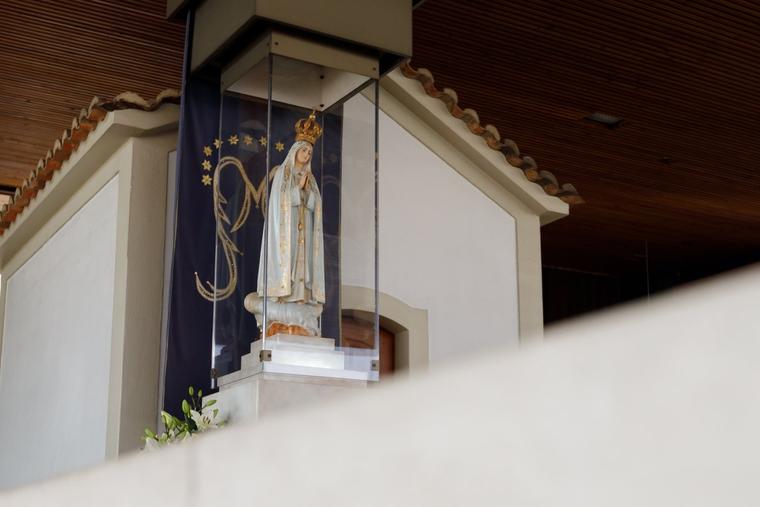
FATIMA, Portugal — Friday seemed like a normal October morning at the Sanctuary of Fátima: As the sun rose in the sky behind the great basilica, dozens of pilgrims arrived, alone or in groups, invariably heading to the Chapel of the Apparitions and prostrating themselves in prayer before the famous statue of Our Lady.
What most of them didn’t know was that they were about to witness a historic moment. The sculpture before them, which in more than a hundred years had rarely left the sanctuary’s grounds, would soon leave for a pilgrim’s journey.
It was then that some of the pilgrims noticed something unusual: A gray van was slowly moving through the center of the sanctuary, where usually only pedestrians circulate. A group of security guards kept the more curious pilgrims away, while the van headed toward the chapel, and countless news reporters pointed their cameras in the direction of the sculpture.
The rector of the sanctuary, Father Carlos Cabecinhas, then went to the ambo to explain what was happening: The statue would be removed because it would be leaving for the Vatican, “by the will of the Holy Father,” to participate in the Jubilee of Marian Spirituality, Oct. 11 and 12. “Accompany this visit of the statue to Rome with your prayers, for the Holy Father and for the good fruits of this visit,” he requested.
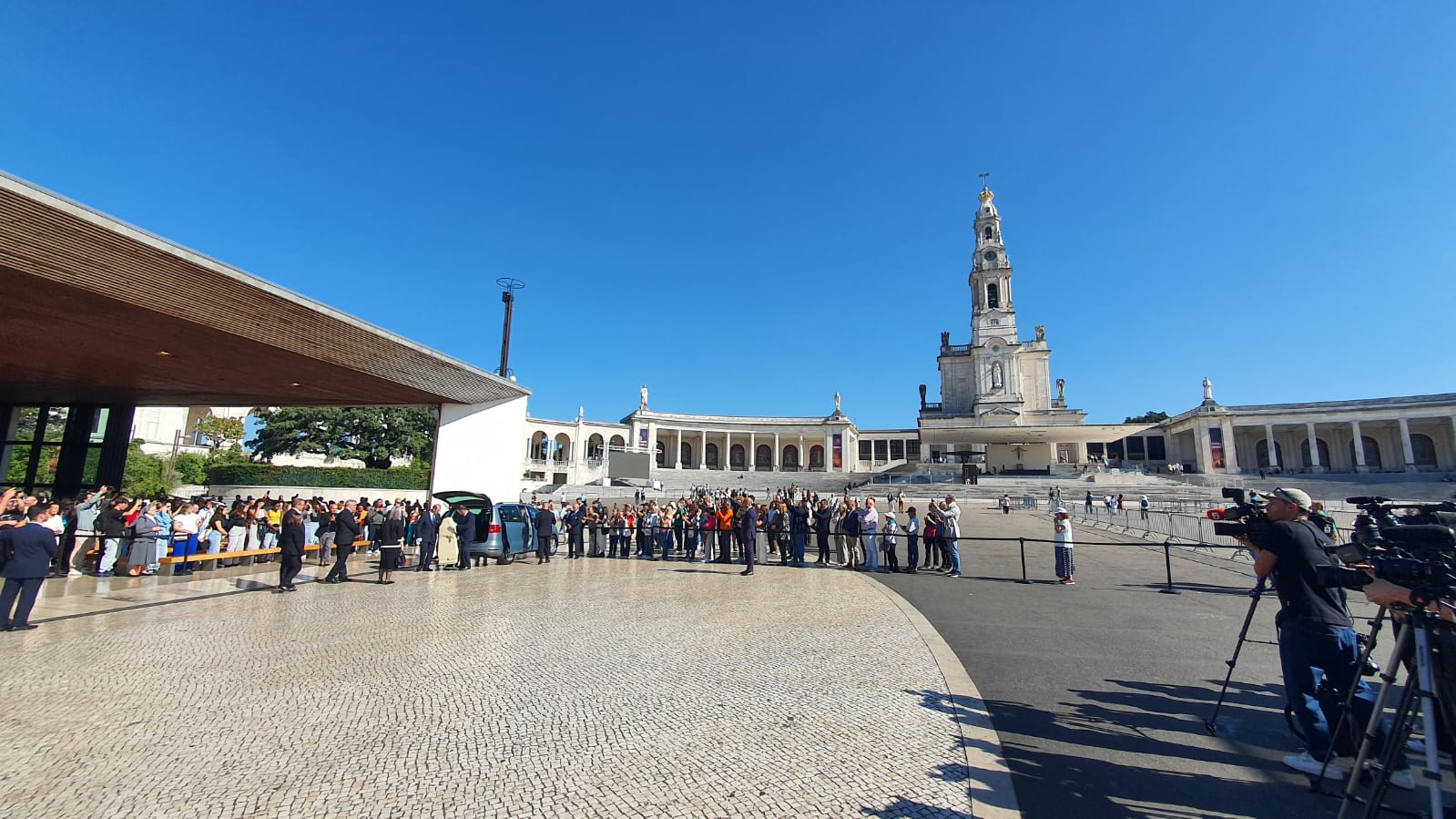
Three men wearing white gloves then went to the transparent display case where the statue was displayed, opened it, and carefully transferred the sculpture to a sturdy-looking white box on wheels, then carried it to the van parked there. As soon as the trunk closed, the pilgrims erupted in applause. Suddenly, someone began to sing the Hail Mary, and a chorus of pilgrims soon joined in, invoking a mix of joy and pride knowing that this beloved image of Our Lady would be close to the Pope and sadness and longing knowing it would be far away.

The Popes of Fátima
In more than a hundred years, this is the fourth time the image has left Fátima to meet a pope in Rome.
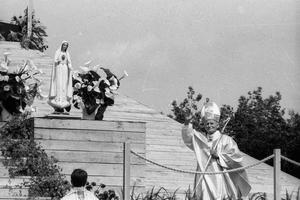
The first time was on March 25, 1984, when John Paul II requested that the sculpture be brought to the Vatican during the Holy Year of the Redemption to renew the consecration of the world to the Immaculate Heart of Mary. It was after this act of consecration, which took place in St. Peter’s Square, that the Polish Pope offered Our Lady the bullet that had struck him in the attack he had suffered three years earlier, on May 13 (the anniversary of the first Marian apparition in Fátima), which was later inlaid in the crown of the sculpture.
The second visit to Rome took place in the Holy Year of 2000, as part of the Jubilee of Bishops. On Oct. 8 that year, before the image and in union with the entire episcopate, John Paul II consecrated the new millennium to Our Lady.
The third and last time the image of Our Lady of Fátima was in Rome was in October 2013, at the request of Pope Francis, who chose it as the icon to represent Marian devotion worldwide as part of Marian Day. On the 13th that year, before this image, the Pope entrusted humanity to Our Lady.
In February of this year, it was Pope Francis requested the image of Our Lady of Fátima to return to the Vatican for the Jubilee of Marian Spirituality.
After his death and the election of Pope Leo XIV, the sanctuary followed up on the papal request. “And it was confirmed that the Holy Father indeed maintained this desire for the image to be present,” Father Cabecinhas told reporters, just hours before departing for Rome to fulfill the request.
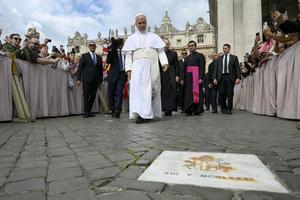
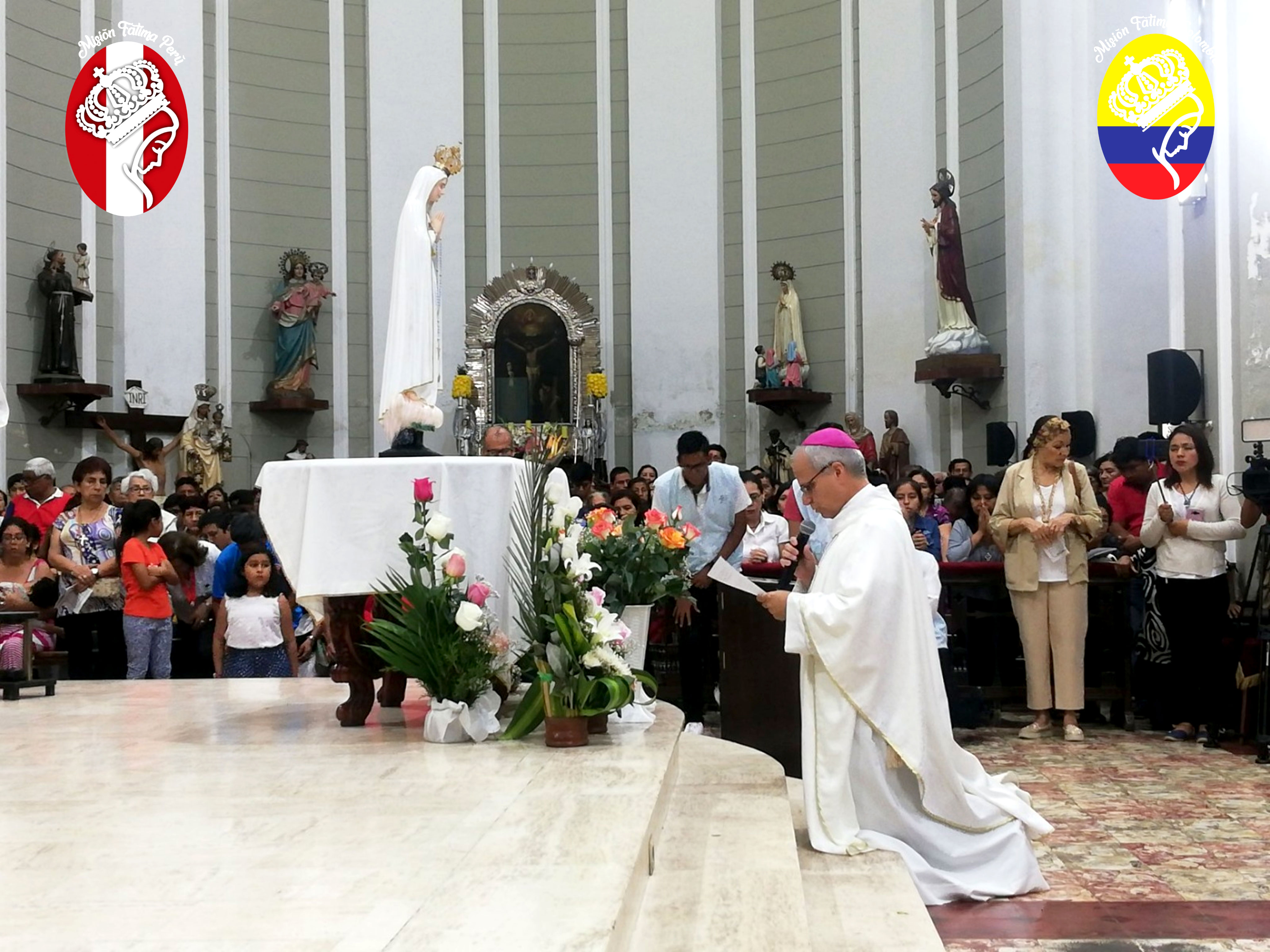
The Marian image was present in St. Peter’s Square on Oct. 11, at 6 p.m., for a vigil and Rosary for peace, as it will be on Sunday morning, the 12th, for Mass. “Initially, the Pope wasn’t even planned to be present at the vigil, but only at Mass on the 12th, and then it was the Pope himself who decided that he would also be present at the vigil on the 11th,” the sanctuary’s rector observed, unmistakably proud.
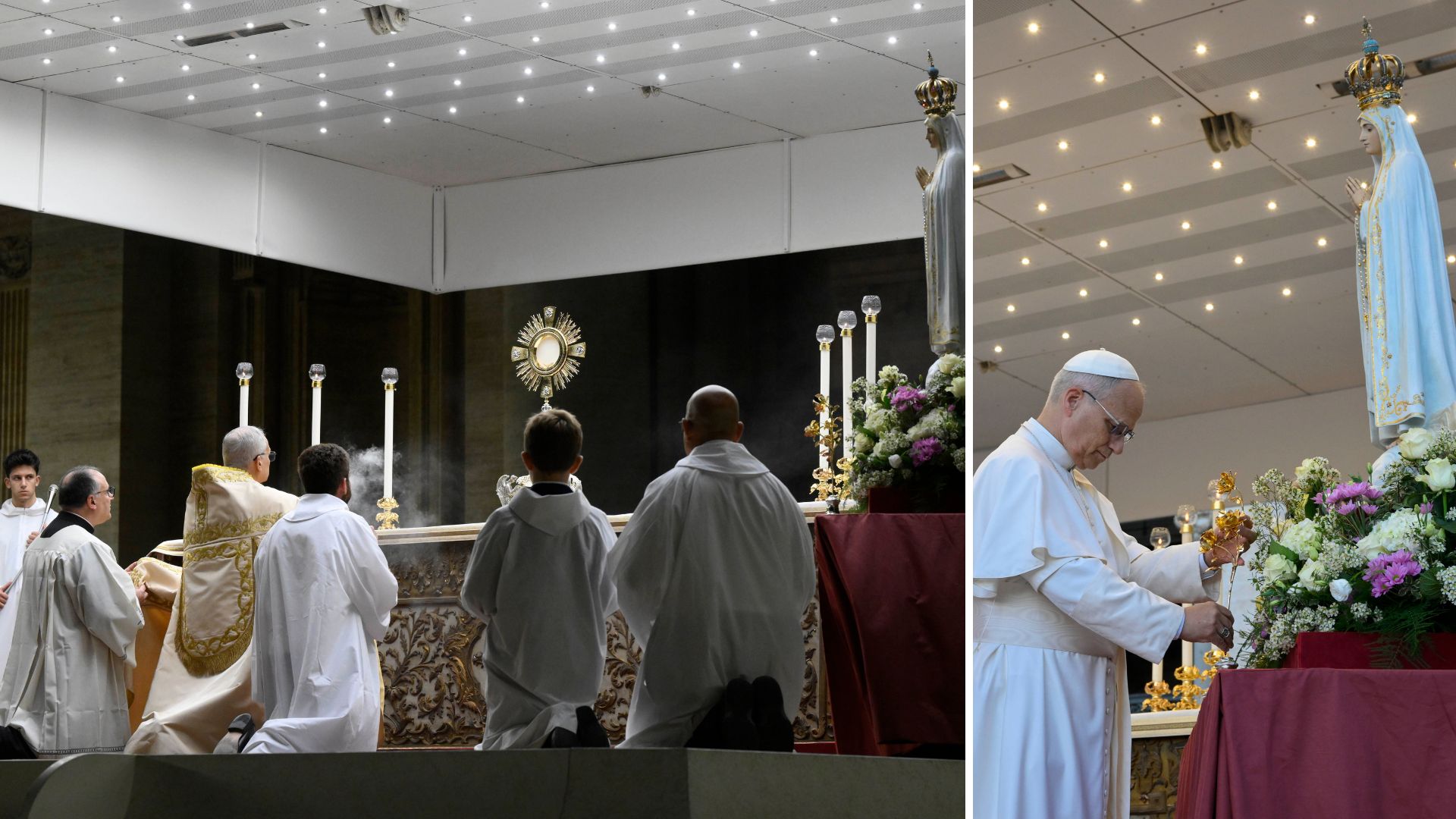
Could this be a sign that, like John Paul II, Benedict XVI and Francis, Leo XIV also has a special devotion to Our Lady of Fátima? “I cannot speak for the Pope, but what we know is that Leo XIV himself, while still a bishop, had already received the pilgrim image of Our Lady of Fátima in his diocese and that he had consecrated the clergy, himself and the diocese to Our Lady of Fátima. Therefore, I am convinced that, yes, he could also be a Pope of Fátima,” the shrine’s rector said.
The rector of the sanctuary also recalled the words that Archbishop Rino Fisichella, pro-prefect of the Dicastery for Evangelization, addressed to him when reiterating the request for the visit: “The presence of the beloved original image of Our Lady of Fátima will allow everyone to experience the closeness of the Virgin Mary,” said the Italian archbishop, considering that the image of Fátima is “one of the most significant Marian icons for Christians around the world,” highlighting why it was requested to be in Rome for this weekend’s Jubilee events.
The Beloved Image
The original sculpture of Our Lady of Fátima was born from the pilgrims’ desire to have, in addition to the chapel, an image they could identify as the “Lady dressed in white” and “wrapped in light” the three little shepherd children reported seeing in 1917.
Created three years later, in 1920, the image is the work of Portuguese artist José Ferreira Thedim (1892-1971), from a Catholic family with a strong tradition in sculpture and sacred art.
It stands about three and a half feet tall and was carved from Brazilian cedar, based on the visionaries’ accounts. Later, on May 13, 1946, the statue was solemnly crowned.
The crown that the image wears on the days of the great pilgrimages was offered by the women of Portugal, after a public subscription, on Oct. 13, 1942. It is a gold piece, weighing about 2.5 pounds, containing 313 pearls and 2,679 precious stones. Twelve artists worked on it for three months.
However, what many consider its greatest treasure was only added in 1989, when, on April 26 of that year, the bullet extracted from John Paul II’s body was embedded in it. The Pope said that a “maternal hand” had deflected the trajectory of the projectile, allowing him to survive the attack.
Protected by a bulletproof glass dome, the image rests on a pedestal that marks the exact spot where the holm oak (since disappeared due to the actions of devotees) stood, where Our Lady is said to have appeared to the three shepherd children.
Until 2009, it was removed at the end of the day, a few minutes before midnight, to the interior of the chapel for safety, returning to that location the following morning
This practice was abandoned when the Sanctuary of Fátima began broadcasting images of the chapel online 24 hours a day, captured by a camera aimed at the sculpture.
Since then, the image representing Our Lady of Fátima has been permanently visible to everyone, truly worldwide. Even so, requests continue to arrive at the sanctuary for the image to be moved to other locations and venerated there as well.
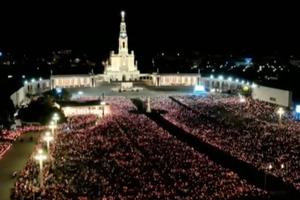
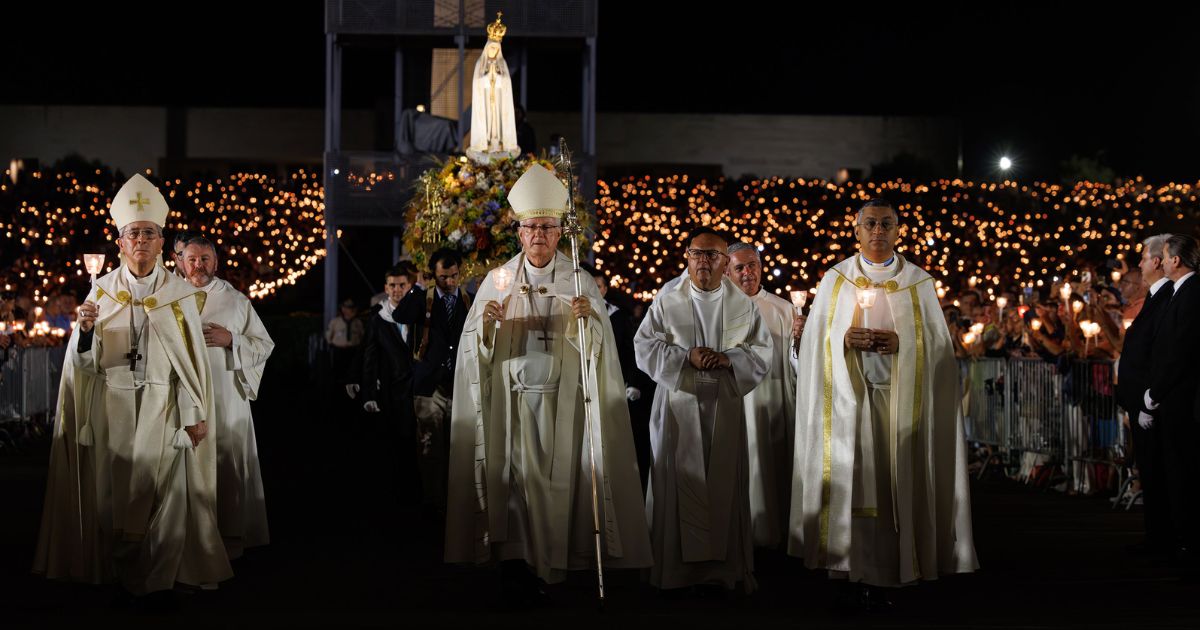
With so many requests, the sanctuary decided to have several replicas of the original image made, currently numbering 13. The first of these is now in the chapel, until the original returns from Rome, which should happen on Sunday at the end of the day, still in time to participate in the candlelight procession that, on the nights of the 12th to the 13th of each month between May and October, carries the image of Our Lady to the altar of the prayer area.
Our Lady’s Message
For Father Cabecinhas, it’s not just that the sculpture is a Marian icon recognized worldwide, but also that “the message of this place is one of peace and hope, and therefore fully aligned with the current situation the Church and the world are experiencing.”
Furthermore, the rector considers the fact that the image of Our Lady “goes to meet the Holy Father” at the beginning of his pontificate to be “particularly significant.”
“The Lady, dressed in white, goes to meet the bishop, dressed in white, making visible the bond of communion that the message of Fátima has always maintained with the Holy Father,” he emphasized.
He recalled that Leo XIV had already been to Fátima, as a bishop, during World Youth Day 2023, and that he had been invited to preside over the international pilgrimage in May or October of this year, shortly before being elected Pope. The invitation was declined, for obvious reasons, but it remains, the rector of the shrine said.
Father Cabecinhas concluded with a hopeful smile, “For now, Our Lady is going to visit him. … Maybe later he can come and visit her here at her house.”