Pope Leo XIV Wants a Missionary Church — What Does That Look Like Today?
Several Catholic voices weigh in on the missionary vision of the current pontificate.
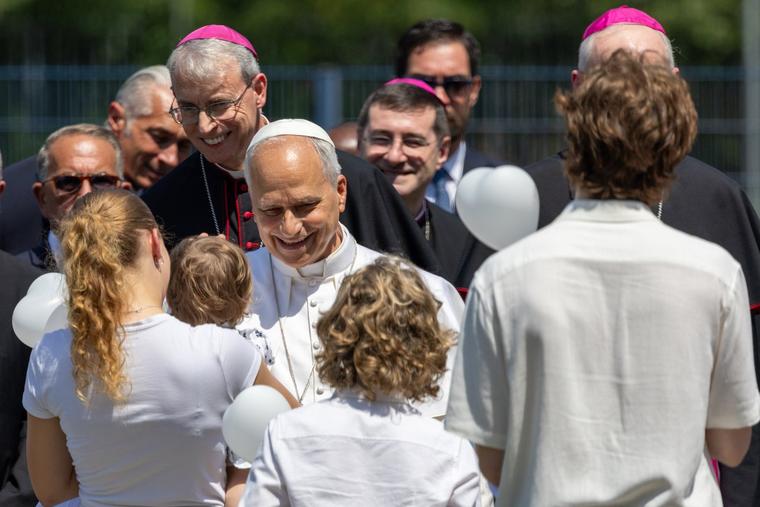
Ever since his election to the See of Peter, it has been clear that evangelization and the Church’s missionary dimension is a priority for Pope Leo XIV.
At the inauguration of his pontificate in May 2025, he called Catholics to build “a missionary Church that opens its arms to the world,” and at the Jubilee of Missions last October he said that “we are called to renew in ourselves the fire of our missionary vocation.”
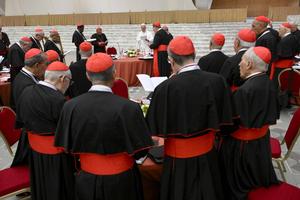
Leo has tasked his leading prelates with promoting this missionary vision, writing in a letter last April to the College of Cardinals that he wants to focus further “on what emerged from the groups [of cardinals] regarding Evangelii Gaudium, especially concerning mission and the transmission of the faith.”
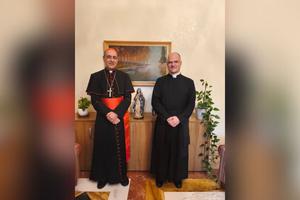
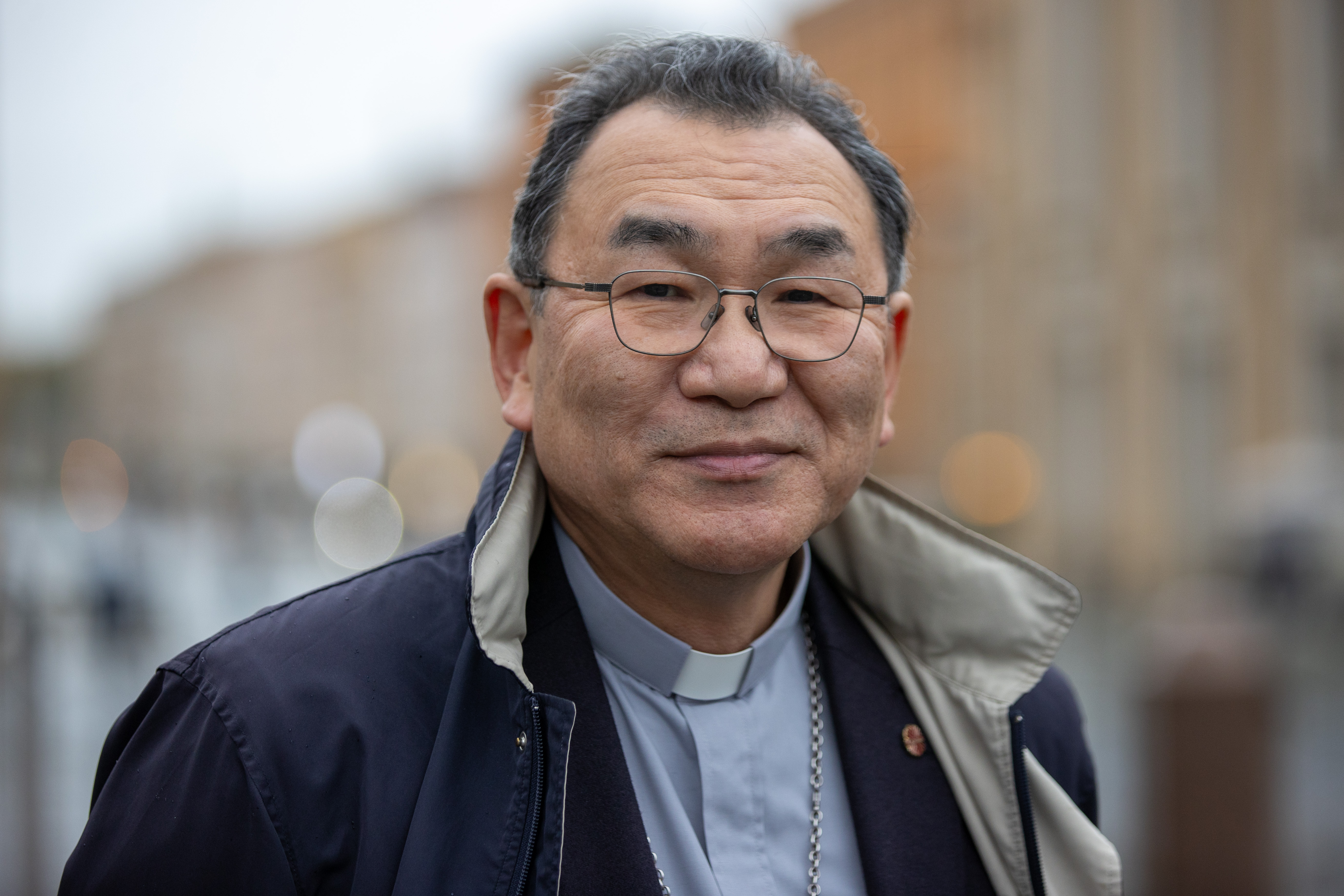
“It seems clear that Pope Leo places great importance on the perspectives of those cardinals who serve as diocesan bishops, especially those working on the front lines of evangelization,” Cardinal Tarcisio Isao Kikuchi, archbishop of Tokyo, told the Register in an email interview.
Cardinal Kikuchi, who is also the president of Caritas Internationalis, participated in the January and June consistories of cardinals. He said, “A Church that does not engage in evangelization, but only seeks to preserve the existing structures, is not the Church in her true identity.”
Leo has referenced Evangelii Gaudium — Francis’ 2013 apostolic exhortation on the proclamation of the Gospel in today’s world — and spoken about evangelization on numerous occasions during the first year-plus of his pontificate.
“Each one of us should be able to say with joy: The entire Church is missionary, and it is urgent — as Pope Francis affirmed — that we ‘go forth and preach the Gospel to all: to all places, on all occasions, without hesitation, reluctance or fear,’” the Pope said on Oct. 5, 2025, quoting Evangelii Gaudium (“The Joy of the Gospel”).
Evangelization was also one of the themes discussed by cardinals at this year’s first extraordinary consistory of cardinals at the Vatican in January, although it was not on the agenda for the June 26-27 consistory.
The Joy of the Gospel
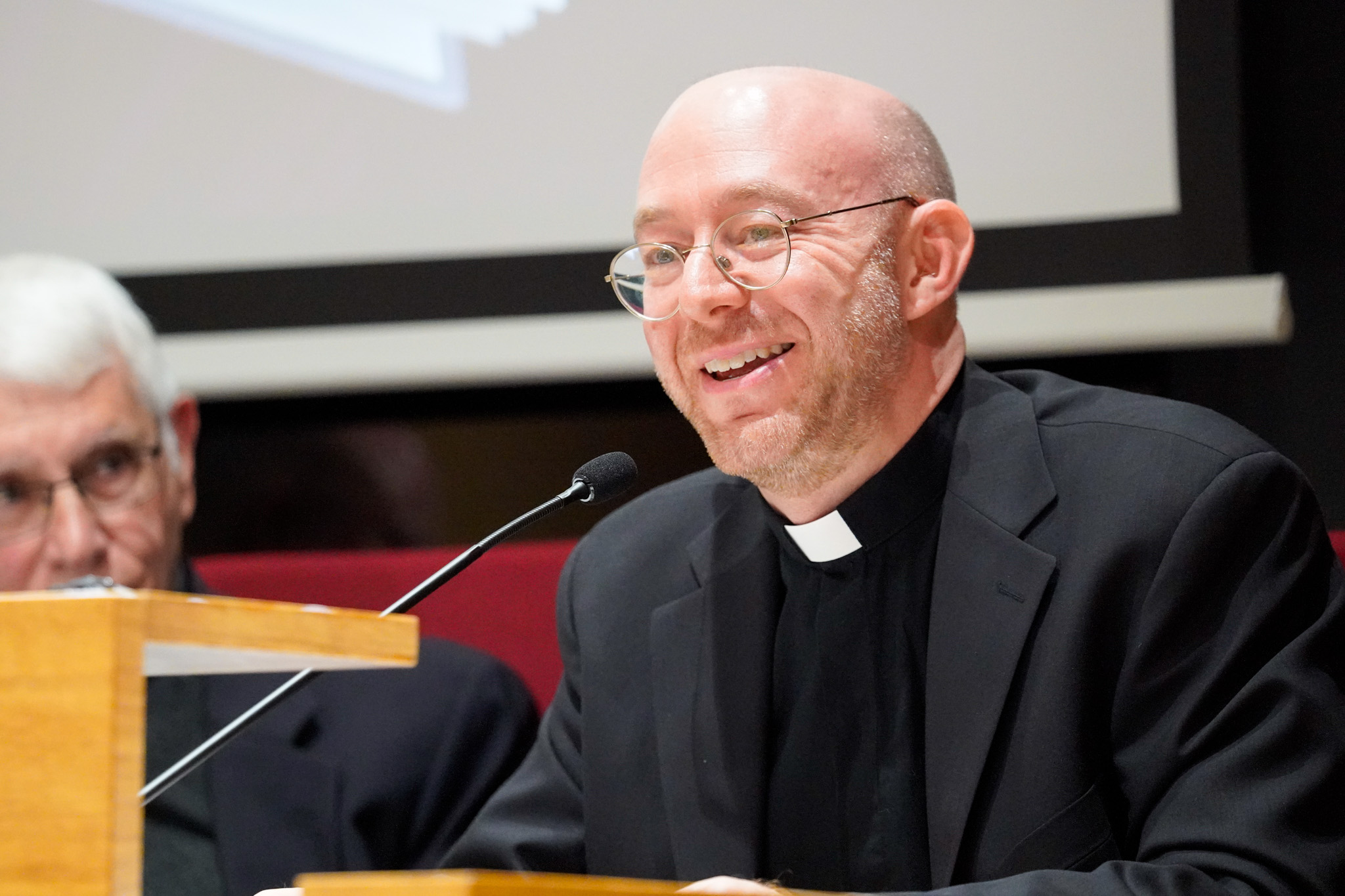
Evangelii Gaudium is “the document of Francis that [Pope Leo] keeps going back to,” Jesuit Father Anthony Lusvardi, a sacramental theologian and professor at the Pontifical Gregorian University in Rome, told the Register.
It “puts the accent on evangelization and the missionary aspect,” Father Lusvardi said.
In his April letter to cardinals, the Pontiff described Evangelii Gaudium as “a significant point of reference” and a “breath of fresh air” for missionary conversion — “thus profoundly guiding the Church’s journey.”
“In addition to introducing new content, it refocuses everything on the kerygma as the heart of our Christian and ecclesial identity,” the Pope continued.
Speaking to this idea of kerygma, Edward Sri, a theologian, speaker and author of What Do You Seek? Encountering the Heart of the Gospel, explained that the word “is rooted in the [Greek verb] kērússō, which means ‘to herald, to proclaim.’”
“And so the kerygma is the early proclamation of the core Gospel message; it’s the heart of everything we believe as Catholics,” he said in an interview with the Register.

“Think of it as the basic story of God’s amazing love and his plan for us; that he created us for relationship with him, even though we turned away from him. He died for us. He comes, and he rises and fills us with his Spirit to transform us, to heal us,” Sri said.
“It’s not only the first [proclamation] in chronological order,” he added, “it’s first in the sense of it’s the most important, it’s foundational. It’s something we as Christian disciples need to go back to over and over again. We need to go deeper into the kerygma all throughout our spiritual lives.”
According to Sri, in Evangelii Gaudium, Pope Francis was putting his finger on the reason the Catholic Church doesn’t evangelize more: “We are not evangelized ourselves.”
A New Missionary Age
Pope Leo spoke about the shifting missionary landscape at a Mass for the Jubilee of Missions on Oct. 5, 2025.
“Today,” he said, “a new missionary age opens up in the history of the Church.”
“If for a long time we have associated with mission the word ‘depart,’ the going out to distant lands that did not know the Gospel or were experiencing poverty, today the frontiers of the missions are no longer geographical, because poverty, suffering and the desire for a greater hope have made their way to us.”
Cardinal Kikuchi made a similar point about what it means to be missionary today.
“To become a missionary certainly means ‘leaving one’s own homeland and one’s own family,’ but this does not necessarily mean simply traveling to a distant place,” the former missionary to Africa said.
“The essential question is whether we have the courage to leave behind our attachment to our own culture, the environment in which we feel most secure. ... This is the true meaning of ‘leaving one's homeland and family,’” he said.
“The barriers we must overcome are not merely physical barriers, but the barriers that exist within our own hearts,” the cardinal continued.
Father Lusvardi, the author of Baptism of Desire and Christian Salvation, echoed the cardinal’s reflections about a need to change approach.
From around 1500 to 1800, we thought about missionaries as being sent out from a Christian heartland, he said.
Today, he explained, “we’re missionaries in the same way that they would have been in the early Church. ... The whole world is mission territory, which I think actually makes the urgency of mission even greater.”
Father Lusvardi noted that missionary activity used to go hand in hand with economic, educational and healthcare development.
Those “don't necessarily go together anymore. ... I think that we have to be even more up front with acknowledging the uniquely supernatural dimension of Christianity and what it gives — it gives us a relationship with God, period. And we don’t need to justify that on any other grounds,” he said. “A relationship with God is valuable in and of itself.”
Evangelization Today
For Father Lusvardi, part of the challenge for the Church and evangelization today is reckoning with the reality that for the past half-century or longer, “we’ve taken Catholicism for granted. We’ve expected that the culture could pass on the faith” in the West.
“It wasn’t something that you had to be all that self-conscious of doing. You weren’t fighting the culture; it was the culture that was doing this. Well, we’re in a completely different situation right now,” he said.
This reality in a tech age was acknowledged by Pope Leo in his first encyclical: “Indeed, we must consider the digital world as a new continent to be evangelized, one that requires generous missionaries who are mature in the faith.”
In an address to members of the Dicastery for Evangelization in May, the Pope reflected further on the changing context of evangelization. “We cannot underestimate the fact that, especially in Western countries, the crisis of faith, together with other socio-cultural factors, has given rise to widespread religious indifference. To many, faith no longer appears relevant to their lives,” he said.
“The underlying danger, the gravity of which is not always perceived, is that the very essence of what is most human — namely, the search for meaning — may be lost. The great existential questions remain unanswered, whilst a technological culture that is supposed to meet every need is spreading,” he continued.
“The transmission of faith, in this context, necessarily involves encountering people and communities who express the joy of the Christian faith and the coherence of a Gospel-inspired way of life. It is certainly not by watering down the content or softening the demands that Christianity can be made attractive, but by bearing witness with humility and courage to ‘the way, the truth and the life’ that has converted and sanctified so many people.
Father Lusvardi pointed to the increase in adult baptisms happening in the United States and in parts of Europe, some of the more secularized parts of the world: “That’s what the future looks like … precisely because we’ve gone through a period of decline and poor retention among Catholics.”
The challenge, he said, is going to be forming people who are interested in Catholicism in such a way that they stay: “I think we’ve been lulled into thinking it was automatic because we've lived for centuries in Christian cultures.”
“Christianity actually has a great future in a post-Christian culture,” he said, adding a hopeful note. “Because it’s not just inertia Catholicism. … [Converts] are looking for something which they can’t find in the consumeristic culture. And when they find it, it changes their life.”