Just-War Case for Removing Venezuela’s Maduro Falls Short, Catholic Scholars Say
Time will tell if Trump’s action proves to be a political and strategic success. Meanwhile, experts in the Catholic principles of just war maintain that the moral and ethical justification for using military force is weak.
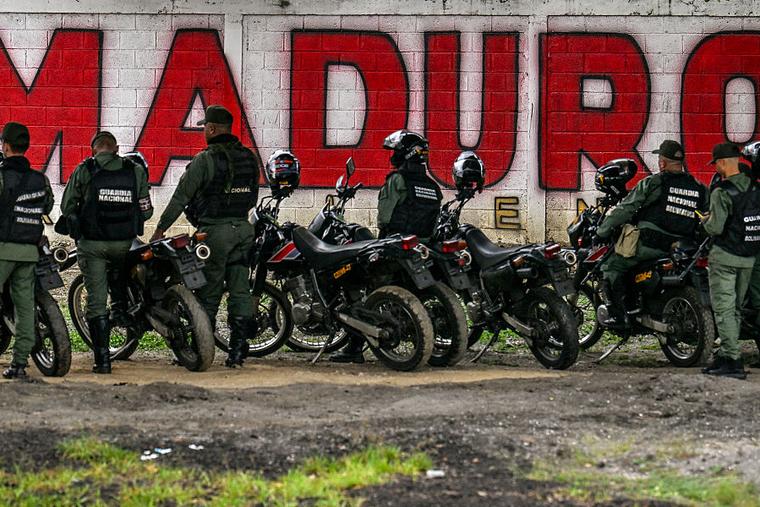
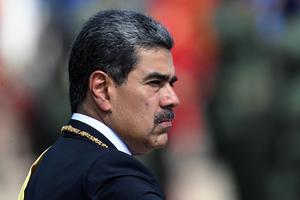
The U.S. military’s successful capture of Venezuelan President Nicolás Maduro has ignited a fierce political debate over the Trump administration's legal authority to conduct such an operation.
While President Trump did not justify the mission solely on humanitarian grounds, the operation succeeded in removing a repressive dictator, who inflicted widespread suffering, committed serious human rights abuses and maintained his grip on power by manipulating elections.
At the same time, this historic military intervention is raising questions among Catholic analysts, particularly regarding whether the use of military force in this way meets standards for what constitutes a “just war” according to Catholic teaching.
While the Trump administration’s action has received strong support within Republican circles, the consensus of scholars who spoke to the Register largely agrees that the action falls short on moral and ethical grounds for several specific reasons.
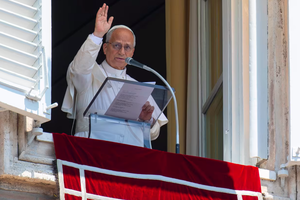
Pope Leo, while urging consideration of the “good of the beloved Venezuelan people,” also called for guarantees of the country’s sovereignty. Speaking to the diplomatic corps on Jan. 9, he lamented what he called, “diplomacy of force,” in an appeal for dialogue rather than military intervention.
“In our time, the weakness of multilateralism is a particular cause for concern at the international level. A diplomacy that promotes dialogue and seeks consensus among all parties is being replaced by a diplomacy based on force, by either individuals or groups of allies,” he said.
What Is Just War Doctrine?
“Just war theory traditionally has been formulated as a set of moral principles that act as conditions that need to be met in order for the decisions entailed in launching and prosecuting wars to uphold the requisites of justice,” E. Christian Brugger, a moral theologian, writes in the Register.
The Catholic just war tradition traces back to St. Augustine, who drew on Cicero and St. Ambrose, and was later systematized by St. Thomas Aquinas. In the modern era, the Second Vatican Council reaffirmed this tradition while placing greater emphasis on preventing war and strongly condemning weapons of mass destruction. The Catechism of the Catholic Church further develops the framework by treating war only as a last resort for legitimate societal self-defense, Brugger explains.
The criteria are divided into two parts: jus ad bellum (the justice of going to war) and jus in bello (the justice of acts within war). Of primary consideration when judging an act of war is whether an act of aggression can be deemed to have just cause — that is, whether it can be judged as correcting some form of injustice.
Trump’s Reasons for Removing Maduro?
In his statements following the capture of Maduro, Trump justified the removal by citing Maduro’s involvement in drug trafficking and narco-terrorism, emphasizing the need to stop drugs from entering the United States, citing the loss of life in the U.S. due to the drug trade.
In addition, he said that Venezuela had seized U.S. oil assets, causing financial losses to American companies, referring to former president Hugo Chávez’s nationalization of the country’s energy sector in 2007 — a policy that Maduro, Chávez’s successor, perpetuated. Righting this wrong, Trump said, would help finance the revitalization of Venezuela, undoing the damage done to the economy.
“We’re going to have our very large United States oil companies, the biggest anywhere in the world, go in, spend billions of dollars, fix the badly broken infrastructure, the oil infrastructure, and start making money for the country,” Trump said.
He also made the case that removing Maduro was necessary to assert U.S. dominance in the region, invoking the Monroe Doctrine, formulated by President James Monroe more than 200 years ago to oppose European interference in the Western Hemisphere.
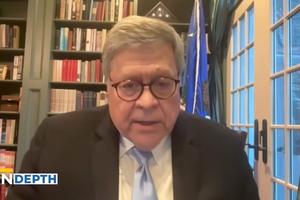
Former U.S. Attorney General Bill Barr, appearing on EWTN News In Depth, said that the Trump administration’s case for removing Maduro was persuasive, and could be justified under Catholic just war doctrine, arguing that the operation was necessary to defend the United States and protect its citizens.
“Here, you’re dealing with a regime that has been preying on the United States,” Barr said, adding that U.S. authorities had indicted the country’s leader and would present evidence showing he deliberately sought to weaken and harm the United States.
Barr blamed the leader for “tens of thousands of Americans — probably hundreds of thousands after all this time — of American deaths,” calling it a deliberate attack on the country. He said U.S. “vital interests” were also at stake, alleging the regime provided a base for Hezbollah, assisted Iran in manufacturing weapons used against U.S. allies, and allowed Russia and China to establish a presence in the country.
Meeting the Criteria
Time will tell if Trump’s move against Maduro will prove to be a political and strategic success. Meanwhile, an assessment of the moral and ethical basis for Trump’s use of military force, through the lens of just war principles, points to numerous shortcomings, Catholic analysts told the Register.
Greg Reichberg, a professor at the Peace Research Institute Oslo, who, since 2016, has served as a member of the Vatican’s Pontifical Academy of Sciences, specializes in philosophy and its application to military ethics. He’s also the author of the 2017 book, Thomas Aquinas on War and Peace.
The U.S. intervention in Venezuela, he told the Register, cannot be justified according to Catholic teaching, because, he said, the justification offered by the president doesn’t meet the “just cause” criteria.
Reichberg questions the legitimacy of Trump’s stated reasons for removing the Venezuelan president. For one, he said, the president’s claim that the operation was necessary to protect the U.S. from the illegal drug trade “has the appearance of a pretext.”
“They’re really stretching self-defense,” he said. “Maduro is responsible for very little of the drug trade.” While the U.S. State Department’s 2024 International Narcotics Strategy Report called Venezuela a “major transit country for cocaine shipments,” the report estimated the country’s share of the world’s cocaine trafficking overall at 10% to 13%, the Los Angeles Times reported. That same report also named Mexico as outlet as the “sole significant source of fentanyl.”
Similarly, Reichberg said, Trump’s argument that American petroleum assets had been stolen by the Venezuelan government didn’t amount to a legitimate just cause, either. Reichberg told the Register that the idea that war can be justified if it is waged to punish wrongdoing (such as stealing property), was an innovation of scholars who came after Aquinas, Francisco de Vitoria and Francisco Suárez. Punishing wrongdoing is no longer considered a moral justification for war today, he said.
“Waging war to recover allegedly stolen, taken property, that’s no longer considered a valid rationale because there are other remedies. There’s the International Court of Justice (ICJ). There are forums in which to take up these issues,” he explained. The ICJ is the United Nations’ primary judicial body, tasked with settling legal disputes between nations and providing advisory services to UN agencies.
While Trump referred to the suffering of the Venezuelan people, he said, he did not effectively make the case that this was a humanitarian mission. If he had, Reichberg said, he would have indicated that there would be certain steps taken to improve their lives.
The crux of the problem, for Reichberg, however, is that the administration has cast the argument for intervention in terms he characterized as “hard-core political realism,” which he contrasts with a just war doctrine based on ethics.
“The advocates for this military engagement are not framing it in ethical terms,” he said. “Basically, political realism is the view that what matters in international relations are relations of power, and that ethics has no bearing within the international sphere.”
Edward Feser, a professor of philosophy at Pasadena City College, told the Register’s Edward Pentin that the Trump administration’s past rhetoric — framed in terms of relations of power rather than ethics — has made it hard to justify the U.S. intervention in Venezuela.
“The rhetoric from some in the administration, and from some of his defenders, goes well beyond anything that could be justified even in principle by just war criteria,” he said.
The president’s threats to annex Greenland and failure to rule out military action, he said, are “manifestly contrary to just war doctrine.”
“It would be naked aggression, nothing [other] than gangsterism,” he said. “Because the president and some of his allies engage in this sort of irresponsible rhetoric, it is very hard to take seriously the suggestion that they are concerned to act justly where war is concerned. They have done enormous damage to their own credibility on these matters and have no right to complain when critics question their motives.”
“They have, unfortunately, given the international community good reason not to believe what they say about the Venezuela situation.”
Daniel Philpott, a professor of political science at the University of Notre Dame who specializes in the intersection of religion and global politics, told the Register that Trump hadn’t provided a “just cause” to justify the operation.
While noting the human rights violations carried out by the Maduro regime, Philpott said, they did not rise to the level of injustice that would warrant overthrowing the country’s leader.
“Let us grant that Maduro was a thug,” he said, noting that he had prevented a fair election in 2024, barring opposition leader Maria Corina Machado from running as a presidential candidate and refusing to abide by the results that showed his opponent Edmundo González had won a clear victory.
“On that occasion and in previous years, Maduro jailed, exiled and killed scores of political opponents. His economic policies had driven the country into ruin, creating widespread poverty and severe shortages. And, of course, he is alleged to have been involved in drug trafficking,” he said.
Still, Philpott said, the bar is “very high” when it comes to determining when it is permissible, under just war doctrine, to invade another country and remove its leader. It would require, he said, something on the order of mass starvation or a large-scale civil war.
“All told, it is doubtful that such repression justifies intervention,” he said.
Joseph Capizzi, a professor of moral theology and ethics at The Catholic University of America, told the Register that the intervention in Venezuela fails the just cause test, in part, because too many reasons were given for seizing the country’s president.
“I think the removal of Maduro by the U.S. is hard to justify by the principles of just war theory,” he said.
“The changing rationale provided by the administration — he’s at the head of a drug enterprise, he’s a dictator, we want to exert hemispheric control, we’re recovering oil — all point to its own awareness this isn’t about a particular wrong to the U.S. that could satisfy the just cause rationale,” he said.
Catholic Teaching on Sovereignty
Philpott told the Register that central to just war doctrine is a respect for the sovereignty of nations.
“Sovereignty is the most basic norm of the U.N. system. The political independence and territorial integrity of sovereign states is at the core of the U.N. Charter. The Catholic just war ethic also accords great respect to the independence of states. This is why the core justification of war is self-defense, the guarding of a state’s sovereignty,” Philpott explained.
Philpott noted, however, that the right of sovereignty is not absolute under Church teaching. “It is conditional upon a state’s upholding of justice, which is grounded in human dignity,” he said.
Historically, he said the Church has made exceptions for respecting sovereignty.
“Pope Innocent X roundly condemned the Peace of Westphalia in 1648, which founded the sovereign states system in Europe and sundered an earlier continental unity based on common moral principles,” he said.
“In 2008, Pope Benedict XVI extolled the ‘Responsibility to Protect,’ a United Nations principle calling for intervention in countries in which large-scale human suffering takes place — as long as this intervention has the approval of the U.N. Security Council.”
But, he said, in this case, Maduro’s record of abuses, as noted above, didn’t rise to that level of injustice, and therefore, didn’t warrant, under Catholic just war doctrine, the violation of Venezuela’s sovereignty.
Barr, the former attorney general, has a different take on the sovereignty question. He said respect for sovereignty is grounded in the principle that people should be free to determine their own future. He argued that principle did not apply in this case, saying the regime had overturned the results of a free election and lacked popular legitimacy, citing mass emigration and polling data indicating the leader lost the country’s most recent election.
‘Reasonable Chance of Success’
Among the other criteria put forward by just war doctrine is whether a military action has “a reasonable chance of success.”
Early indications are mixed.
On Jan. 9, it was reported that the Venezuelan government had begun to release political prisoners. As many as 900 people are said to have been unjustly detained by the regime and charged with conspiring to overthrow the government or acts of terrorism. On the other hand, there were also reports that security forces had ramped up repressive tactics following Maduro’s ouster.
According, to Capizzi, it may prove “very good” for the Venezuelan people, but it’s not yet clear that the mission was successful, if success is understood to be measured as an end to their suffering.
“We’re a long way from that being the case,” he said.
The absence of a “just cause,” he said, could also have negative repercussions elsewhere around the world.
“A certain outcome of violating the principles of morality is that those principles are undermined. Any appeal to them against, say China or Russia, will be weakened by the obvious hypocrisy. Another way to put this in just war terms is that the act creates more disorder, and that is not good,” Capizzi said.
Philpott agreed, saying that it is “dubious” whether things will improve in Venezuela.
“The worst problem — the lack of democracy — is highly uncertain to be solved,” he added. “The U.S. is not planning to occupy the country and has said little about making new and fair elections a priority. The grounds for rendering an illegal intervention moral are largely absent,” he said.
Feser agreed, nothing that because Maduro’s regime is still in power, it would be hard to say that the operation has a chance of success.
“Are we going to send troops into Venezuela in order to remove it entirely? If not, exactly how are we going to ensure that they govern any better than Maduro himself did?” Feser asked.
“Until we know what the actual plan is — if there is one — we have no reason to believe there is a reasonable hope of success. And without that, a war cannot be justified by just war criteria.”