Just Wars and Unjust Regimes
COMMENTARY: What will be the Trump administration’s response to the regimes of Venezuela, Nicaragua and Cuba?
That war is almost always a calamity seems obvious. It was Ben Franklin who famously wrote that “there was never a good war or a bad peace,” but he said so in a letter written after the military victory and treaty that secured American independence, a conflict that he had wholeheartedly supported and worked to bring about.
Today there is much talk of war with Venezuela, and certainly, there has been criticism, including by Catholics, of the Trump administration’s efforts toward that country. Edward Feser was scathing recently in elucidating at great length why the administration’s actions fall short of Catholic conditions for a just war.
I am no canon lawyer nor a scholar on St. Thomas Aquinas, and I am not seeking to defend or excuse all or any actions per se by the Trump administration. And yet I am deeply troubled by the legalistic mindset that obsesses on what the Americans cannot say or do and seemingly ignores the nature of the regime in question. I also know enough about foreign policy to understand that governments often use one public explanation — say, fighting the drug war — when they are seeking to do something else: regime change.
Regime change by the United States in Latin America has a long, often ugly and controversial history. More recently, we saw the Clinton administration (1994) overthrow a Haitian regime to restore a legally elected president; President Bush overthrow the Panamanian regime of Manuel Noriega in 1989; and President Reagan remove the Marxist regime in Grenada in 1983.
One of these actions (Haiti) had U.N. approval and the others did not. But in all three cases, the Americans removed “unjust” regimes that had either ignored election results or, in the case of Grenada, had actually just overthrown and murdered the country’s previous leftist rulers.
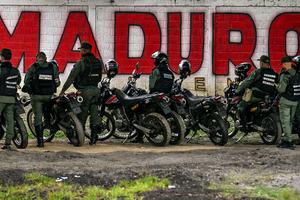
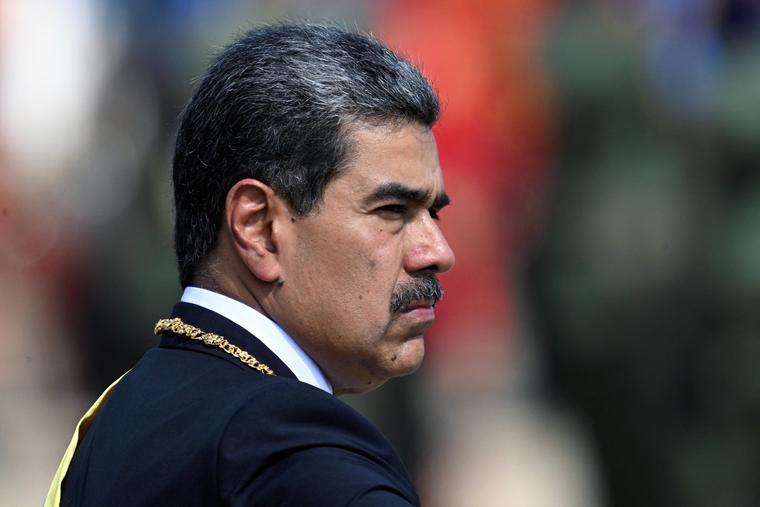
Venezuela today is, of course, very similar to the political situation in all three of those countries. Presidential elections were held in Venezuela in August 2024 and, by all reputable accounts, Nicolas Maduro not only lost, but lost overwhelmingly to an alliance led by diplomat Edmundo González.
The Maduro regime had done all it could to rig the elections, prohibiting the popular María Corina Machado from running, and yet still lost. But the regime thought — correctly so far — that it could brazenly get out of this dilemma through brute force and repression.
To understand the situation in Venezuela, one has to look at it within the context of two other countries — Cuba and Nicaragua. All three are leftist regimes, close allies and hostile to the United States, of course, but it is more than that. The regimes in Caracas and Managua are ideological and national security offspring of the communist dictatorship in Cuba.
Nicaragua’s Daniel Ortega has been in power (this time) for 17 years; the Chavez/Maduro regime has been in power for 26 years. The same regime — the Castro family/Communist Party/military amalgam — has been in power in Havana for 67 years.
Venezuela’s Maduro was not only trained as part of a communist cadre in Cuba; some consider him to have been an “asset” of Cuban Intelligence. The three dictatorships sustain and nurture each other, with the relationship between Cuba and Venezuela being particularly intimate.
These are unjust regimes in every sense of the word. Not only do they maintain themselves in power undemocratically — Cuba is a one-party state, of course — but all three oppress the Catholic Church to a greater or lesser extent (Nicaragua’s Ortega is particularly zealous and blatant in doing so while the Cubans and Venezuelans usually favor indirect methods).
All three have thousands of political prisoners (Venezuela has slightly more than Cuba right now) and hundreds of thousands of political exiles. All three rule through predatory economic practices favoring a ruling political elite. All three are traffickers in the human misery of their own impoverished and hungry citizens, Cuba especially has collapsed economically in the past five years. And all three regimes maintain power by force, by monopolizing the coercive power and violence of the state to rule, seemingly — if they can — forever.
I don’t know what the Trump administration will eventually do in Venezuela. Right now, the policy seems to be a quarantine on regime oil exports for the next couple of months to try to force Maduro — an illegitimate ruler like Noriega, Haiti’s Raoul Cédras and Grenada’s Hudson Austin — out of power. Maduro’s Cuban advisers are doing all they can to ensure that he perseveres and survives the pressure. Venezuela’s oil industry is in tatters but still supplies at least 40% of Cuba’s oil, part of which the regime sells for hard currency.
While some Americans fear that Trump will go too far in the Caribbean, many Latin Americans fear that he will not go far enough and that Maduro will endure.
Rome in the fourth century is very removed from our time. But it was then that St. Augustine of Hippo in his City of God compared unjust states to criminal enterprises: “Justice being taken away, then, what are kingdoms but great robberies?” These criminal bands can grow (perhaps like Maduro’s Cartel de los Soles) into states “not by the removal of covetousness, but by the addition of impunity.” Impunity reigns in these three regimes.
I bow before the learned Catholic sages who tell me that Trump, a non-Catholic, is in danger of waging an unjust war, or indeed that he is already doing so, in the Caribbean. But I also think of the Catholics (and non-Catholics) of Cuba, Venezuela and Nicaragua, enduring decades of misery and oppression at the hands of these unjust regimes, these criminal bands in power, condemned to a wretched existence with little hope, disarmed and distraught. These tyrants have honed their malevolent ability to use violence, propaganda, and manipulating the vagaries of the international system to perpetuate themselves in power. Who will liberate the people from this injustice?