Pope Leo’s First 100 Days
ANALYSIS: 6 Themes of a Papacy
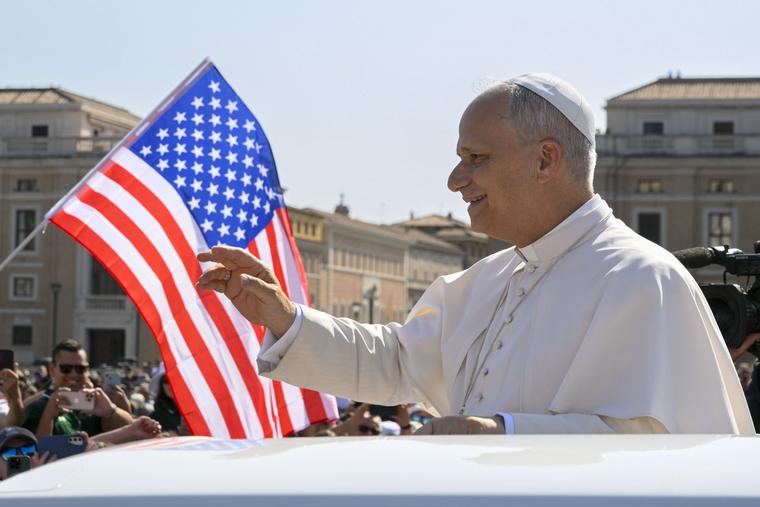
A focus on Christ, an emphasis on unity and a whole lot of baseball references. These have been some of the hallmarks of Pope Leo XIV’s first 100 days as pontiff.
The first American Pope’s words, gestures and decisions since his election on May 8, have given the Church insight into not only the man himself, but also the kind of papacy the 69-year-old Chicago native is aiming to have.
Of course, the most telling indicators of how Leo hopes to lead the Church, including who he taps to head the Vatican’s dicasteries and what he chooses to focus on in his major teaching documents, are yet to come.
But here are six emerging patterns and what they suggest about Pope Leo’s intended direction.
1. He’s embraced his Americanness.
When Pope Leo XIV spoke in Italian and Spanish but not English during his opening remarks from St. Peter’s loggia, some speculated that the Chicago-born prelate was intent on downplaying his Americanness. But that’s not how it’s played out.
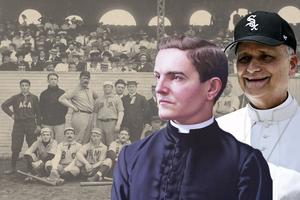
Not only has the first American Pope spoken occasionally in his mother tongue during his audiences and addresses since then, but he’s also connected with members of his American flock in any number of ways — from putting on a White Sox hat after a papal audience to receiving (and later) eating some Chicago pizza in St. Peter’s Square. Most recently, Pope Leo XIV shared a video message with the American-founded Knights of Columbus at their annual conference. Even international media refers to him shorthand as “the US pope.”
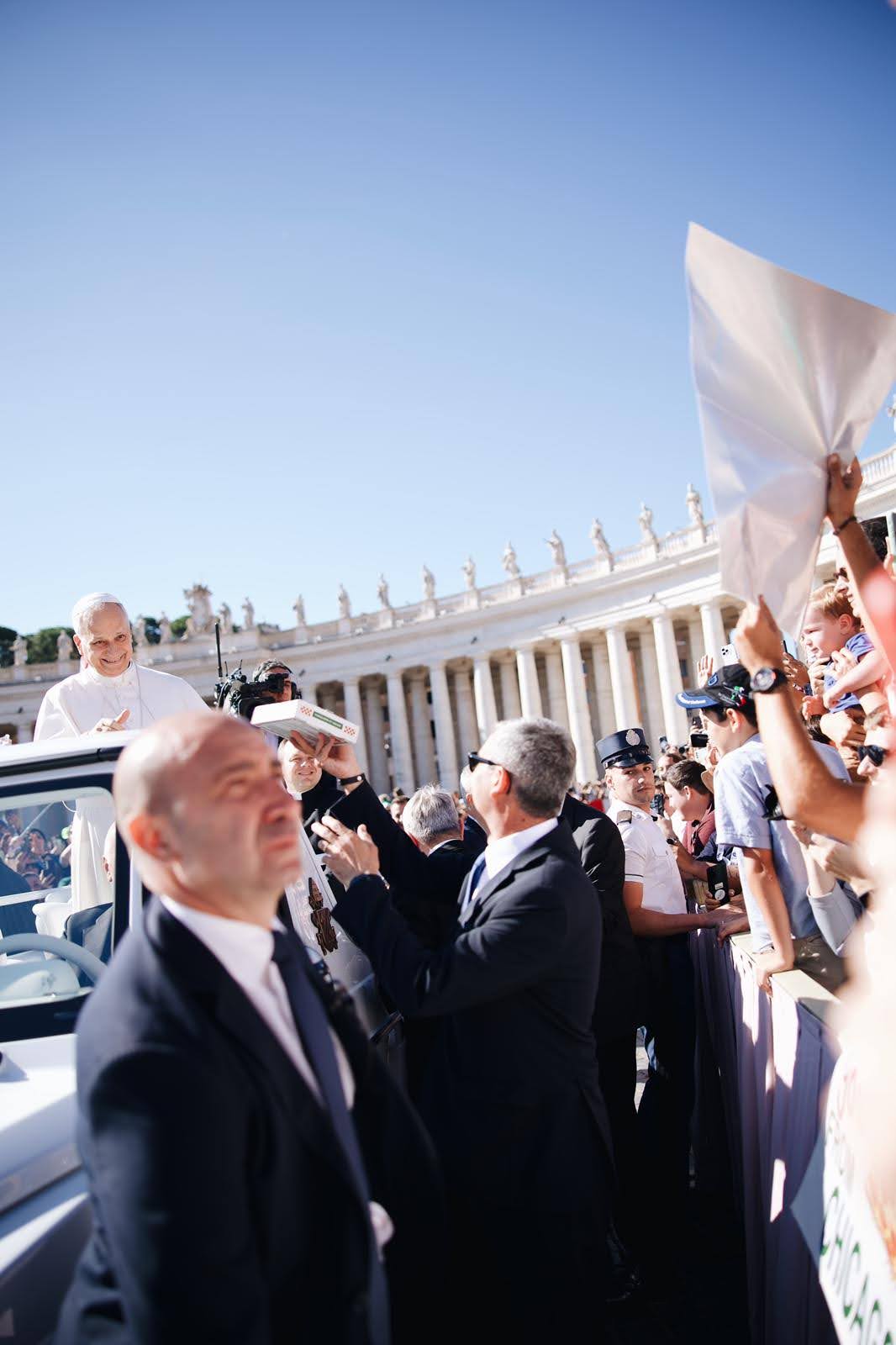
The dynamic has certainly made for any number of viral memes, but it also points to a deeper truth: Even while his time in Peru gives him a more international makeup, Pope Leo knows the United States and is eager to be close to its Catholics.
This suggests possibilities on two critical fronts: the improvement of dynamics between the cash-starved Vatican and the well-resourced U.S. Church, and also impactful papal interventions into American sociopolitical life. The latter may be especially important, given Leo’s stated desire to ensure that artificial intelligence works for the common good and the U.S. government’s current focus on deregulating the industry.
2. He’s made gestures aimed at Church unity.
It’s no secret that Pope Leo inherited a deeply divided Church. His first 100 days as Pontiff have been marked by symbolic gestures aimed at bringing different groups back into the fold — perhaps especially more conservative-minded Catholics who often felt overlooked or misunderstood by Pope Francis.
Some of these moves have included restoring papal traditions eschewed by Francis, such as wearing the red mozzetta or vacationing at Castel Gandolfo. Others have involved reaching out to those who were often at odds with the late Pontiff, such as Cardinal Raymond Burke or traditionalists taking part in the Chartres pilgrimage. And at his inaugural Mass, Leo spoke of the need for “a united Church, a sign of unity and communion.”
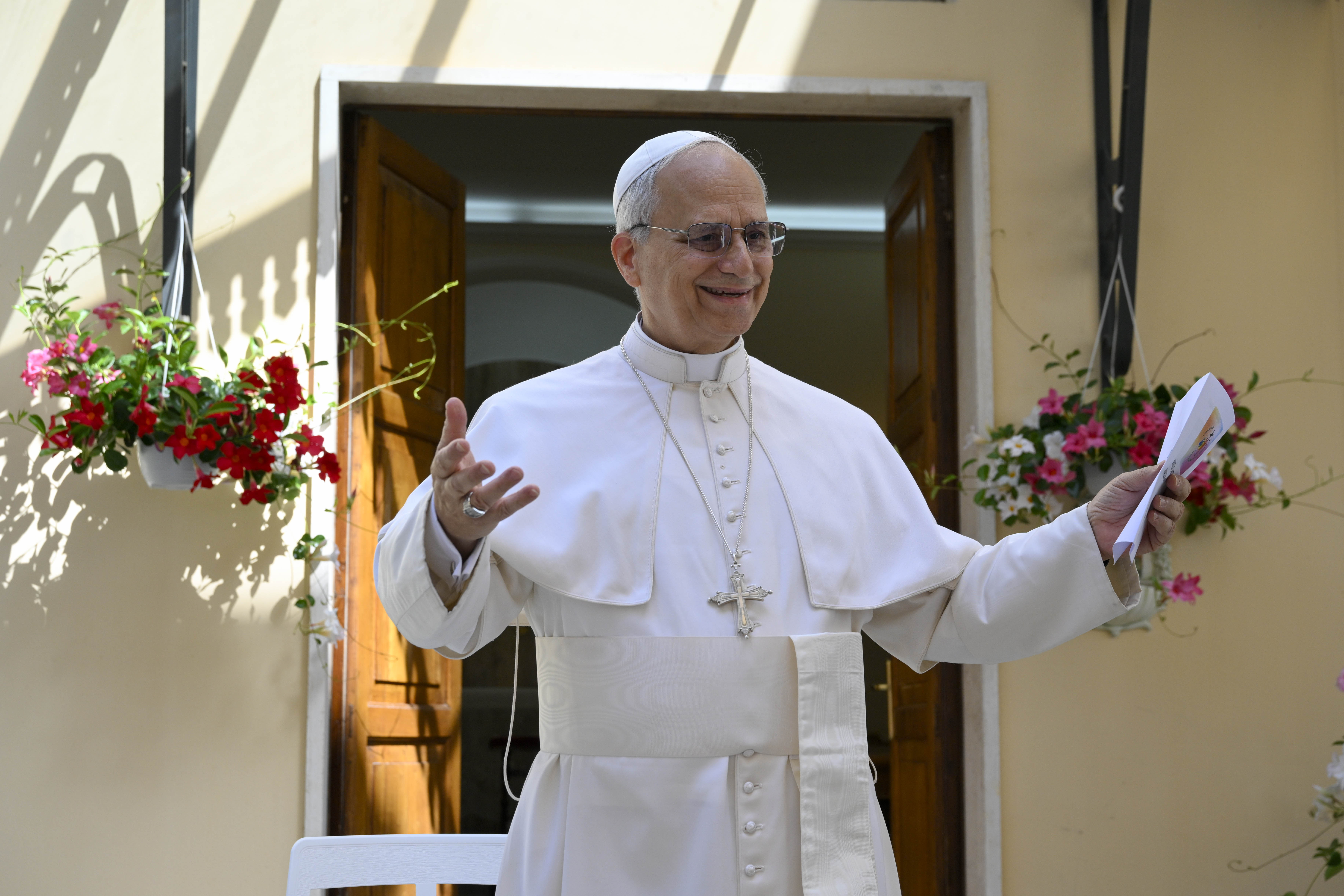
It’s unclear if Leo’s unifying symbols will be matched by more consequential unifying actions, for instance, in the realm of doctrinal emphases and personnel. But there’s no denying these overtures have been a feature of Leo’s papacy thus far, indicating his awareness of just how fractured the Church’s communion seems to be.
3. He’s continuing with Pope Francis’ signature reform.
While Pope Leo has offered a different leadership style than Francis, he’s also clearly moving forward with some of the late Pope’s priorities. For instance, those who bet that “synodality” would be defunct after Francis’ death likely lost a lot of money when Leo spoke of a “synodal Church” in his very first address as Pope.
Since then, the new Pope has made frequent reference to synodality in his speeches and addresses, describing it as an overarching “attitude” that promotes “authentic participation and communion” in the Church. He’s also authorized the creation of new synod study groups on the liturgy and episcopal conferences, and the Vatican’s synod office has released a guide for the next three years of synodal “implementation” under his watch.
What’s clear is that the synodal reforms initiated by Pope Francis will not be stopping under Pope Leo. What remains to be seen is how the new Pope understands the still-somewhat ambiguous concept and how the accomplished canonist thinks synodality should, if at all, reshape the Church’s structures and processes.
4. He’s avoided stirring up controversy.
When Jannik Sinner met Leo in the Apostolic Palace in mid-May, the Italian tennis phenom asked the new Pope if he wanted to hit a few balls around. Looking at the priceless artwork around them, Leo responded with a chuckle, “We’ll break something; better not to.”
The moment captured Leo’s careful and deliberate disposition — a sharp contrast to his predecessor’s famed “make a mess” approach. Indeed, within his first 100 days as Pontiff, Francis had already stirred things up with comments like “Who am I to judge?” regarding a same-sex-attracted priest and norm-breaking gestures like washing the feet of women and non-Christians on Holy Thursday.
By contrast, Leo seems to be studiously avoiding generating controversy, deferring to the papal office rather than seeking to redefine it. It’s a tendency we can expect to continue forward in his pontificate.
5. He’s allowing the “liturgy wars” to play out at the local level.
A major question upon Leo’s election was what he would do with Traditionis Custodes, Pope Francis’ document calling for the restriction of the traditional Latin Mass (TLM). But instead of aggressively enforcing the document or reversing it, Pope Leo appears content to let local bishops decide Traditiones Custodes is, or isn’t, enforced in their dioceses.
For instance, he’s granted Bishop Michael Sis’ request to allow the TLM to continue at a parish church in the Diocese of San Angelo, Texas. On the flip side, Archbishop Edward Weisenburger’s decision to move forward with eliminating the TLM from 13 parishes in the Archdiocese of Detroit just a few months after his arrival in the Motor City indicates that there likely isn’t any Vatican dictate to hold off on applying Traditionis Custodes.
Giving bishops greater autonomy regarding the TLM would certainly be a change from the Francis approach. But it also wouldn’t be a return to the Benedict XVI era, when any priest could celebrate the TLM. Instead, it’d be more similar to how things were under St. John Paul II.
Perhaps Leo has in mind a grander solution for resolving the ever-divisive “liturgy wars.” His apparent love for beauty and reverence in the Mass has given many hope that he will be sympathetic to those drawn to more traditional liturgies. And the fact that a high-ranking Vatican figure like Cardinal Kurth Koch, prefect of the Dicastery for Promoting Christian Unity, has publicly stated he hopes that Pope Leo takes a more open approach to the TLM is an indication of at least a change of climate in Rome. But for now, the Holy Father seems content to defer to local ordinaries and let access to the TLM play out accordingly.
6. He’s playing the role of international “bridge-builder.”
Overcoming division hasn’t just been a focal point of Leo for the Church; it’s also been a throughline of his engagement with the major challenges facing the world.
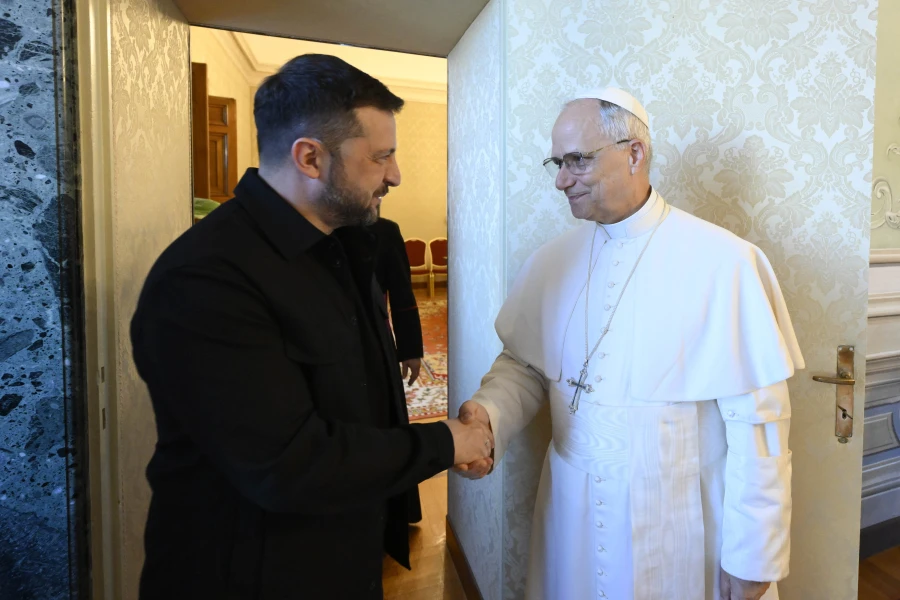
The new Pontiff has already embraced a “bridge-building” role, for instance, in the Ukraine-Russia conflict, both meeting with Volodymyr Zelenskyy at the Vatican and speaking with Vladamir Putin by phone. He’s also played an active role in the war in Gaza, frequently calling for peace in his Sunday Angelus address. And while the world seems to be locked into something of an AI arms race, Leo is positioning himself to be a moral authority on the topic, possibly hoping to inspire some kind of internationally agreed-upon ethical framework. Even American Vice President JD Vance said that guidance from the Pope on AI would be one of “the most profound and positive things” Leo could offer.
Undergirding Leo’s social engagement is a vision of the Holy Spirit’s capacity to help humanity overcome fear and fragmentation, as he said on Pentecost Sunday, with the Church serving as a leaven of unity, communion and fraternity. Leo’s focus on Christ-centered community isn’t just a lofty idea, but is borne out of his own experience as a member of the Augustinian religious order — and seems likely to be a key, underlying motif throughout his papacy.
- Keywords:
- 'pope leo xiv'