Lenten Traditions You Should Know From Europe and Africa
The global reality of the Church translates into a variety of Lenten practices. Read on to learn about more traditions that the Register discovered.
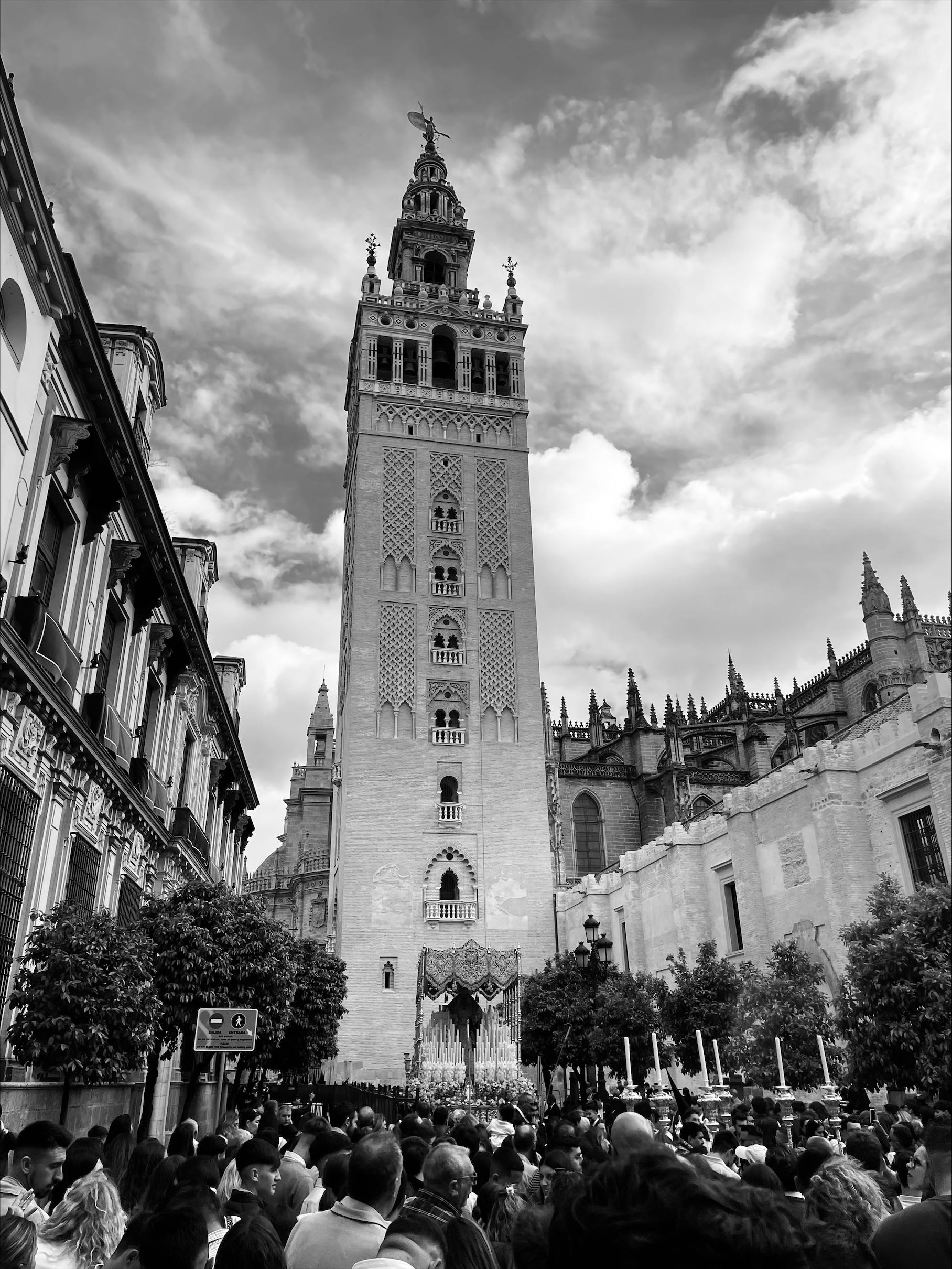
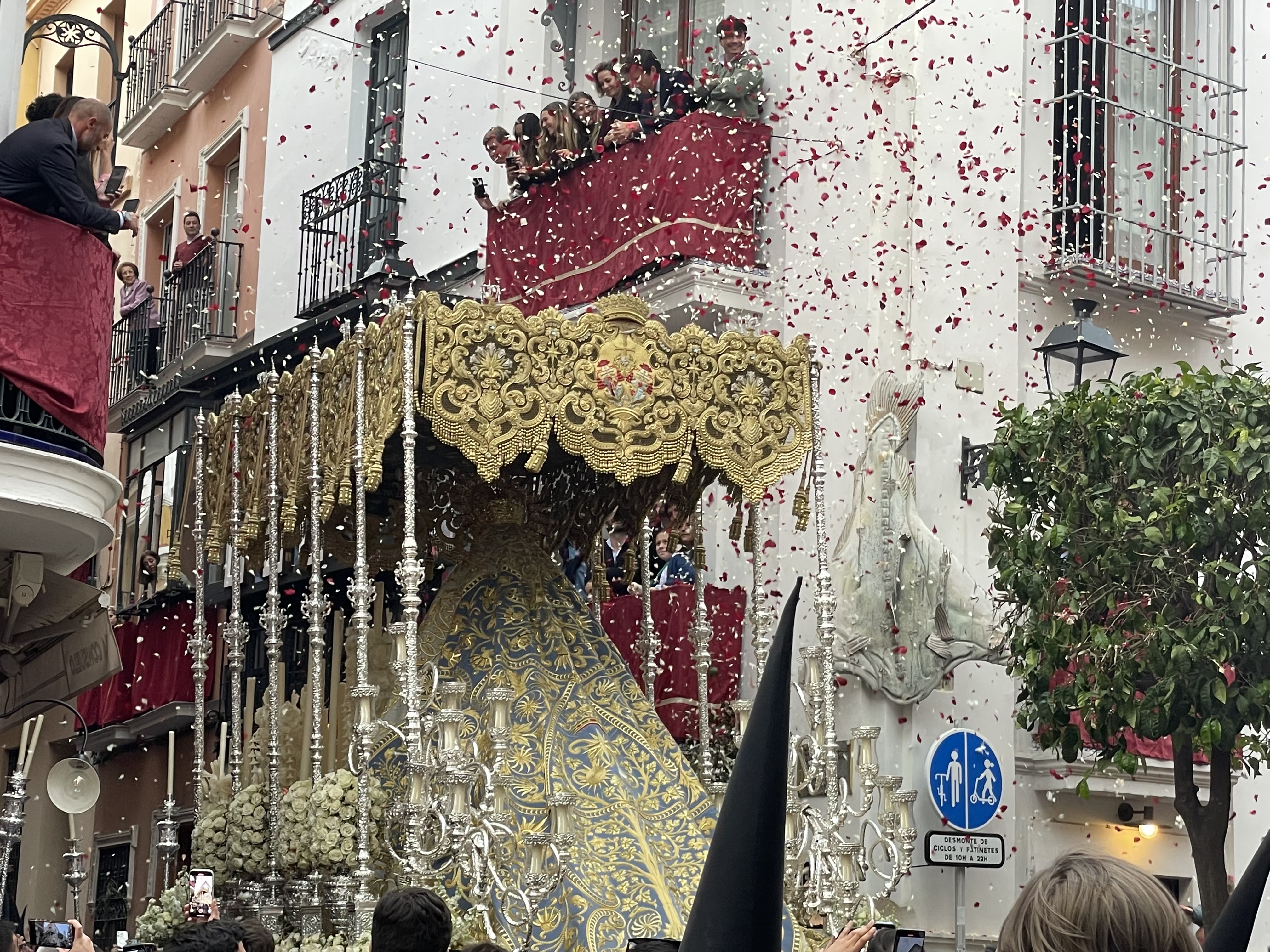
Pasos (floats) hold lifelike wooden sculptures of Jesus or the Virgin Mary with individual scenes of the Passion. Some of these sculptures are hundreds of years old and are considered artistic masterpieces.
Welcome to Seville, an ancient Spanish city where the faithful have been holding Holy Week processions since the Middle Ages.
“I lived in Seville for two years,” said Maria Rudloff, mother of four living in Scarsdale, New York. “One of the things that impressed me the most were the pasos. The statues in these floats were made of wood, wax and wire and were decorated with flowers. The statues have clothes which are richly embroidered. The locals have tremendous veneration for these figures.”
According to Rudloff, every neighborhood has its own float. Parishioners from each neighborhood spend all year preparing for the Holy Week procession.
“For them, it’s a sacred journey of reflection, penance and spiritual renewal,” she said.
Many pasos are richly decorated using gold or silver ornaments. Mary is usually depicted as weeping for Jesus or holding him in her arms.
The floats are organized by cofradias or religious brotherhoods. There are around 70 cofradias in Seville, and each has its own sacred image.
“Every neighborhood in Seville has their own cofradias. It is their responsibility to take out their own sacred image and bring it out in procession during Holy Week. Everyone venerates these images,” said Rudloff.
Hooded men in these processions are called nazarenos, who wear robes and cone-shaped hoods called capirote. The nazarenos often walk barefoot, carrying crosses, or dragging chains as a sign of penance for sins.
Another interesting aspect of the Holy Week processions in Seville is the music.
“Every parish has its own bands of music. They walk out with trumpets when they take the images out in procession. When I lived there, you could hear them rehearsing all year,” said Rudloff.
Every procession goes from the home parish to the Cathedral of Seville and back. It takes between four to 14 hours to bring the pasos to the cathedral, depending on the neighborhood’s location.
“Every neighborhood has its own image. It is amazing to see how Seville is united by these traditions,” she said. “Outsiders may come to Seville and see these processions as a circus, but for the locals of Seville, they do this with great devotion.”
Catholics around the world may not observe Lent with such grand displays of piety, but standard traditions can be found worldwide: from rich meals on Mardi Gras and fasting on Ash Wednesday and Good Friday to meatless Fridays — all leading to a joyous Easter Sunday.
And the global reality of the Church translates into a variety of Lenten practices. Read on to learn about more traditions that the Register discovered in Europe and Africa.
Lent in France has been described by French mother of six Frederique Kruger as a time of “sobriety, spiritual life and festive traditions.”
Kruger, who lives with her family outside of Paris, notes that parishes in France often create their own Lenten practices: spiritual retreats, increased prayer time, rigorous fasting in small groups, prayer groups centered around a particular teaching, solidarity collections and specific charitable actions.
“In recent years, fasting, which had fallen somewhat out of use between the 1970s and 2000s, seems to be making a comeback,” said Kruger. “While abstinence from meat on Fridays remains a common practice, some of the faithful are now choosing to go further, voluntarily adopting more austere days. The goal is twofold: to make oneself more available for prayer and to offer up special intentions.”
Popular traditions leading up to Lent are noticeable in different regions of France.
“As such, Mardi Gras remains present in many French regions. For example, in Dunkirk, in the north, the festivities last from Monday to Ash Wednesday, while in Nice, in the south, the carnival lasts a whole week. This carnival is undoubtedly less exuberant than that of New Orleans, but the procession with floats is famous, and anyone who wants to can dress up,” she said.
Because of the strong culinary culture in France, the time before and during Lent impacts what is eaten.
“Mardi Gras is an opportunity to enjoy pancakes, waffles and carnival doughnuts, made from ingredients considered ‘fatty’ and therefore rarely eaten during Lent: eggs, butter and flour. These specialties have different names depending on the region: oreillettes in Provence, merveilles around Bordeaux, beugnots in the Vosges, risoles in the Jura mountains, rissoles in Savoie, and bugnes in the Lyon region,” said Kruger.
In some regions, these celebrations are not limited to the beginning of Lent. They reappear halfway through the 40 days.
“Mi-Carême (which literally translates as ‘Mid-Lent’) is a traditional carnival celebration held in the middle of Lent. It marks a symbolic break from penance and sobriety,” she said.
While this break has an obvious psychological function, its origin also is practical.
“At a time when fasting and abstinence were strictly observed, certain perishable foods, particularly eggs — the main source of animal protein for a large part of the population — could not be stored for more than about 20 days. Mid-Lent thus made it possible to avoid waste, while offering a moment of respite in the middle of a demanding period,” said Kruger.
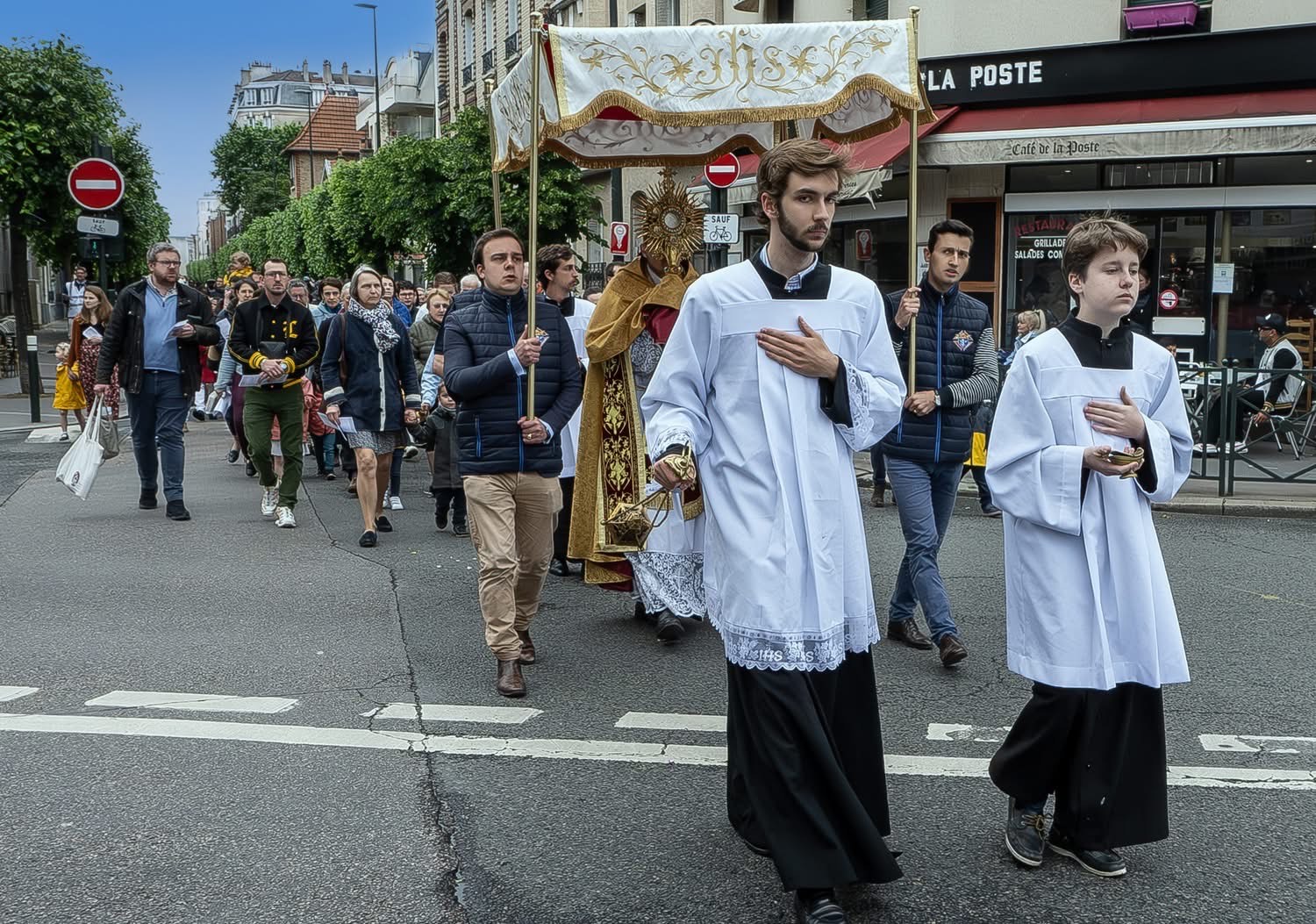
Ahead of Easter Sunday, the Triduum occupies a central place for practicing Catholics, who look ahead to the Resurrection feast.
“Easter Sunday is a beautiful celebration and a true family holiday, where grandparents and cousins often gather around a traditional meal that often includes roast leg of lamb and chocolate desserts,” Kruger said. “True to custom, children go on a hunt for chocolate eggs in the gardens.”
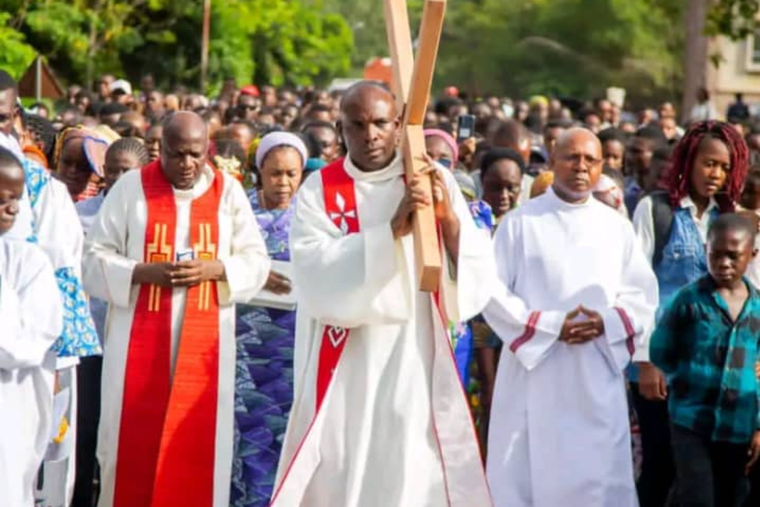
Sister Justine Namavu of the Congregation of the Daughters of Mary lives on the outskirts of Bukavu, a city in the eastern Democratic Republic of the Congo (DRC), situated on the southwestern shore of Lake Kivu, bordering Rwanda.
Sister Justine related DRC Lenten traditions that follow standard Catholic rubrics.
“All begins a week before Ash Wednesday, with an announcement asking Christians to bring in the palm branches from the previous year that they have kept in their homes to be used in the preparation of ashes,” said Sister Justine. “On Ash Wednesday, the imposition of ashes takes place among Christians gathered in various places of worship.”
At hospitals, the traditional imposition of ashes is offered to patients and to the staff who are unable to attend services during the day due to work commitments.
“Every Friday during Lent, the Way of the Cross is organized throughout the parishes. Christians and sometimes non-Christians participate with devotion,” said Sister Justine.
During this period, priests organize visits to administer the sacrament of reconciliation. Priests even visit families at home to administer this sacrament to the elderly and the sick.
“It is also an opportunity to organize catechesis for reintegration into the various sacraments of the Church, that is, for Christians who had abandoned the sacraments for various reasons,” she said.
Retreats are organized by various Catholic movements according to a pre-established schedule and offered in schools and other Catholic institutions.
“After Palm Sunday, before the Easter Triduum, the sacraments of reintegration are conferred on Christians who have completed catechesis in the parish,” she said.
Given the size of the diocese, the Mass of the blessing of holy oils (chrism Mass) is organized at the beginning of the week before Holy Thursday.
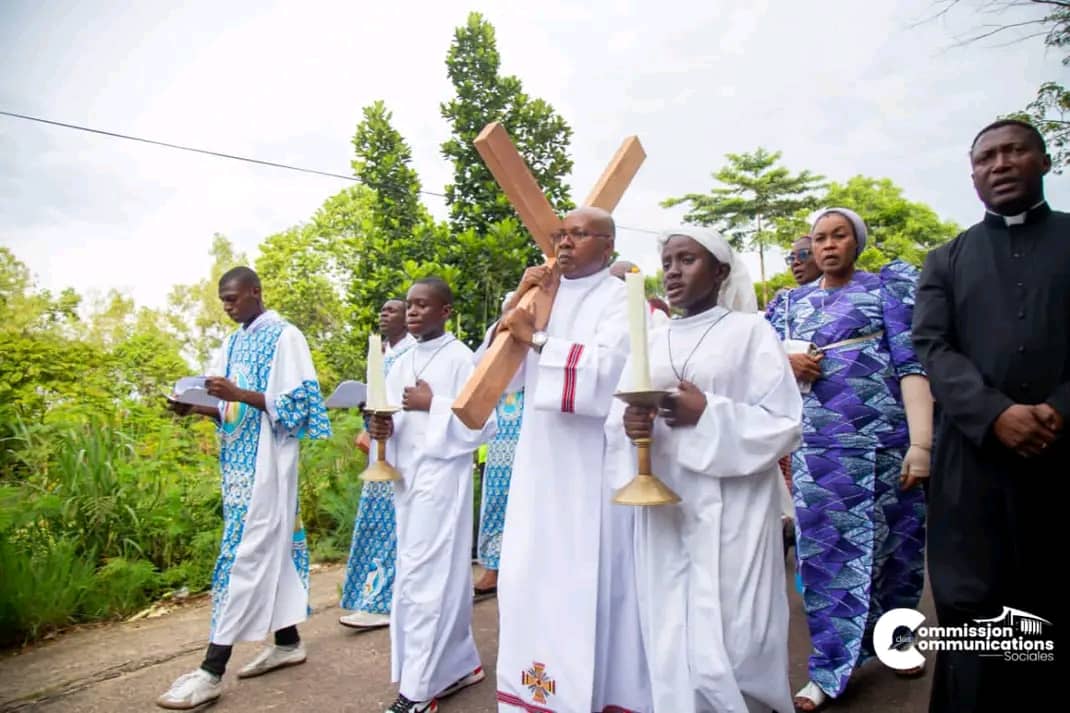
Because Bukavu is considered a dangerous region due to periodic armed conflict between government forces and armed groups, all Lenten activities depend upon the security in the region.
But all points the the hope ahead.
As Sister Justine said, “On Good Friday, there is the veneration of the Holy Cross after the solemn Way of the Cross. On Holy Saturday, there is the Easter vigil at the parish. During these Masses, the priests confer the sacraments of baptism on adults who have completed catechesis.”