Making a Fruitful Lent Blossom All Year
As good Lenten practices build our Christian life, why stop them once Easter arrives?
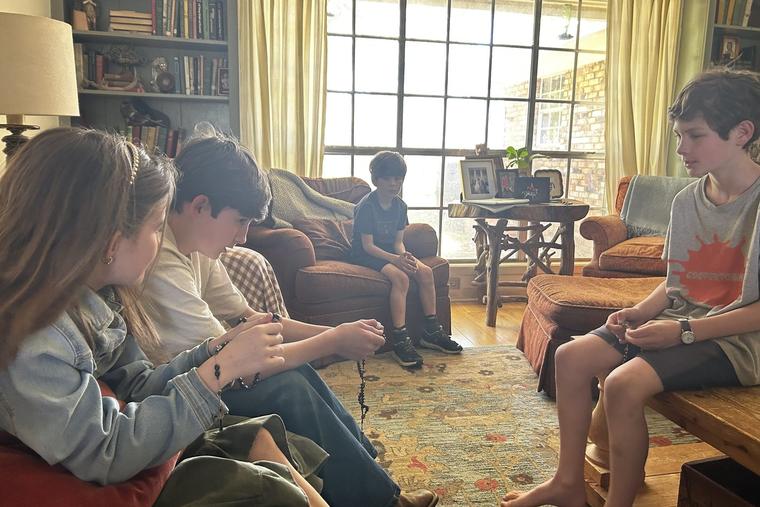
Five years ago, Tim and Emily Malloy resolved to accept their pastor’s challenge to families to pray at least a decade of the Rosary every night during Lent. They’d say the decade with their four young children before bedtime, then finish the other four decades themselves later.
“The fruit that this practice bore was extraordinary,” said Emily, a frequent Register contributor who is floral and food editor of the faith-centered lifestyle website Theology of the Home. So much so, the Mississippi couple decided to continue the prayer practice beyond Lent, gradually adding additional decades until the family’s nighttime routine was a full Rosary.
“It established a beautiful routine as a family, but it provided us with the opportunity to teach our children certain postures and expectations for prayer that eventually spilled over into the Mass,” Emily explained. “The children began to understand that the Mass and prayer were times to behave and be as still as they could be (relatively).”
Lenten practices such as these can lead to a fruitful Lent and continuously blossom in unexpected ways all year.
During Pope Leo XIV’s Lenten retreat, Bishop Erik Varden of Trondheim, Norway, who Pope Leo asked to preach a weeklong Lenten retrteat for the Roman Curia this year, made a point of presenting Christian life as a “continuous Lent” oriented toward Christ’s victory over death — and toward a hope of glory that is already hidden within present trials.
As good Lenten practices build our Christian life, why stop them once Easter arrives?
Father Chas Canoy, pastor of St. John the Evangelist Church in Jackson, Michigan, advises noticing Lenten practices that are bearing good spiritual fruit.
“Was it the one extra daily Mass per week? Was it your weekly holy hour in adoration? Was it the daily Rosary?” he asked. “Wherever you noticed greater divine intimacy may be the very thing you should continue practicing regularly for your dedicated time with God.”
Emily Jaminet, a mother of seven, author, speaker, and national executive director of WelcomeHisHeart.com, an apostolate that promotes devotion to the Sacred Heart of Jesus, told the Register that she and husband, John found Lent (and Advent) motivated them to continue the daily Rosary year-round.
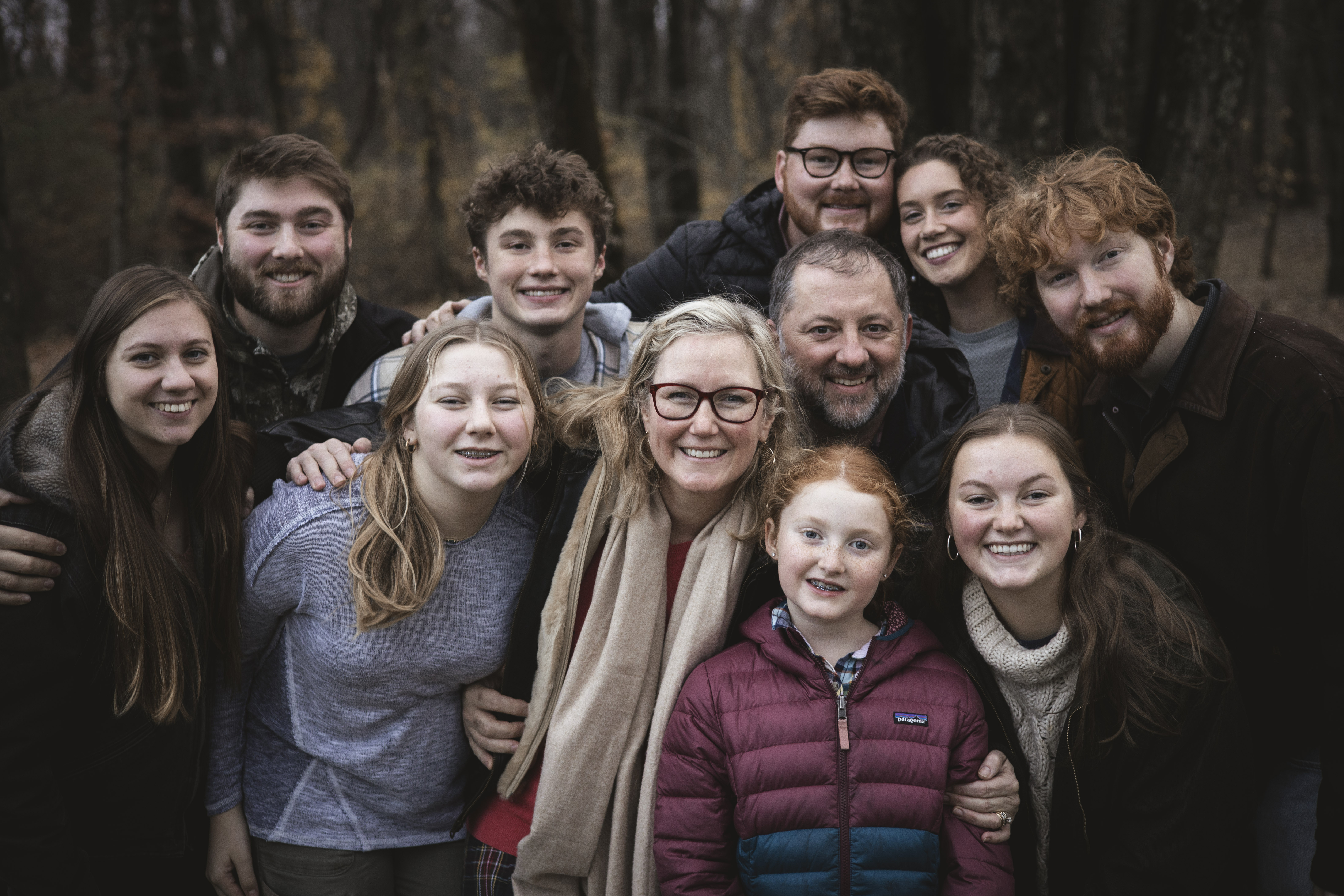
“We found that this is a powerful practice and it bears so much fruit,” Jaminet explained. “We have a better evening when we end our day with the Rosary. Our 10-year-old has requested that we continue to pray the Rosary every night because our family is more peaceful before we go to bed.”
Another important Lenten practice for the Ohio family that continues throughout the year is “talking about our faith, making sure especially the children know the importance of it, sharing inspiring stories of the lives of the saints and understanding the gospel,” Jaminet says. “That involves storytelling, talking about the saints, about the good things at the parish, people coming into the Church.”
“As parents, we need to have spiritual conversations about the faith with our children, and this isn’t just for Lent,” she says. Blossoming needs to continue all year, she emphasized.
Also tailor-made for continuation of a Lenten practice perfect for every day of the year is “initiating kindness,” according to Jaminet. She explained that often we react to other people's kindness; but “in my house we discuss ‘be the one’ to start the kindness, especially at school and when interacting with others.”
Years before becoming a priest, Msgr. Charles Pope, a dean and pastor in the Archdiocese of Washington, D.C., said he decided to start going to Mass on Fridays during Lent.
“I began to discover I really liked Mass and going to daily Mass,” the Register columnist recalled. “So I started increasing to twice a week. Eventually I just became a regular daily Mass communicant.”
Since virtues started in Lent can continue to build up, another carryover is going to Mass more regularly if you can reasonably do it, Msgr. Pope said. “That's an example of something that can open us up to a more stable virtue in our life that's going to always be good,” he noted, “something that we add to our life.”
Msgr. Pope adds the example of somebody who gives a certain amount of money to the poor during Lent.
“Then you come to discover that you don't really miss the money and can continue to be good to the poor as long as finances permit,” he said. “It develops in you a good habit.”
We establish these habits, he emphasized, “and discover that these are things that we can reasonably continue doing.”
In this vein, the Jaminets now continue eating at home through the year to save money and share more family meals. Jaminet said a few years ago she gave up “drive-through coffee” for Lent —“And it has stuck!”
“I realized that I didn't need it, I just wanted it. This allowed me to make sacrifices and brew it at home — which was a sacrifice — and helped me to save money to do good in other places.” As well as at home.
Jaminet shared one act of penance that she began last Lent that has been especially fruitful for her family: making a hot breakfast every day.
“That's the way that we have started together. We say our morning prayers, talk about our day, and we have a nice hot breakfast. It's hard to make breakfast during the week, but it has been amazing,” she said.
“It has changed my home,” Jaminet added. “I know the kids are well fed. I’m making food that is helping them get through the day. We also have no technology. You can’t be on your phone [at the table]. It has been a beautiful practice that started a year ago.”
A further benefit: “If I’m willing to sacrifice and do that act lovingly, then they feel the love and they know that you made the effort. It really was penance for me, but it was a total blessing that has been really powerful.”
In a similar way, Msgr. Pope points out how some people find it hard pray the Rosary, “but they made a commitment to pray every day and they've come to discover that they find it soothing and helpful, and they can continue not so much out of duty as much as just out of this is something that was a gift to me from Our Lady.”
In continuing these practices begun in Lent, he said, “[I]t’s of God because you feel the grace, you want to do it. And that’s a beautiful gift to receive from God, adding something to my spiritual life.”
Among the possibilities, Msgr. Pope mentioned taking on some spiritual reading for Lent.
“[S]ome people begin to discover they really miss just sitting down with a book and reading it” instead of looking at the quick, flash items on the Internet, he said. But when people start to engage in reading about the saints, or good reading on biblical passages, for a Lenten practice, “they begin to discover, I really miss being curled up with a book quietly reading.”
The practice of continuing such practices beyond Lent typically happens more with things one takes up, rather than gives up.
“There may be a good reason not to give up something forever,” he said, “but there often are many good reasons to continue on with habits you form during Lent.”
- Keywords:
- lent
- lenten sacrifices