Meet the Real Priest Who Consulted on ‘Wake Up Dead Man: A Knives Out Mystery’
Father Scott Bailey says the Blockbuster film perfectly encapsulates the complex spirituality of the priesthood.
Editor's Note: This story contains spoilers.
Movies — along with theater — have long interested Father Scott Bailey, a priest of the Archdiocese of Denver. So when acclaimed Hollywood director Rian Johnson called him up asking for advice on the development of his new film, Wake Up Dead Man: A Knives Out Mystery, Father Bailey jumped at the chance.
Johnson, known for films such as Looper and Star Wars: The Last Jedi, once considered himself a committed Christian, but is not a Catholic. For his new film, which revolves heavily around Catholicism, Johnson wanted to get the details right — but more than that, he wanted to deeply understand the lifestyle, thoughts, and spirituality of real priests, Father Bailey said.
The third installment in the blockbuster Knives Out franchise of murder mysteries, Wake Up Dead Man spent a few weeks in theaters before hitting Netflix on Dec. 12. It ended its first week as the top movie on the streaming service, with 20 million views in its first three days. It’s generally garnered positive reviews from secular critics, as well as from several Catholic commentators.
Father Bailey, pastor at Denver’s Risen Christ parish, had long known that a couple of his parishioners were related to Johnson, who grew up in the Mile High City. When Johnson approached his Catholic family members asking for help writing his film, he got connected with their pastor, Father Bailey — a meeting that blossomed into a fruitful partnership.
Throughout the course of the film’s production, which took several years, Johnson sent drafts of the script to Father Bailey for feedback. The priest had a lot to say about Johnson’s first draft, offering some major, big-picture criticisms along with smaller suggestions: the colors of liturgical vestments, for example, or suggesting the use of the title “Monsignor” rather than “Reverend.”
Father Bailey continued offering counsel as Johnson developed the script, and also got the opportunity to have some substantial conversations with actor Josh O’Connor — who grew up Catholic — about God, and about Father Bailey’s experience in priestly ministry.
For his part, Johnson is no longer religious, and his socially liberal views are often readily apparent in his films. But Father Bailey said he was nevertheless appreciative of Johnson’s respectful and sincere approach to learning about Catholicism. (Johnson expressed appreciation for Pope Leo XIV’s recent address to filmmakers and actors at the Vatican, and has said that he hopes the Pontiff will watch his film.)
“[Johnson’s] open about the fact that in his 20s, he would have said that he shaped his life around Christ. I haven’t heard too much of his story about why that changed, but for him, there was something very sincere about it at one point. I think he has an appreciation for the sincerity of those who are believers,” Father Bailey commented.
As the film opens, we meet Father Jud Duplenticy (O’Connor), a young Catholic priest and former boxer with a heart for Christ who struggles to control his aggression and anger.
His bishop sends him to serve as an associate at a parish in upstate New York, where the pastor, Msgr. Jefferson Wicks (Josh Brolin) turns out to be a bombastic and vulgar man who has built a cult of personality around himself and relishes the opportunity, during his homilies, to berate and shame his parishioners personally for their sins.
Msgr. Wicks also goads and torments Father Duplenticy, even as the younger priest tries to make a sincere effort to connect with and pastorally accompany several of the church’s most engaged parishioners.
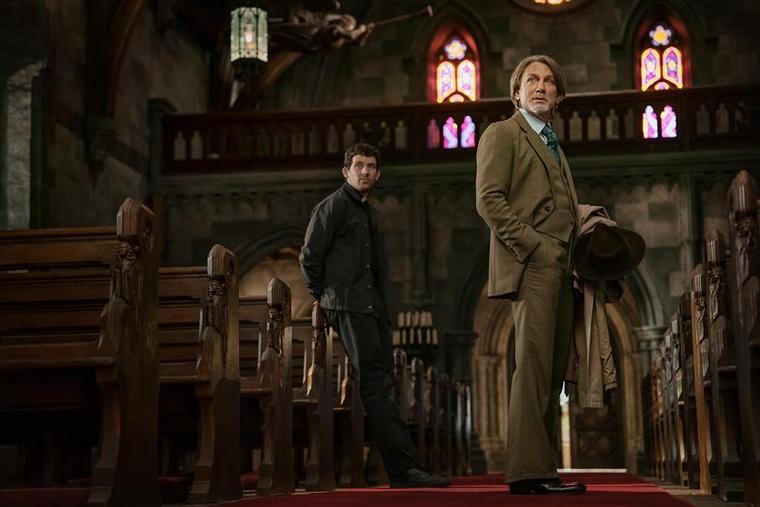
The backstory and dynamics of the ensemble cast of characters are complex, and many classic whodunnit-style compounding factors are soon introduced: infidelity, jealousy and a lost family fortune. Soon enough, someone turns up dead — and it’s the monsignor, who is found stabbed in the middle of Good Friday service, under seemingly impossible circumstances. Suddenly, Father Duplenticy finds himself pegged as a suspect and must go toe-to-toe intellectually with detective Benoit Blanc (Daniel Craig), a loudly outspoken atheist and skeptic of religion, who has been brought in to solve the crime.
Rather than pitting Father Duplenticy and Blanc against each other as caricatures, the story allows a friendship and air of mutual respect to develop between them, reflecting — in Father Bailey’s opinion — Johnson’s own attempt to hold together different parts of his own worldview in dialogue.
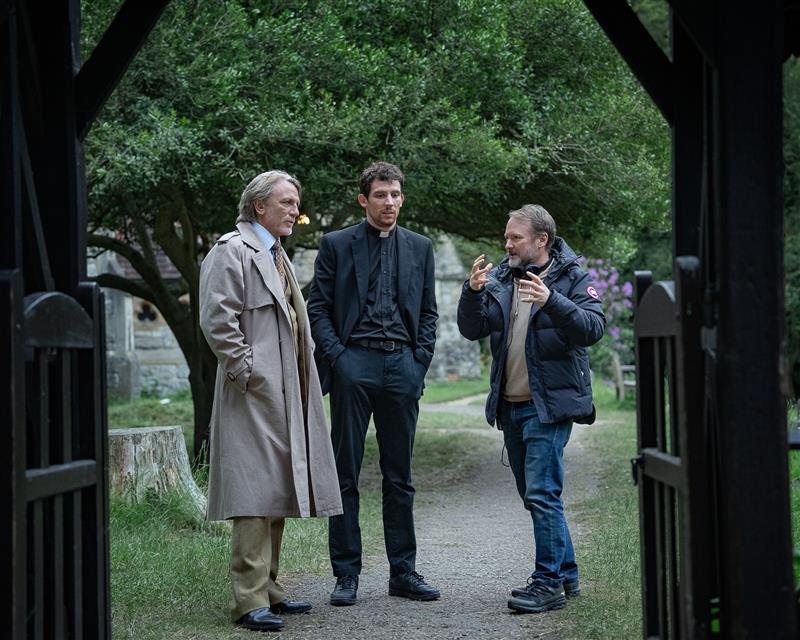
It’s unusual for a mainstream film to depict priests as well-rounded characters, with flaws and shortcomings along with positive attributes, Father Bailey said. In this regard, Father Duplenticy is a well-written character; his flaws are on full display, but he nevertheless seeks Christ sincerely and speaks frequently and passionately in the film about the salvation He offers.
One pivotal scene in particular — wherein Father Duplenticy briefly steps away from the murder investigation to offer pastoral comfort to a distressed parishioner — was “really beautifully done,” Father Bailey said, and was explicitly inspired by Johnson’s conversations with real priests.
“For a lot of us priests, that's our favorite scene in the movie, because it feels so real,” he said.
“[Father Duplenticy] is a sincere guy, and he’s totally comfortable talking about the Lord. You're going to occasionally find maybe a curse word in there, and you’re going to see some of his shortcomings in the course of the story, and the struggles of his past and how that’s affecting him today. That feels all very real,” Father Bailey continued.
“I’ve watched this movie with priests a couple of times now, and all of us have a lot to say about how very real he feels to us — that we feel like we could hang out with Father Jud. He just feels like he’s one of us.”
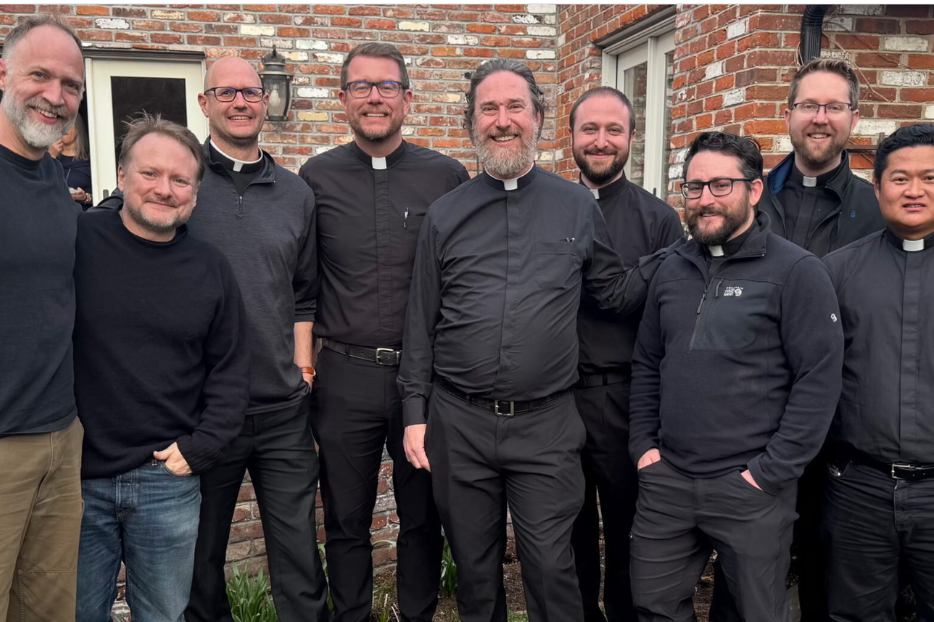
Last April, Johnson phoned up Father Bailey to tell him he wanted to hold a secret screening of the near-final edit in Denver for family and friends, and wanted Father Bailey and several other Denver priests to attend and offer their honest opinions. Following the screening, Johnson picked the priests’ brains over a multi-hour pasta dinner, incorporating their feedback into the final film.
The positive aspects of the movie notwithstanding, Father Bailey is quick to point out that Wake Up Dead Man is a mainstream Hollywood film — and a murder mystery to boot — which means it contains a fair amount of content that only mature audiences should be prepared to stomach.
Prospective viewers should expect salty language, subterfuge, violence and a rather disturbing scene early in the film depicting the destruction of the parish’s tabernacle and crucifix, which is initially framed as a demonically motivated act.
Father Bailey has made no qualms about telling his parishioners what to expect if they choose to put on the movie, but has also encouraged them to consider giving it a try.
“This is not written by the writers of the The Chosen. This is not a saint movie. This is a Hollywood blockbuster murder mystery, and written by a person who’s not a Christian,” he said.
“[But] there’s a lot of beautiful spiritual stuff in here, in spite of the stuff that’s still objectionable. I’ve been surprised to see that so many people have been willing to celebrate that, in spite of the flaws of the film as well.”
Viewer caveat: Wake Up Dead Man is rated PG-13 and contains strong language; a brief verbal discussion of crude sexuality; violence; smoking; and a scene depicting the desecration of a church sanctuary that some viewers may find disturbing.
- Keywords:
- knives out
- catholic movies