‘A Charlie Brown Christmas’ at 60: The Cartoon That Proclaims the Heart of Christmas
Linus continues to remind the world of the true meaning of the Nativity.
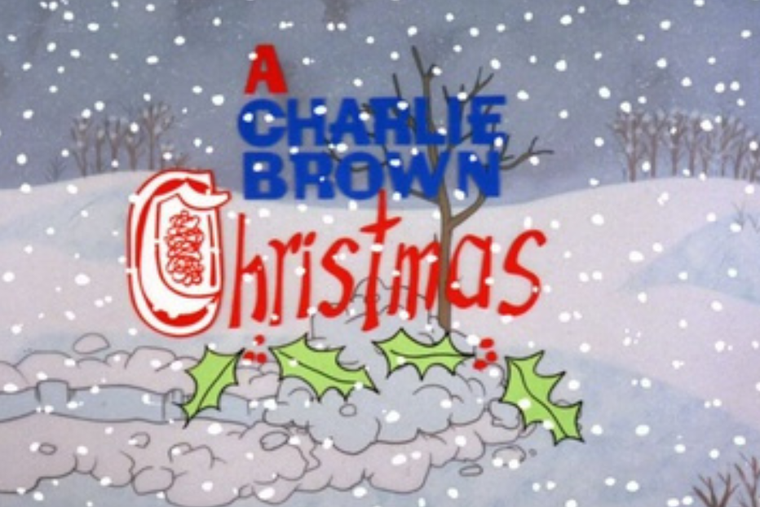
This December marks the 60th anniversary of A Charlie Brown Christmas, a half-hour television special that did something almost unheard of in American pop culture, both then and now. In the middle of a prime-time cartoon, a child stepped forward, quieted the noise, and proclaimed the Nativity story from the Gospel of Luke (King James Version):
And there were in the same country shepherds abiding in the field, keeping watch over their flock by night.
And, lo, the angel of the Lord came upon them, and the glory of the Lord shone round about them: and they were sore afraid.
And the angel said unto them, “Fear not: for, behold, I bring you good tidings of great joy, which shall be to all people.
“For unto you is born this day in the city of David a Saviour, which is Christ the Lord.
“And this shall be a sign unto you; Ye shall find the babe wrapped in swaddling clothes, lying in a manger.”
And suddenly there was with the angel a multitude of the heavenly host praising God, and saying,
“Glory to God in the highest, and on earth peace, good will toward men.”
That moment has endured for six decades — not because it was sentimental, but because it was serious. Peanuts creator Charles M. Schulz believed that if the meaning of Christmas could not be spoken plainly in a cartoon, then it might not be spoken at all.
When A Charlie Brown Christmas first aired on CBS in December 1965, it defied nearly every expectation of network television. There was no laugh track. The pacing was slow and contemplative. The animation was simple. Vince Guaraldi’s iconic jazz score was somewhat melancholic for a Christmas special. The child voice actors sounded like actual children. And at the center of the story was not some triumphant drama, but rather confusion: a boy overwhelmed by a holiday that had become loud, commercial and strangely joyless.
Charlie Brown’s distress is not abstract. He is surrounded by aluminum trees, frantic play rehearsals, and a pressure to see Christmas as a “big commercial racket” over anything else. “I think there must be something wrong with me,” he admits — a line that captures a spiritual fatigue as recognizable today as it was back then.
Scripture Is Enough
When Charlie Brown finally asks whether anyone knows what Christmas is really about, Linus steps forward and recites the Nativity story from St. Luke’s Gospel. This moment is not framed as a lesson or an argument; instead, it is simply Scripture offered as an answer. The effect is immediate.
Charlie Brown’s anxiety gives way to clarity not because the commercial trappings disappear, but because they are put back in their proper place. Christmas, Linus reminds him, already has a meaning. It does not need to be invented or marketed.
That clarity was no accident. As Schulz’s wife Jean later recalled, Charles had been teaching adult Sunday school in the early 1960s, and the decision to include Scripture felt natural to him. When animator Bill Melendez objected that such a moment “wasn’t done” in cartoons, Schulz responded simply: “If we don’t, who will?”
Linus’ recitation bears witness without commentary, trusting that Scripture itself is sufficient. As he speaks, he briefly drops his ever-present security blanket before finishing the passage. Schulz insisted the detail remain. The gesture is easily missed, yet telling, as fear gives way to trust, not through argument but through proclamation.
Decades later, A Charlie Brown Christmas continues to draw families together each December, introducing new generations to a cultural artifact that refuses to minimize the Incarnation. Its endurance suggests that audiences are often hungry for clarity.
A Famous Fan
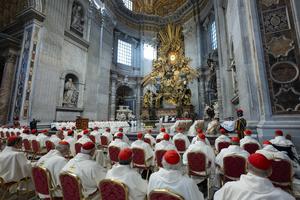
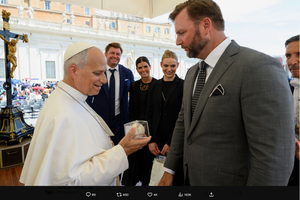
That hunger surfaced again in a small but telling way earlier this year. Following the May election of Pope Leo XIV, public attention turned to the background and personality of the Catholic Church’s new Vicar of Christ. In the course of reviewing previous public statements and social-media activity, observers noted that, years earlier, then-Cardinal Robert Prevost had shared a Peanuts image featuring Charlie Brown and Snoopy reflecting dryly on the state of the world.
The discovery prompted lighthearted commentary online, but it also revealed something subtly fitting: a spiritual leader drawn to a comic strip that has always taken doubt, humility and perseverance seriously.
The Peanuts cartoon has never offered easy optimism. Charlie Brown fails far more often than he succeeds. He hopes when experience suggests he should not, and he keeps showing up even when doing so costs him. That persistence — often mistaken for weakness — is central to Schulz’s vision. It also holds deep significance with a Christian understanding of the human person: fallen and fragile yet called to hope.
In Need of a ‘Little Love’
In A Charlie Brown Christmas, that vision finds its most explicit expression. Charlie Brown’s tiny, unimpressive and ridiculed tree becomes a sign of hope precisely because it is small. “I guess it just needs a little love,” Linus says. The line echoes the meaning of the Incarnation itself: God choosing what is humble and overlooked to accomplish what is eternal.
In a culture that often treats religious language as something to be softened or sidelined, A Charlie Brown Christmas remains countercultural. It insists that Christmas has a meaning, that the answer has already been given, and that it is still worth saying out loud.
“If we don’t, who will?”
Sixty years on, the question remains. And so does the answer — spoken faithfully by a child under the spotlight.
THE ICONIC SCENE
- Keywords:
- peanuts
- Charlie brown