After Roe: How the Abortion Pill Has Been a Complete Game Changer
Here’s a look at the new landscape of abortion in the United States.

In the three years since Roe v. Wade was overturned on June 24, 2022, the increased availability and use of the abortion pill has been a game changer, radically affecting the lives of the women, the unborn and those who defend them, as well as the abortion industry itself.
According to the Guttmacher Institute, medicated abortion is the primary method used in abortions in the U.S., accounting for 63% of all reported abortions in 2023, up from 53% in 2020.
Here’s a look at how the abortion pill has changed the landscape of abortion in the United States.
More women are bypassing abortion facilities and buying the abortion pill online. A new study released by the pro-abortion initiative #WeCount, sponsored by the Society of Family Planning, found that women are increasingly purchasing abortion pills online from telehealth providers.
In the last quarter of 2024, 25% of abortions were the result of abortion pills purchased through telehealth providers. This is a rapid and significant increase from the second quarter of 2022, when only 5% of abortions were telehealth abortions.
Pro-life sidewalk counselors have less access to women seeking abortion. The shift to mail-order abortion pills follows the Biden administration’s easing of regulations on abortion pills, making it possible to order the pills online and deliver through the mail, without ever setting foot in a doctor’s office or an abortion business.
Pro-life activists from groups like 40 Days for Life, Sidewalk Advocates for Life, and Pro-Life Action Ministries have no way of influencing a woman who is considering abortion if that woman is performing the abortion herself, in her own home.
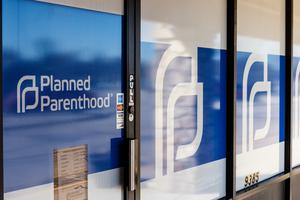
Planned Parenthood and other brick-and-mortar centers are facing competition from telehealth providers. The abortion giant has been forced to close several of its brick-and-mortar operations across the country due to financial reasons. Already this year, 20 Planned Parenthood locations — in Michigan, New York, Iowa, Minnesota and Utah — closed their doors, and 17 more were shuttered in 2024.
While several factors have been said to have contributed to the abortion centers’ financial difficulties, including the Trump administration’s freeze of Title X funds, some observers have noted that stiff competition from strictly online vendors of abortion pills has disrupted Planned Parenthood’s revenue flow.
Caitlin Myers, a Middleburg College professor who tracks abortion in the United States, told the Register that competition from telehealth providers could be hastening the closing of brick-and-mortar facilities.
“Reductions in demand for in-person services may result in reduced revenue and financial pressures that could cause some to close,” Myers said. She added that in-person abortion centers, however, might survive by shifting their efforts towards telehealth abortions.
There’s no longer reliable data on exactly how many abortions take place. The #WeCount report found that from 2023 to 2024 the total number of abortions in the country increased from 1.06 million to 1.14 million.
What these numbers don’t tell, however, is how many women are purchasing abortion pills online. It’s not clear, either, how many of these pills are actually being used to perform abortions.
There’s no way to know how many abortion pills are being purchased online, Tessa Cox, senior research associate at the Charlotte Lozier Institute (CLI), told the Register.
“With no federal abortion-reporting requirement, several states collect no abortion data at all, including large abortion states like California, meaning there are no official numbers on the total number of abortions occurring in the U.S.,” Cox said.
“Pro-abortion research organizations like Guttmacher Institute and Society of Family Planning produce their own estimates by directly surveying abortion centers, but even they do not track all mail-order abortions, particularly abortion drugs prescribed illegally or distributed by so-called ‘community networks,’” Cox said.
Guttmacher Institute and the Society of Family Planning did not respond to the Register’s request for comment.
Women are more at risk of serious injury and complications due to self-administered abortion. A study from the CLI found that as many as 15% of women taking the abortion pill will experience hemorrhaging, and 2% will have an infection. The risk of complications, the study said, increases with the length of gestation.
Without an in-person visit with a medical profession, pro-life advocates say, women purchasing abortion drugs online may not communicate their medical history and any factors that could endanger their health.
Marjorie Dannenfelser, president of Susan B. Anthony Pro-Life America, on Monday said that she is hopeful that Secretary of Health and Human Services Robert F. Kennedy Jr. will fulfill the promise he made during his confirmation hearing to investigate the safety of the abortion pill.
“The data is out there. It is very much in the news. The adverse effects of this pill are being unreported. Its lack of safety is not being communicated,” she said.
According to CLI, “chemical abortion has a complication rate four times that of surgical abortion, and as many as one in five women will suffer a complication.”
An in-person doctor’s visit is necessary, according to CLI, to properly screen women before allowing them to have a medication abortion.
If a woman incorrectly estimates how far along she is in her pregnancy, she could be at serious risk to her health if she takes the abortion drug. Another serious, potentially fatal complication is ectopic pregnancy, which can only be diagnosed with a sonogram. If a woman has Rh-negative blood and takes the abortion pill, the risk of adverse effects to her future pregnancies increases.
The availability of abortion pills leaves women more vulnerable to abuse. According to CLI’s Cox, easy access to abortion drugs means abortion drugs can get into the wrong hands and be used to hurt women.
“Once the abortion drugs have been mailed by the online abortion center, there is no way of knowing for sure where they end up or who ultimately takes them — and we’ve seen recent reports of bad actors obtaining these drugs online and trying to force abortions without women’s knowledge or consent,” Cox told the Register.
Women are more vulnerable to the psychological damage that comes with abortion. Making it easier to have an abortion does nothing to protect women against the emotional and psychological pain that comes with abortion.
Groups like Rachel’s Vineyard offer retreats, where women experiencing the effects of abortion, which the Church teaches is a “moral evil,” can receive support.
- Keywords:
- post-roe
- abortion pills
- abortion access