Will There Be a Joint Catholic–Muslim Document on AI?
Building on the collaboration that resulted in the 2019 Document on Human Fraternity, the Vatican has been working with Muslim leaders to draft a follow-up document addressing artificial intelligence, according to a representative of the Grand Imam of Al-Azhar.
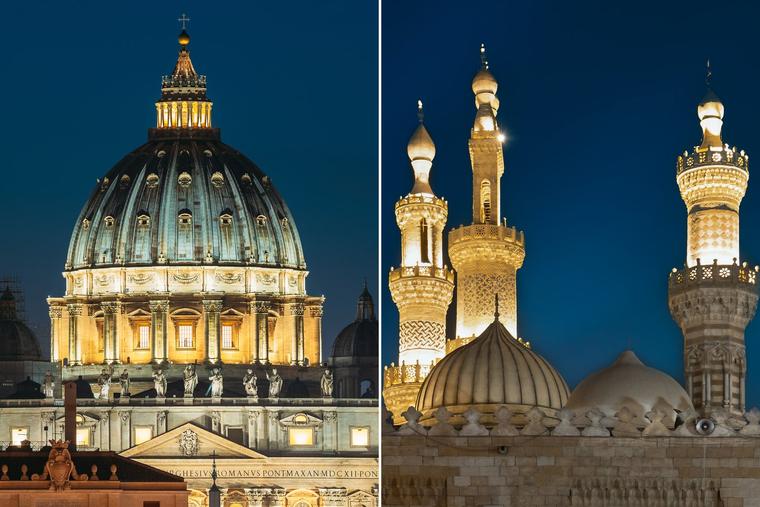
After the February 2019 release of the groundbreaking Document on Human Fraternity, Pope Francis was ready to sign another joint document with the Muslim world — this one focused on artificial intelligence.
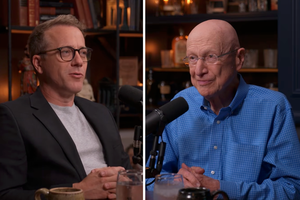
Judge Mohamed Abdelsalam, who was part of the talks that led to the Document on Human Fraternity, disclosed this news in a lengthy interview with the Register. The interview will be published in the upcoming book A World Order Without God? (Città Nuova).
Abdelsalam is not only one of the “architects” of the Document on Human Fraternity. He is Senior Representative of His Eminence Grand Imam of Al-Azhar, Secretary-General of the Muslim Council of Elders and Co-President of Religions for Peace. His connection with the Vatican grew very much under Pope Francis, and he became the first Muslim to receive the Medal of Commander with a Star [of the Order of St. Gregory the Great] from the Pope.
The Muslim leader discusses the Document on Human Fraternity, the importance of God in the current world order, and how the collective witness of all faiths can help the world to better face the challenges of today.
The Document on Human Fraternity is widely seen as the outcome of a long journey of dialogue between East and West — bringing to mind, for instance, the Peace Conference in Cairo, which Pope Francis attended, among other events. What were the key milestones leading up to the declaration of the Document on Human Fraternity? And how do you see its future unfolding?
The Document on Human Fraternity is indeed the outcome of a long journey that included many rounds of dialogue between East and West, and a shared effort by the Vatican and Al-Azhar Al-Sharif. This process was led by two prominent faith leaders: the late Pope Francis, former head of the Catholic Church, and His Eminence Professor Dr. Ahmed Al-Tayeb, Grand Imam of Al-Azhar and Chairman of the Muslim Council of Elders.
The journey spanned from 2013 to 2019 and included several key milestones, with encounters taking place in cities such as Florence, Cairo, Paris, Geneva and Abu Dhabi. The drafting of the Document on Human Fraternity itself took a full year of work before it was officially launched from Abu Dhabi to the world on 4 February 2019. This historic document — considered one of the most important in modern human history — has inspired millions worldwide. Some nations have even adopted it as a national declaration, including the United Arab Emirates, Egypt, Bahrain, Italy and Lebanon. It has also been endorsed by both Al-Azhar and the Vatican, and incorporated into academic programs at universities such as Georgetown.
In addition, the United Nations, with consensus from all member states, designated the date of its signing as the International Day of Human Fraternity, to be observed globally in recognition of this historic document and its noble human values. The document has also inspired several landmark initiatives, most notably the Zayed Award for Human Fraternity, the Abrahamic Family House, and many other impactful projects.
What are the next steps?
Today, a new document is emerging — focused on the ethics of artificial intelligence. This initiative, too, is a product of ongoing cooperation between Al-Azhar, the Catholic Church, and the Muslim Council of Elders. In his address at the recent Arab Media Summit in Dubai, the Grand Imam mentioned that he had previously discussed with the late Pope Francis and the Vatican the development of a document on AI ethics — aimed at protecting current and future generations, and encouraging adherence to ethical and religious principles in the face of rapidly advancing technology.
The document was nearly complete and scheduled for release, but the passing of Pope Francis delayed its announcement. We are currently in close contact with the Vatican to resume and finalize this important project.
How can the Document on Human Fraternity serve as a model for the Muslim world?
In my view, the Document on Human Fraternity — signed by the late Pope Francis, former head of the Catholic Church, and His Eminence Ahmed Al-Tayeb, Grand Imam of Al-Azhar, in 2019 in Abu Dhabi, the capital of the United Arab Emirates, under the patronage of His Highness Sheikh Mohamed bin Zayed Al Nahyan, President of the UAE — marks a historic turning point in the journey of dialogue between religions and cultures. It is not merely a joint declaration, but a comprehensive ethical and humanitarian framework that reflects a sincere ambition to reshape the relationship between human beings in a world plagued by conflict and division.
What distinguishes this document is its foundation in deep spiritual and religious values. It recognizes the differences among people while affirming their ability to unite around universal human values such as compassion, justice and mutual respect.
What is the impact of the document in the Muslim world?
From this perspective, the Muslim world — with its rich civilizational and ethical heritage and its long-standing experience in facing intellectual and social challenges — is called upon to take this document as a guiding model, both internally and externally. It is an invitation to rediscover the noble Islamic and humanitarian values that affirm human dignity, promote coexistence over conflict, and prioritize construction over destruction.
How can the document be a model in the Islamic context?
In the Islamic context, the Document can serve as a model in several key areas:
1. Affirming pluralism as a religious and humanitarian value: The Document recognizes that God created people different in faith and culture. This diversity must be managed through dialogue, not conflict. This aligns with Islamic principles, including “There is no compulsion in religion,” and the belief that diversity is a divine will and a sign of God’s creation.
2. Correcting stereotypes about Islam: By adopting and applying the Document’s principles, the Muslim world can present itself as a partner in peacebuilding and a contributor to global understanding.
3. Restoring the role of moderate religious leadership: The Document reaffirms the ethical and guiding role of religious scholars in society, away from politicization and polarization. It calls on Muslim scholars and religious leaders from other faiths to play a reformative role in guiding both their communities and the broader world toward justice and compassion.
4. Protecting religious and sectarian minorities: One of the most pressing challenges today is ensuring the rights of religious minorities. The Document provides a moral and legal foundation for respecting those rights, firmly rejecting the term “minorities” and calling instead for the adoption of the principle of full citizenship, where all citizens are equal in rights and responsibilities — laying the foundation for civil peace.
In addition to the meetings between the Grand Imam of Al-Azhar and Pope Francis, what is your view on the meeting Pope Francis had with Grand Ayatollah Ali al-Sistani in Iraq and with the Chief Imam of Indonesia in Indonesia?
I would like to emphasize that the meetings between His Eminence Ahmed Al-Tayeb, Grand Imam of Al-Azhar, and the late Pope Francis, former head of the Catholic Church, went beyond formal symbolism to a broader and more profound horizon. These meetings, marked by sincerity and humility, presented an inspiring vision of a world open to all — led by faith leaders driven by living consciences and a deep sense of responsibility.
The meeting between Pope Francis and Grand Ayatollah Sayyid Ali Al-Sistani in Iraq, as well as his meeting with Indonesia’s Chief Imam in the world’s most populous Muslim country, confirmed that the message of the Document is not limited to any one geographical region or religious denomination. Rather, it is a universal message reflecting humanity’s shared aspiration for justice, compassion, and peace. It demonstrated that interfaith dialogue is no longer a luxury, but a civilizational necessity and an urgent requirement for the future of humanity.
Together, these meetings have established a new approach to relationships among religious leaders — where shared values take precedence over religious or sectarian affiliations, and where dialogue becomes the foundation for coexistence and understanding. This is precisely what our world needs today, more than ever before.
What is the future like for the Document on Human Fraternity?
Through the Zayed Award for Human Fraternity, we aim to highlight these inspiring examples and support individuals and entities that embody the Document’s principles in their communities — whether in the Muslim world or beyond. We firmly believe that human fraternity is a collective responsibility that can only be fulfilled through the cooperation of all.
It is important to affirm that the journey of human fraternity is ongoing. It has taken root in human relations and left a real impact on many levels. During my recent meeting with His Holiness Pope Leo XIV — his first meeting with a Muslim since his election as head of the Catholic Church — His Holiness confirmed his commitment to continuing the path of human fraternity. He also reaffirmed this commitment in a phone call with the Grand Imam, in which the Grand Imam congratulated him on his election as the Supreme Pontiff of the Holy See.
How does the Islamic world view the state of international relations and the general condition of the world today?
It can be said that the general mood in many Muslim societies is characterized by a sense of anxiety and uncertainty due to the ongoing wars, conflicts, tensions, and the rise of hate speech, extremism and Islamophobia. There is a widespread feeling that the global system lacks justice and often applies double standards — not only in matters concerning Muslims, but also in issues affecting minorities, refugees, the marginalized, the oppressed and the displaced, as well as those who have lost shelter and security around the world. Palestine remains a constant example. We all witnessed, during the most recent aggression, how the world stood silent in the face of systematic killing, displacement, and a deliberate campaign of starvation. There are also many other urgent issues that reinforce the perception that human values are being applied selectively.
Is religion still important?
What we are witnessing today underscores the importance of returning to the teachings of religions, which call for justice, love, coexistence and peace. I believe there is a real opportunity to build a more just world order — through the revival of values such as goodness, compassion and peaceful coexistence — by practically applying the principles enshrined in the Document on Human Fraternity. The Muslim world, in particular, holds significant potential: demographic weight, strategic geographical location, natural resources and a deep civilizational legacy. These are all assets that can enable the Muslim world to play an active and constructive role in building a more just and sustainable global order.
We need alliances grounded in values, ethics, religious teachings, and dialogue — not exclusion. The Document on Human Fraternity, with its spirit of consensus and shared humanity, offers a gateway to this new vision where religion, conscience and humanity converge.
Why can religion play an important role in diplomacy?
In today’s world, we are witnessing growing polarization, the increasing failure of traditional diplomacy, and the rise of hate speech, extremism and discrimination. In contrast, the religious sphere is witnessing a positive trend, marked by growing relationships among different faiths and a narrowing of interreligious gaps. This has given rise to what can now be referred to as religious diplomacy and the soft power of religions, grounded in values of dialogue, tolerance and peaceful coexistence.
A prominent example of this approach is the renewal of institutional ties between the Vatican and Al-Azhar al-Sharif, under the leadership of the late Pope Francis — the 266th pope of the Catholic Church — and his brother, His Eminence Ahmed Al-Tayeb, Grand Imam of Al-Azhar. Through their friendship and fraternity, these two faith leaders have demonstrated that religions are not necessarily a source of division but can be a shared foundation for advancing human progress — particularly in the pursuit of peace.
Faith leaders and religious institutions can, without a doubt, play an active role in supporting peace efforts through religious diplomacy — drawing inspiration from the interfaith collaboration that characterizes our era.
Can the Document on Human Fraternity be a diplomatic tool?
We are keen to engage with political and diplomatic leaders to advance the values outlined in the Document on Human Fraternity. In 2022, we organized a roundtable with ambassadors of the European Union in the United Arab Emirates to discuss the document. The event provided diplomats with an opportunity to explore practical ways to advance the principles of human fraternity at both the global and European levels.
At that event, the former EU Ambassador to the UAE, Andrea Matteo Fontana, remarked: “We recognize how essential the values set forth in the Document on Human Fraternity are to the realm of foreign policy. They inspire leaders to work toward a better world.”
- Keywords:
- ai
- artificial intelligence
- al-azhar
- islam
- catholic-muslim dialogue
- catholic-muslim relations
- document on human fraternity