The Sacred Island in Norway that ‘Turns Tourists Into Pilgrims’
Amid the windswept ruins of Norway’s first monastery, Selja stirs once more with prayer and the quiet rebirth of a Benedictine vision.

Editor's Note: This story has been updated.
SELJA, Norway — The Sanctuary at Selja in Nordfjord goes back to the 10th century and is traditionally considered the cradle of Christianity in Norway and the Nordic countries.
Like many pilgrimage sites and sacred places in the history of the Church, the holy island of Selja is linked to a legend: the legend of the Irish princess Sunniva and her companions.
The Legend of St. Sunniva
Sunniva fled her homeland in the ninth century to escape a forced marriage to a pagan king, who would pillage her kingdom as punishment for her refusals. She and a group of followers boarded boats without sails or oars, trusting entirely in God’s providence to lead them to safety.
“They providentially ended up here, on this holy island of Selja in Norway,” newly ordained Father Mathias Ledum, who first made the pilgrimage to the island 10 years ago, told the Register, “where they settled down in the caves to live a life of fasting, abstinence and prayer.”
According to legend, as her enemies approached, the cave collapsed around Sunniva and her entourage, preserving her purity and sanctity. When her incorrupt body was discovered years later, the island became Norway’s first pilgrimage site, with Sunniva the Scandinavian country’s first saint.
During the 11th century, Selja grew to prominence as the site “became the seat of the first diocese in Norway,” Father Ledum explained, “and a Benedictine monastery was established.”
While pilgrimages to Selja continued uninterrupted until the Reformation, when the monastery was destroyed in 1536, modern Catholic pilgrimages in Norway have since been revived in the 20thc century to honor and remember the country’s Christian roots.
“You could call this the cradle of the Church in Norway,” Father Ledum observed. “The blood of St. Sunniva and her companions,” he explained, is the seed from which the Church of Norway grew out, “and you can see now, many years afterwards, the living faith of Norwegians.”
“We have a long way to go, but things are happening, and things are looking bright,” he added. “There are good reasons for hope.”
Experiencing the Intercession of St. Sunniva
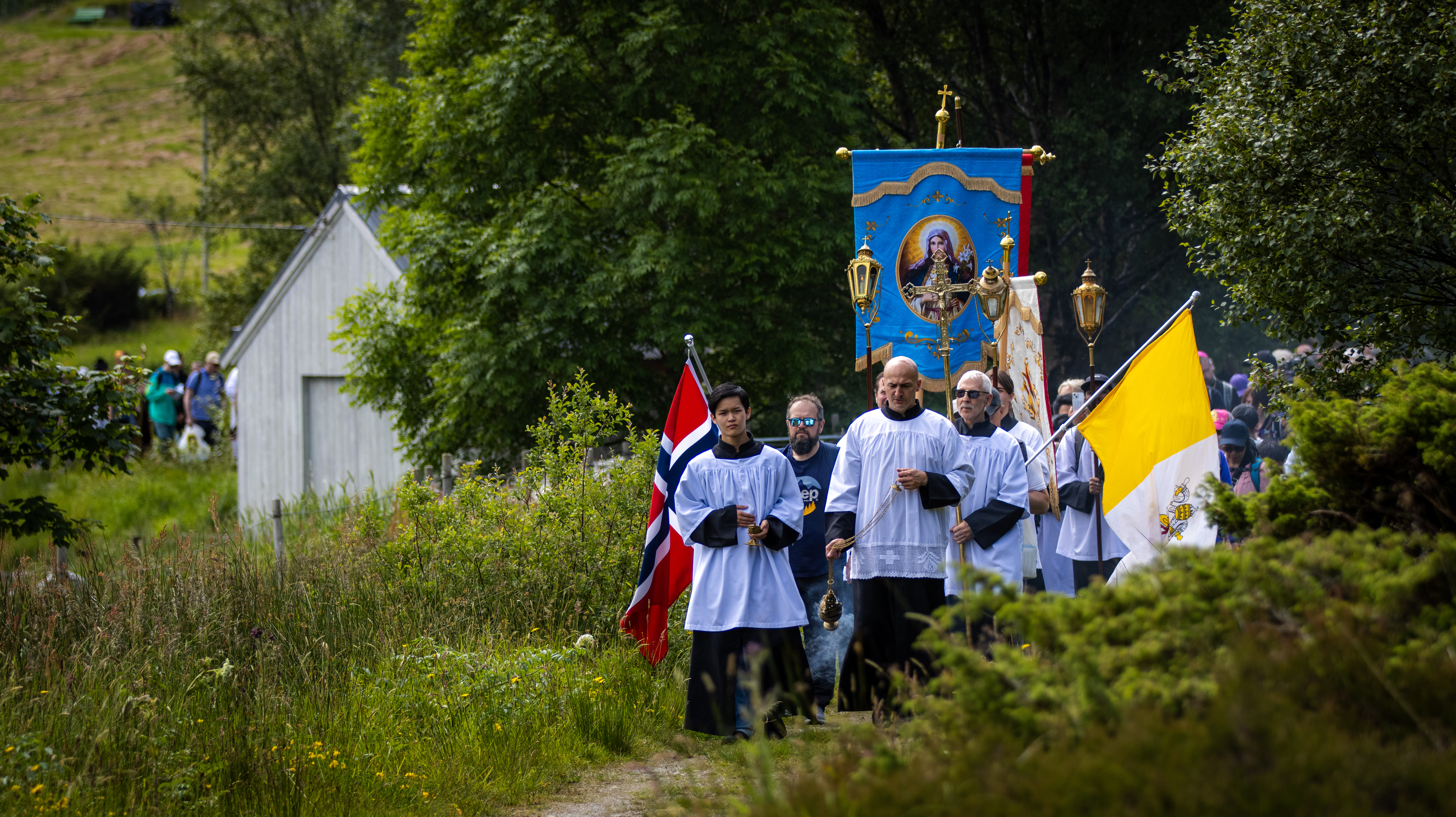
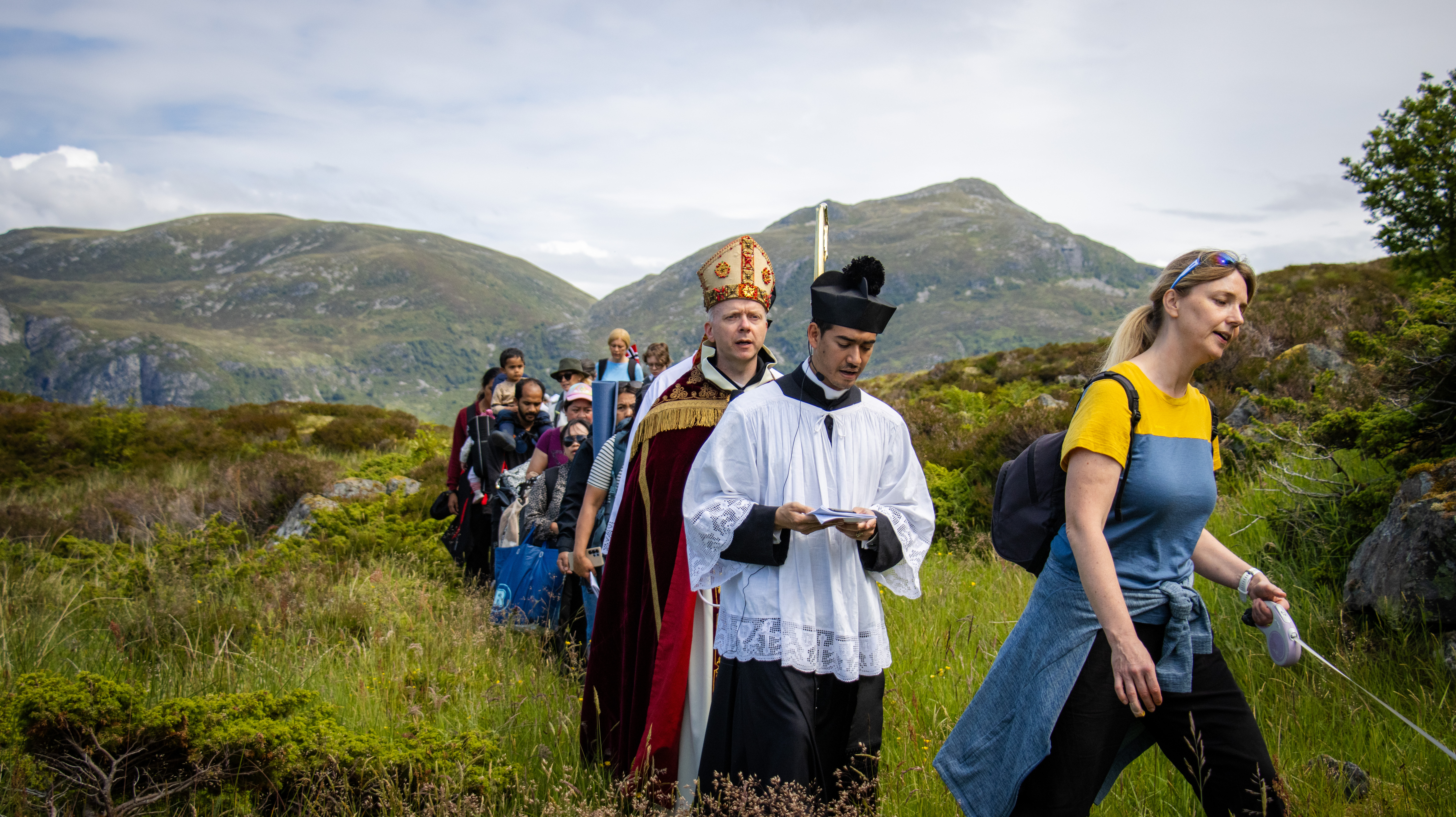
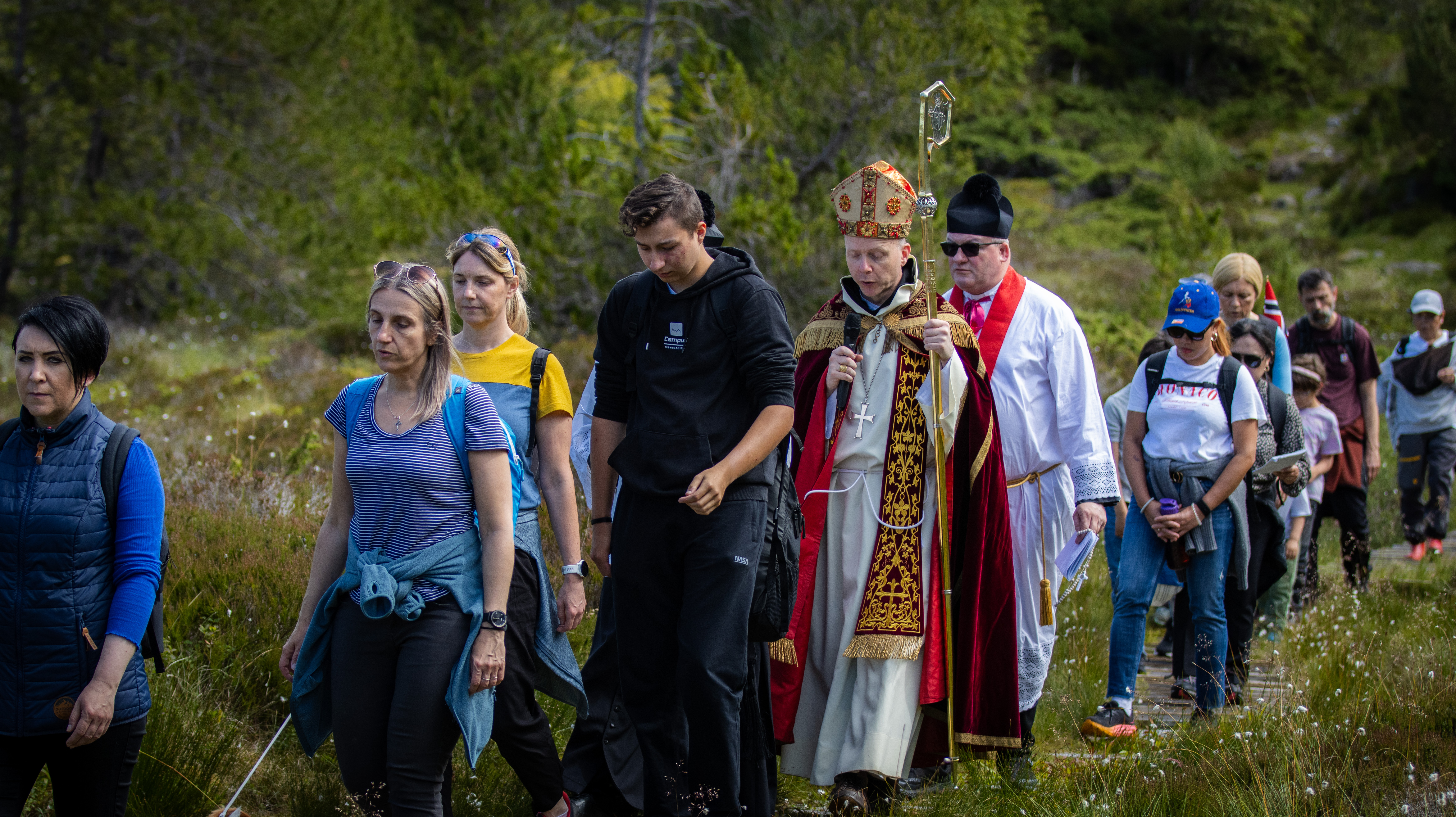
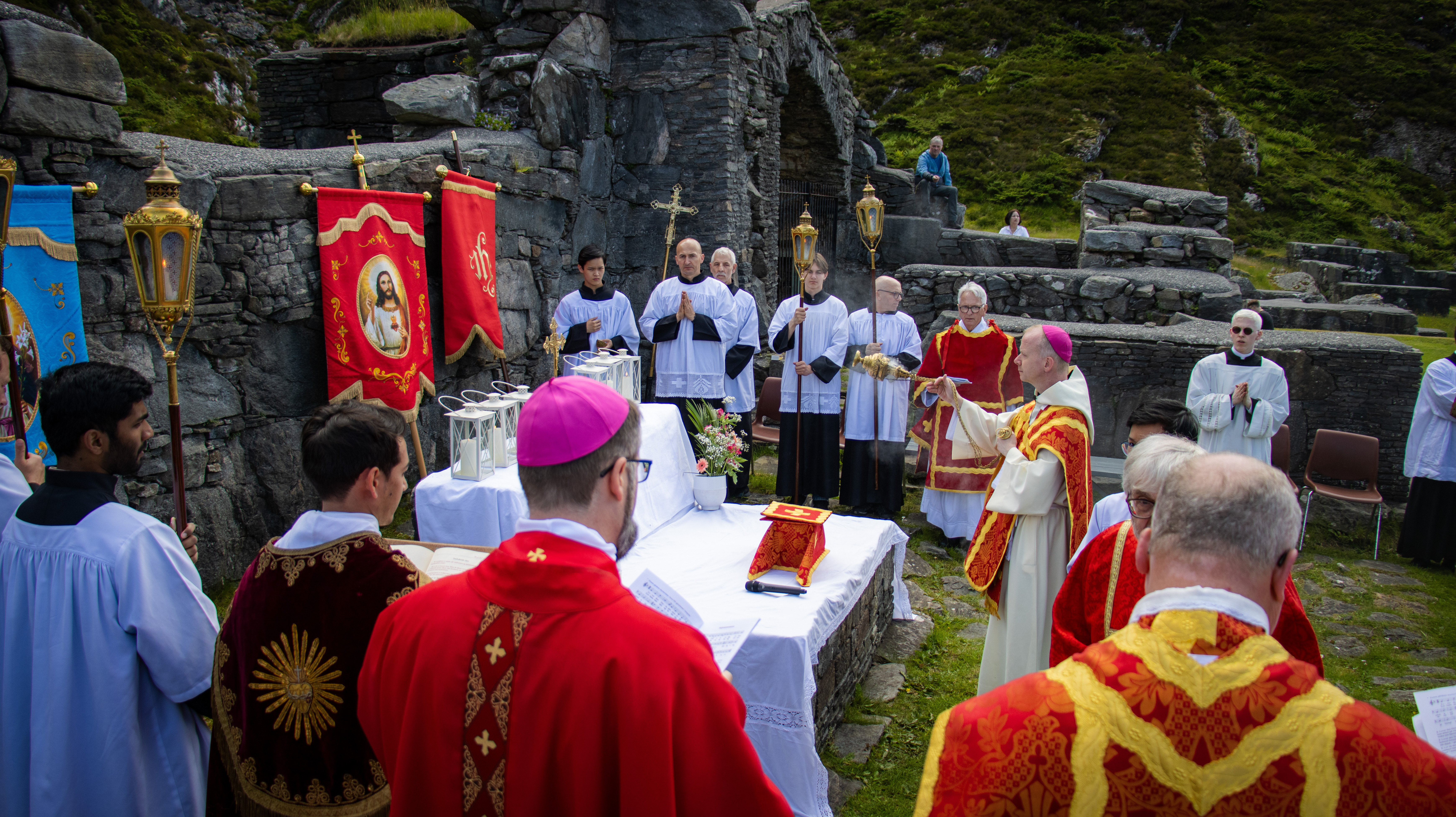
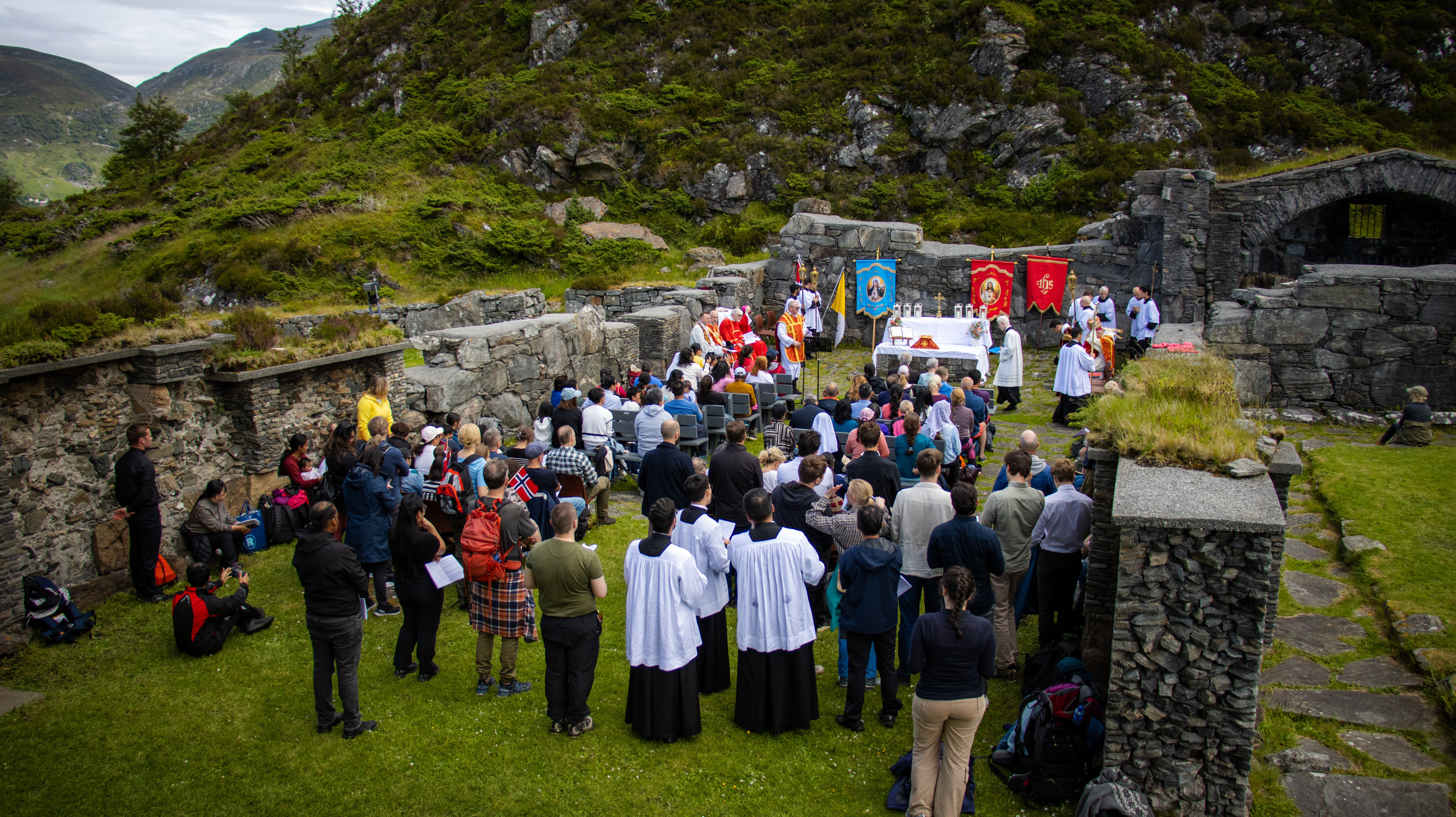
Every year on July 8, Sunniva’s feast day, the Catholic Church in Norway organizes a pilgrimage to the island — accessible only by ferry — where a procession across the island and Mass celebrated among the ruins of the once-flourishing Benedictine monastery draw hundreds of faithful. There is also a pilgrimage on the closest Saturday to the feast; this year, July 5.
“The first time I came here was exactly 10 years ago while I was still considering joining the seminary,” Father Ledum, who was ordained on June 28 in Oslo, said.
“I came here on the pilgrimage, and I felt the intercession of St. Sunniva very strongly for my vocation, and her story — leaving Ireland and setting out in a boat without any ores, without any sails and just letting God take control — that resonated a lot with me.”
Father Ledum shared that while he “still wasn’t sure what God wanted with [his] life, he knew one thing: “I knew that if I let him take control, if I gave my life over to him, he would lead me to where I needed to be. And here I am 10 years later.”
Father Ledum explained that this year’s pilgrimage — coming back to Selja for the first time as a priest — “felt almost like a honeymoon.” He expressed deep gratitude for the opportunity to give thanks to St. Sunniva and her companions “for their strong intercession at the very beginning of [his] vocation journey.”
But also, he added, for inspiring him “to set out into the boats, let God take control, guide [him] through the waves of seminary life, and bring [him] safely to the shore of ordination.”
Celebrating History and Building a Future
This year’s pilgrimage marks the first time since the monastery’s closure in 1537 during the Reformation that Norway’s two bishops from Trondheim and Oslo were present on the island at the same time — Bishop Erik Varden of Trondheim and Coadjutor Bishop Fredrik Hansen of Oslo
Coming from eastern Norway, recently ordained Bishop Hansen was less familiar with St. Sunniva than with other local saints — like “St. Hallvard, who was martyred just outside my hometown” — but knew that “all who come to Selja speak about the impact it has on them.”
“St. Sunniva is one of a handful of medieval Norwegian saints and a testament to the debt we owe the many holy men and women who brought the light of Christ to our Viking ancestors,” the bishop said.
Making his “first ever pilgrimage to Selja,” Bishop Hansen described that by stepping foot on the island, “one enters not only into our Catholic past, but into a place where St. Sunniva, her companions, and the monks that would found a monastery gave witness to a complete trust in God’s providence and where faith would conquer and show a new path for those who embrace it.”
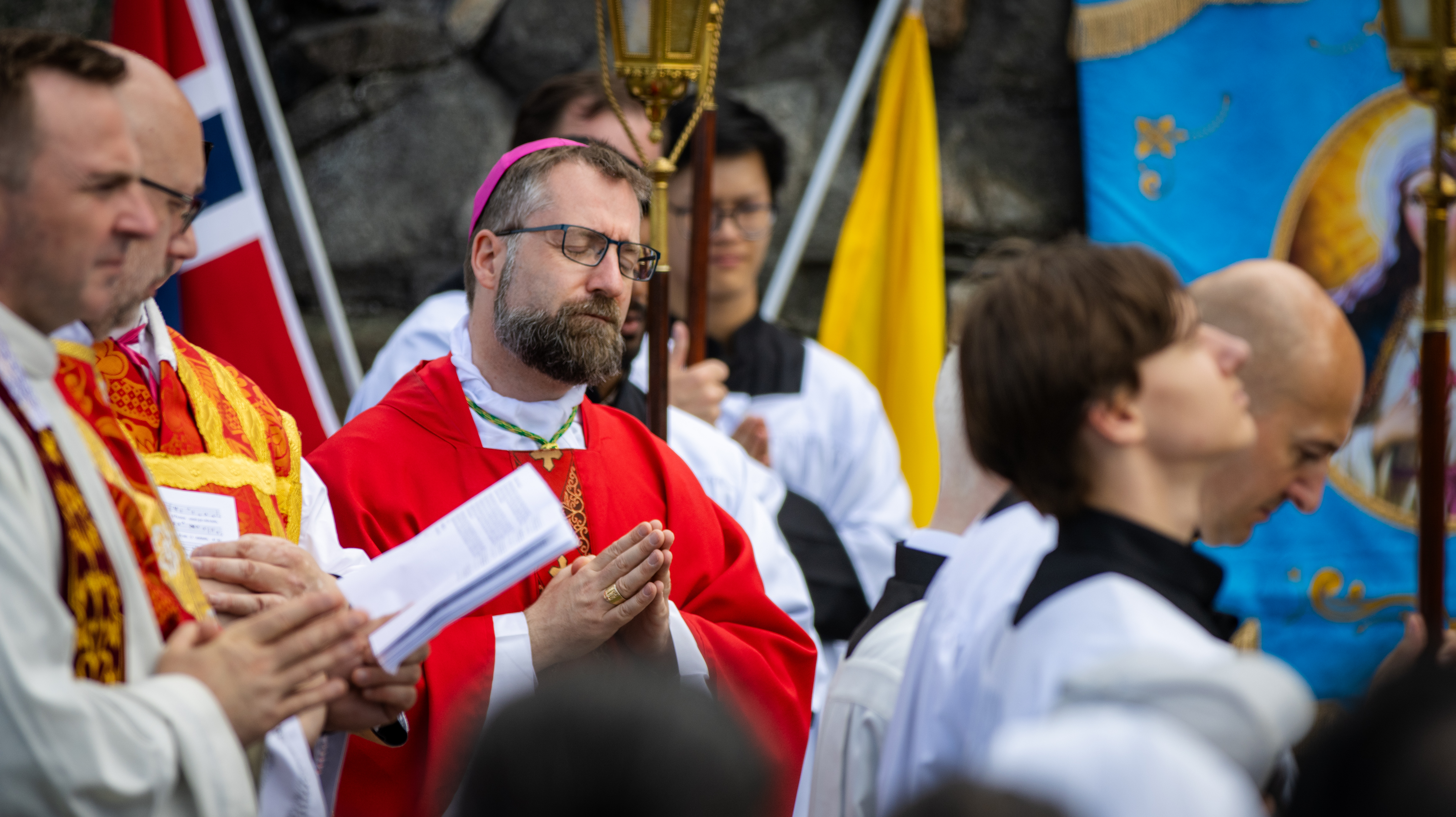
“To be here is to celebrate our history, the development of Christianity, the coming of Catholicism to our country, a thousand years of evangelization.” Bishop Hansen said, adding that for this reason, the bishops also decided to make the island an official 2025 Jubilee site. It is “a way of recalling our past to build a future, a future for Christianity in this country.”
Bishop Varden, who led the July 5 procession across the island and celebrated the Mass in the monastery ruins, told the Register that “the place has its own radiance.”
“Each year, the number of participants increases. That is a joy,” Bishop Varden said. “The walk across the island, the Mass and vespers were celebrated with deep inner recollection. In addition, there was a good, warm, joyful atmosphere. A pilgrimage is a gathering of brothers and sisters — a family reunion. That was very evident on Selja.”
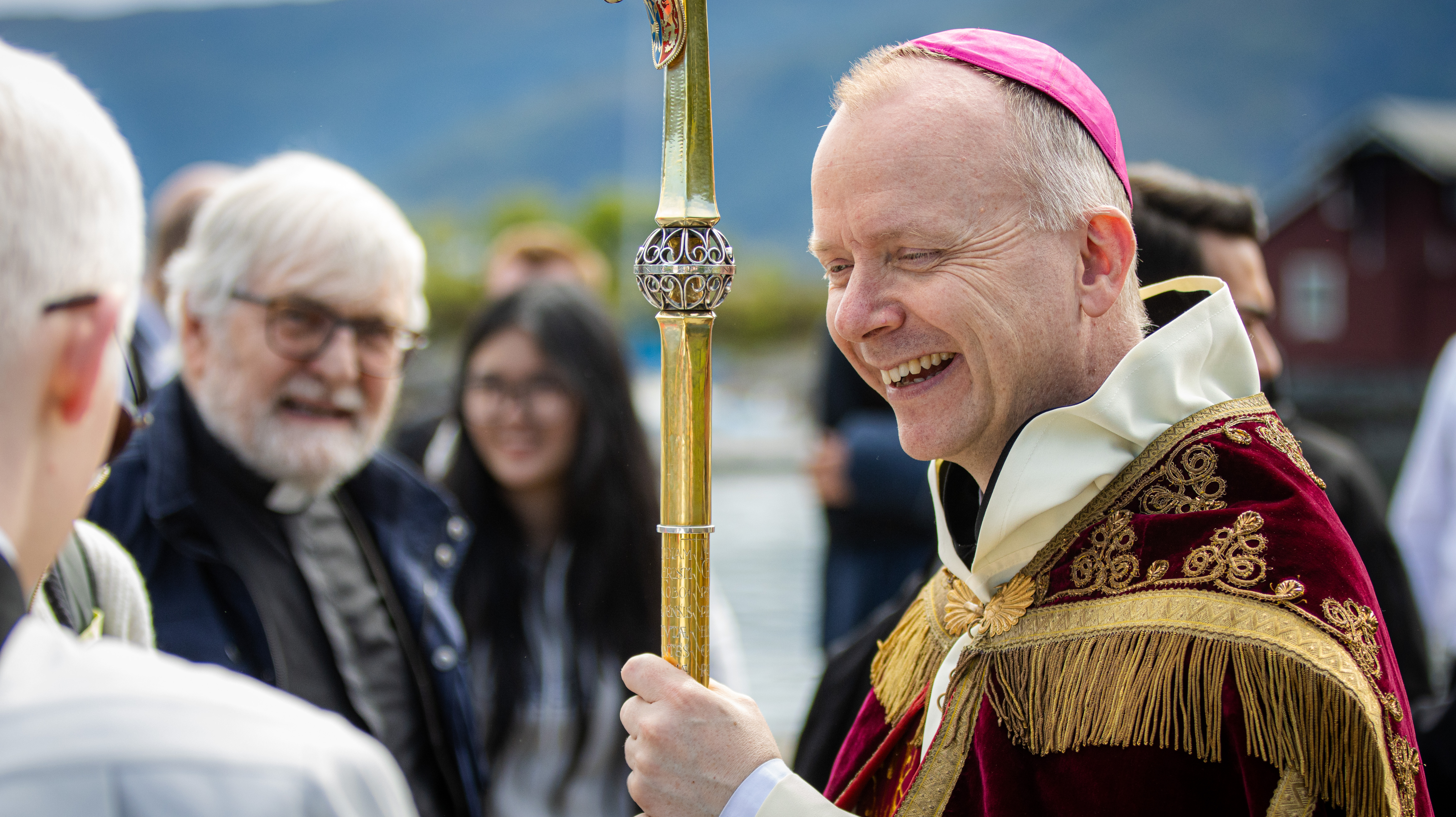
Since “Selja is the very origin of Norwegian Christianity,” Bishop Varden stressed that “to return there is to become aware of our own roots” — and how important it is to do so.
“We live in a rootless time,” he argued. “Many are searching for criteria, for coordinates to live by. In that, the example of the saints is a great help. The stories about them are not given to us merely to nourish our piety; they portray role models we are meant to — and can — follow.”
Laying the Foundations for a New Monastery
One person who has taken that call to heart is Ragnhild Aadland Høen, a Communications director from Oslo, who is hard at work laying the foundation for a second monastery on Selja. In 2013, she and her husband purchased a plot of land to be dedicated to this very purpose.
Aadland Høen is quick to clarify that the vision of reviving a monastery on Selja did not originate with her. “The initiative came from the local community,” she explained. “They had long hoped for the return of monastic life and reached out to the Catholic Church in 2012 for help.” The bishop of Oslo passed the request to St. Paul Parish in Bergen, where Aadland Høen’s parish priest invited her to take part. “I didn’t start this,” she said. “I was simply called into something God was already doing.”
Her connection to Selja, however, began nearly a decade earlier. Aadland Høen first came to the island of Selja in 2004 as a Lutheran."
“As a Lutheran, I believed there was nothing holier than God,” Aadland Høen told the Register, “but I understood right away that this was a holy place.”
Aadland Høen had been married for two years, and she and her husband had tried to conceive without success. They were told by a guide about “a holy well” where many came to pray during medieval times and which granted many healings and the gift of life to those desiring a child.
“As a Lutheran I couldn’t ask a saint to pray for me,” Aadland Høen said with laughter, “but I drank the water from the well and prayed to God. After praying in the monastery ruins for about 30 minutes, I heard this voice inside me saying: ‘She will be called Sunniva, and she will be great for God.’”
The following month, Aadland Høen found out she was pregnant.
Having experienced a personal spiritual encounter on the island — and noticing its growing appeal to tourists and curious travelers — the idea of reviving the monastery began to take root.
“I see people sense the sacred and feel the presence of God,” Aadland Høen argued. “There is no doubt this island turns tourists into pilgrims.”
Looking to the Future
Together with other Catholic families — and with the support of a Benedictine monastery in France that has encouraged the project — Aadland Høen looks to the future with hope, especially since it’s an ecumenical efforts — including “Pentecostal, Baptist, and Lutheran pastors” who sit on today’s board for the project.
This ecumenical interest in Selja echoes a longing that has stirred in hearts for generations. In 1926, Catholic Norwegian Nobel Prize winner Sigrid Undset came to the island with a desire to purchase land, but the municipality refused, reportedly out of concern for “Catholic propaganda.”
Now, with the project’s broad support, supporters pray for Norwegian vocations to found the Benedictine monastery.
“We pray every day for the conversion of Norway and for vocations,” Aadland Høen said.
Reflecting on the chaos, growing secularization and progressivism of the modern world and Norway, Aadland Høen said: “We need the Benedictines to return. They are spiritual warriors of the Church, and we need them desperately in this country.”
Describing the island as “a place with only a thin veil between heaven and Earth," Aadland Høen stressed that “this is a place overflowing with peace and goodness. No one leaves Selja untouched. No one leaves without wonder and being transformed by God.”
- Keywords:
- catholic saints
- norway
- 2025 jubilee
- pilgrimage