Apostolic Nuncio to Ukraine: ‘Our Hope Lies in Prayer’
Archbishop Visvaldas Kulbokas explains why true peace must be just, and how prayer sustains Ukraine amid war.

During the 2022 siege of Kyiv, all foreign diplomatic missions evacuated the Ukrainian capital. Only two ambassadors remained: Poland’s ambassador and the apostolic nuncio.
Archbishop Visvaldas Kulbokas, 51, has been the Pope’s representative in Ukraine since 2021. A native of Klaipėda, Lithuania, he has lived in the country since the hostilities between Russia and Ukraine broke out.
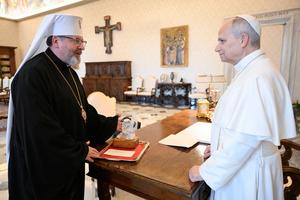
The nuncio met with Pope Leo XIV June 6 at the Apostolic Palace. In a conversation with the Register, Archbishop Kulbokas explains the meaning of a “just peace” as prescribed by the Holy Father, highlights the work of the Catholic Church in the region, and shares his total trust in prayer in a situation that seems desperate.
Among the first appeals of Leo XIV was the call for a just and lasting peace in Ukraine. What is meant by just and lasting peace?
There are at least two aspects to the adjective “just” attributed to peace. The word “peace” should already be enough, but unfortunately, in the current situation, the concept of peace is often manipulated and misused, sometimes described in a reductive sense, as if a ceasefire were peace or occupation were peace.
So, what is a “just peace”?
It means genuine peace, not superficial peace. Not a peace that hides an occupation. And then a just peace includes real justice, understood as the prevalence of law over selfishness and particular interests. If there is no such justice, on what basis will we build peace? Very soon, someone could assert the law of the strongest. Without law, there remains the great temptation to destroy the peace that has just been built.
Truth and justice, therefore, as the foundation of peace…
There would be other aspects. Among these, there is necessarily the look toward reconciliation. There is work to be done to reconcile peoples and hearts.
One of the prerequisites for reconciliation is, first of all, reconciliation in everyday life because it is humanly difficult to reconcile with the aggressor while he continues to attack you. At the very least, the aggressor must stop the aggression and recognize the other's right to exist.
And does Ukraine feel its right to exist is in jeopardy?
There is, in Ukraine, a great concern to exist. I noticed it when I read the comments of the Ukrainian delegations following the various negotiations that took place in May and early June. The delegations show the reaffirmation of their right to exist and survive. If peace were built in which the right of a people to exist was denied, one could no longer speak of a just peace.
In this war, do you see Ukraine’s desires or Russia’s desire to create a space for defense?
I do not want to launch into a military or political comment. I want to note that agreements have been signed between Russia and Ukraine regarding their respective borders. And there is a fundamental international principle: to respect the other. This aggression involves a failure to respect the Ukrainian borders. And I ask myself: based on what principle can I decide that my interests prevail over the interests of the other country and the international community?
After three years of high-intensity war and 10 since the beginning of the conflict, how is the Ukrainian population doing?
Let me tell you a story. There is a doctor who works six days a week in the hospital, and on the seventh day, he goes to defend his neighborhood from drones. Drone attacks have occurred every day in 2025. There have not been more than 10 days and 10 nights this year without a bombing. And ordinary people, like this doctor, feel the need to defend themselves with their own hands; they feel a sense of involvement in the defense of their homes.
It’s a very tiring life. But is it more tiring at the front or everywhere else?
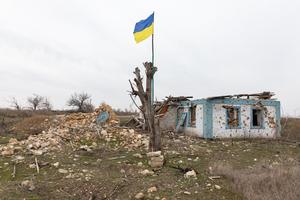
There are places like Kherson where, in four years, there has never been more than 56 minutes without an explosion. It is continuous and brings about significant physical and psychological fatigue.
Can you share your war experiences?
It is a very different thing to have a first-hand experience of war than to tell about it. It is eloquent what happens in families when the husband returns from the front and cannot communicate with his wife because their language and experiences are so different. The soldier has a different experience, on the edge between life and death. And he knows that it would also be excessive to load all this burden on the family. This is also my difficulty — speaking with people who have had different experiences, even within Ukraine, because some regions are less directly affected.
What happens in this situation?
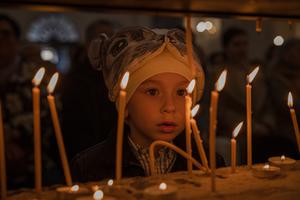
We remain with God. We stay wrapped up in prayer; we let ourselves be embraced by God. There is no loneliness because there is the prayer of many people, of the entire Church. I would say that the essential grace that surrounds us is the presence of God. In the readings of these days, there is Jesus, who says that if you have the Father, joy is complete. This is the vocation of the Church: to live complete joy despite the destruction because you are with God. Without faith and prayer, the dispersion is almost total.
What role can the Church play?
There are occupied places where I, as apostolic nuncio, have no way to fulfill my evangelical duty to bring water to the thirsty, to give a word of relief to the afflicted. There are territories where, physically, it seems like living in another world.
Then there are realities like those on the front, where the word “military” includes everyone: men and women, those who volunteer and those who have been forced, those who look death in the face, those who are wounded and know that they will die in a few minutes.
Doctors and military chaplains say that almost everyone asks for forgiveness of sins. There is a vital role for the Church: that of distributing grace and forgiving sins because this is the greatest gift we have. If there is no chaplain, there are comrades who pray for the dying and ask for the Lord’s forgiveness. The Church has the essential role of supporting the Gospel.
And does this have an impact?
We talked about just peace. The gospel surpasses even all the discourses on peace and justice. The gospel means building and seeking an encounter with God the Father. And if I truly desire an encounter with my Father, I announce it and consider this announcement the primary issue in my life; it will not occur to me to destroy others.
The gospel is a spiritual and moral weapon, and the Church has it in its hands. The invitation to prayer — as Pope Francis did, and Pope Leo does nowadays — is an invitation to bring the gospel and, therefore, to bring peace. I also discussed it with Pope Leo during our recent meeting. When the Church announces the Gospel, it gives content to all its activities and to all the humanitarian initiatives it undertakes.
We are in the Jubilee of Hope; the Jubilee of Nuncios is being celebrated at this time. Is there hope for the country where you are nuncio today?
If I have to speak on a human level based solely on human logic, I must say No. To have hope, I should see something concrete in action; I should see a genuine search for peace by the countries, not a pursuit of personal interests. All negotiators — in many negotiation processes, and not only for the situation in Ukraine — have insisted that the most outstanding work depends on the distance between reality and willingness. You cannot negotiate without political willingness. You announce to the international community the achievement of some result only when it seems like the time has come. Still, the most outstanding work is to allow the parties to express themselves. I don't think this work is the case at the moment.
Does this leave us without hope?
There are groups of people who give me hope. Some experts gather and reflect together, really, on peace. Unfortunately, they are not so influential. But thanks to them, I have hope — a reduced hope at this moment. But then I remember the message of the Virgin in Fatima. What did she ask the little shepherds several times? To pray. In this sense, I want to make myself equal to these little shepherds, these little children, and listen to Our Lady again: “Pray, pray, pray, and with prayer, you will win the peace.”
- Keywords:
- Archbishop Visvaldas Kulbokas
- ukraine war
- ukraine
- peace