What Catholics Can Learn About Leisure From a Pope on Vacation
Inspired by Pope Leo XIV and Josef Pieper, Catholic clergy share insights into the true meaning of leisure as more than just free time in a world often preoccupied with work.
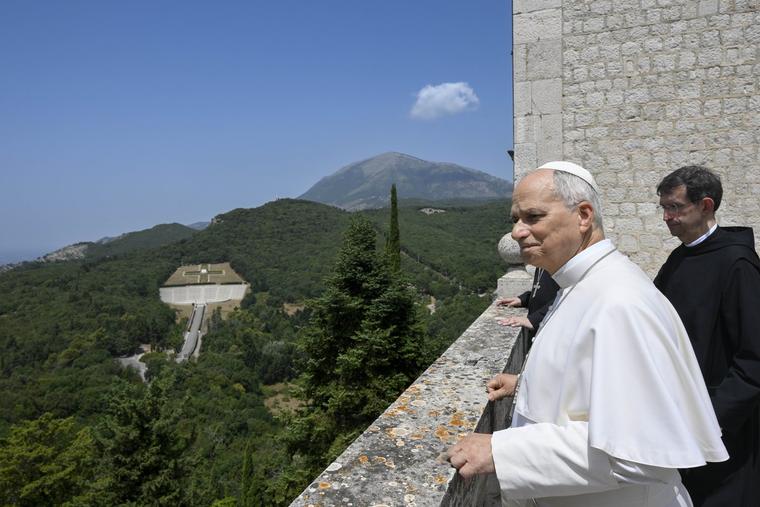
Since his election to the papacy, Leo XIV has made rest days a priority, seeking opportunities to relax from his busy schedule at the Vatican. Throughout the year, for instance — when he isn’t traveling abroad — he spends his Mondays and Tuesdays at Castel Gandolfo, where he enjoys tennis, swimming and horseback riding before returning to work in Rome.
The lakeside medieval town, a preferred retreat spot for the popes since 1626, quickly became a regular fixture in Leo’s pontificate, offering him respite amid his responsibilities as the spiritual leader of 1.4 billion Catholics. Soon after his 2025 election, Leo restored the papal tradition of spending several weeks at the Apostolic Palace there, a tradition discarded by Pope Francis during his 12-year reign. While on vacation there in 2026, he has visited several pilgrimage sites in the Italian countryside.
Leo’s visits to Castel Gandolfo, however, are about more than just escaping Rome’s summer heat. They point to something that he has often encouraged Catholics to rediscover in today’s technocratic world: the true meaning of leisure.
In several of his writings, particularly his encyclical Magnifica Humanitas, Pope Leo warned about a culture that prioritized work efficiency over fostering social cohesion through leisure. “... without a proper balance between work, leisure and rest, families are weakened and young people struggle to develop a sense of responsibility,” Leo wrote.
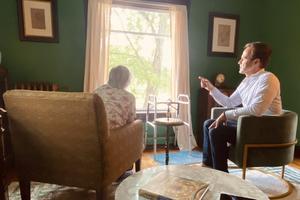
Legionary Father Eamonn O’Higgins, a philosophy professor at the Pontifical Athenaeum Regina Apostolorum in Rome, told the Register that the Pope’s emphasis on leisure “is showing us that stepping away from our routine work and entering another context is fundamental to our humanity.”
“I think, fundamentally, what it shows us is that being a man who is so busy and with such a weighty responsibility, he sees that it is necessary to have time away from his work. That points out that in the work-obsessed culture in which we live, there is a need to step away and open up into a deeper perspective of life and contemplation,” Father O’Higgins said.
Leisure: Needed for Contemplation
The importance of incorporating periods of rest and leisure has a long precedence in Catholic culture. Josef Pieper, a German Catholic philosopher who witnessed the Second World War, also had much to say about an increasingly leisure-less society in his book Leisure: The Basis of Culture. In that book, subject of the EWTN documentary Beyond the Machine: Josef Pieper and the Challenge of AI, he described leisure as “not the attitude of the one who intervenes but of the one who opens himself.”
Father O’Higgins, a noted scholar of Pieper, explained to the Register that Pieper meant leisure is not merely free time but intentional time spent in contemplation.
“We all have that spontaneous reaction: Leisure means taking a break, hanging loose, and not doing stuff. But that is not really what Pieper has in mind,” Father O’Higgins said.
“He refers to getting out of the things we have to do — what he would technically call ‘servile work’ — to rediscover the existing order and purpose of things, persons and God. We have to rediscover the joy of existence as our fundamental motive for rejoicing. That is what Pieper means by leisure. It is much closer to what we would call contemplation.”
Leisure vs. Doomscrolling
To escape the political turmoil in his native Germany, Pieper traveled to Italy with his then-fiancée, visiting Florence and Rome before returning home to witness the rise of Nazism. He reflected on this period as a realization of the purpose of leisure as something more than mere idle time.
“Unless we regain the art of silence and insight, the ability for nonactivity, unless we substitute true leisure for our hectic amusements, we will destroy our culture — and ourselves,” Pieper said.
Those hectic amusements often include dependence on modern technology, such as smartphones and computers, especially during summer break.
Bishop Paul Tighe, secretary of the Culture Section at the Dicastery for Culture and Education at the Vatican, recommended to the Register an unconventional way to identify how one may have misused free time: an examination of conscience using one’s browser history.
“I recently suggested a modern ‘examination of conscience’: Look at your browser history,” Bishop Tighe told the Register. “Where have you been all day? What have you given your time to? On public transport, everybody is doomscrolling.”
He emphasized, “Time is a very precious gift. Am I using it well?”
With the rise of artificial intelligence (AI), there is hope that this new technology will alleviate certain forms of work, increasing time spent on leisure. Bishop Tighe, however, criticized the notion that free time would be better spent if AI performed more tasks, using an example from his school days.
“Fifty years ago, when I was finishing school, we were advised to prepare for a ‘life of leisure’ because automation was going to take away many human tasks. That hasn’t fully happened, but it’s back on the agenda now with AI.”
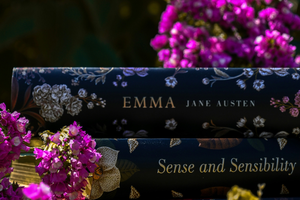
“But true leisure is more than just occupying yourself. Leisure is about valuing who you are. It’s reading the kind of book that opens your eyes, visiting an art gallery, or seeing a film that gives you new ideas. We have to be more attentive to what we do with our time,” Bishop Tighe said.
Leisure: A Gateway to Worship
Pieper, writing about his experiences in Italy, noted that he realized there that festivals, at the heart of leisure, were originally intended for worship: “But if celebration and festival are the heart of leisure, then leisure would derive its innermost possibility and justification from the very source whence festival and celebration derive theirs. And this is worship.”
“What holds true of festival also holds true of leisure. Its ultimate, innermost possibility and justification come from its rootedness in cultic festival,” Pieper wrote.
For Catholics, worship often takes concrete form in personal prayer and participation in the liturgy, particularly the Sunday Mass. Even the Pope has recently encouraged the faithful to “make room for listening to, reading, and meditating on the word of God.”
Father Francisco Insa, a psychiatrist and theology professor at the Pontifical University of Holy Cross in Rome, spoke to the Register about the importance of the Lord’s Day for Catholics and their leisure and how the Pope’s example could help.
“I would also say that we often see the Ten Commandments as a set of burdensome rules, but let’s not forget that the commandments also have rules that go along the lines of keeping holy the Lord’s Day,” Father Insa told the Register. “It is a rule that frees us one day a week.”
“We can all devote more time to recreation, but this does not mean spending all day in front of a computer watching YouTube videos. I think Pope Leo can also be an example here. On his day off, he dedicates time more calmly to prayer, to his relationship with God, to reading, and to physical exercise,” he said.
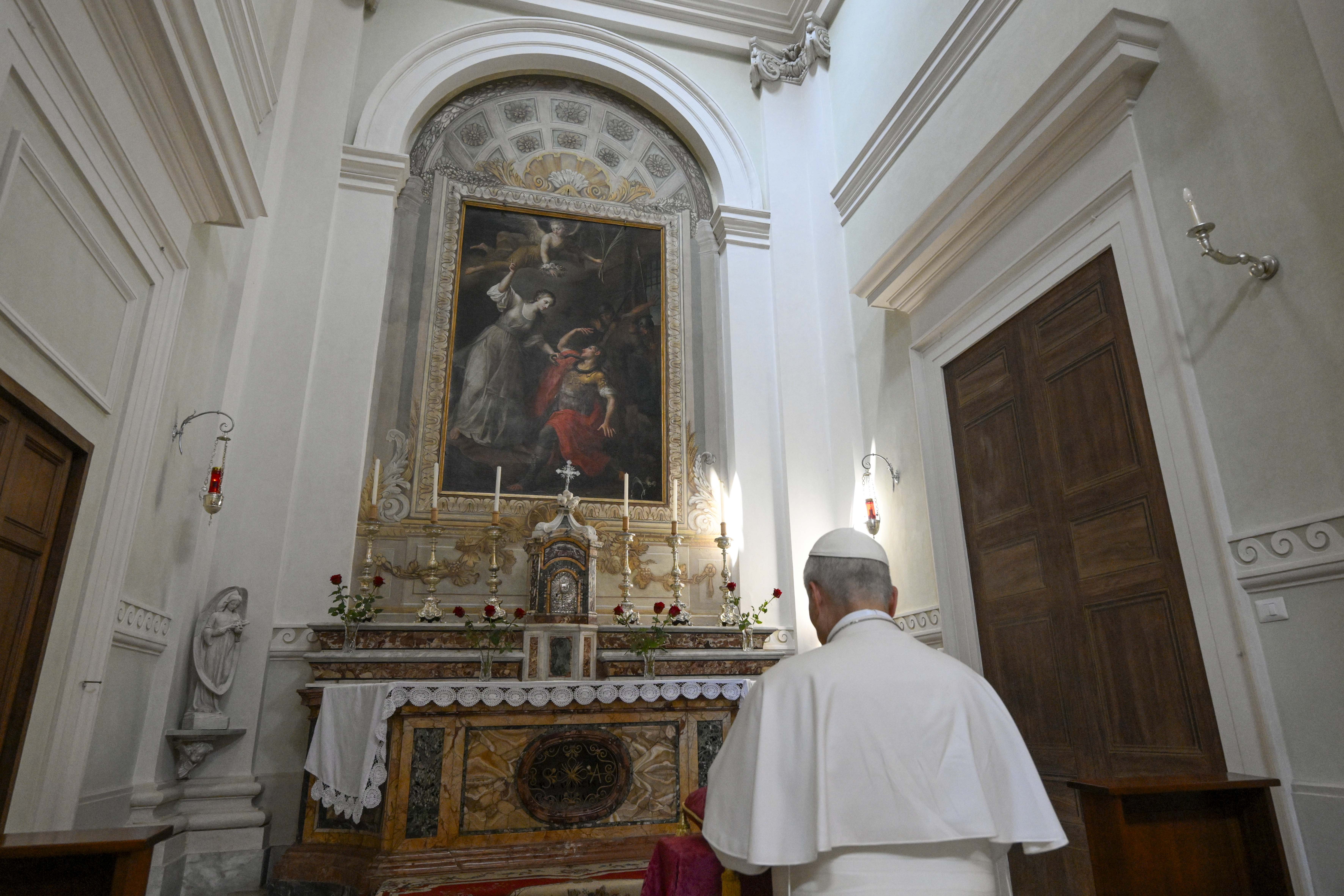
“I think it is a beautiful example of how even a pope can do such careful and profound work [for the Church], taking advantage of those moments, which surely was also an effort for him,” Father Insa continued. “We often don’t have time to spend with friends, and certain friendships are lost; this is certainly one of the things we can do during these vacation periods.”
- Keywords:
- summer vacation
- leisure
- day of rest
- digital fast