A Home for Grandma: Caregiving and the Cross
COMMENTARY: God was asking me to give more, to love more — and ultimately to trust Him more.
Anyone paying attention to the economy knows that one of the most challenging areas facing Americans is the housing market. Prices, interest rates and inflation are all high, while home options are low. For several years, I was one of many Americans searching and searching, with little to show for it besides pent-up frustration and a growing sense of desperation. Realtor.com was a permanent feature on my desktop. Checking those red dots of available real estate on the map became a daily, even hourly, ritual. For a time, it seemed like nothing would pan out. I considered giving up.
I had big plans for this house. The years of looking gave me plenty of time to plan for things to be “just right” when I finally moved in, whenever that would be. I’d become something of a thrift-store addict in recent years, accumulating a respectable amount of vintage furnishings for the future house. I stored much of it at work in various closets. “It’s for the house,” I’d explain with a nervous smile. The higher ups, thankfully, were understanding. But the months and years rolled along, and still no luck — no house. All of a sudden, things changed.
Venting to a colleague about my seemingly dead-end search ended with her putting me in touch with a close friend who was also an experienced realtor. Within a couple days, I was viewing a house. A few days later, I put in an offer that was accepted within a matter of hours. After three long years, things were coming together. My carefully crafted plans, for so long in a conceptual stasis, were finally put in motion. But once again, things changed.
One late afternoon, about a month after moving in, I was getting ready for a small get-together with my parents and a small group of friends. I was eager to host my first soirée at the new house.
As I was preparing hors d’oeuvres and getting the house ready, the family started exchanging nervous texts and calls that my 90-year-old grandma wasn’t answering her phone. A bit alarming, we all thought, but no immediate concern. She may be sleeping and just can’t hear the phone. This had happened before on many occasions. Repeated phone calls eventually resulted in an answer. (The family had kept up daily check-ins and visits with Grandma, especially in recent years.) My brother, who lives much closer to her than I, went over to the house and began repeatedly ringing the bell and knocking on the door. No answer. Still just sleeping? Perhaps. But concern began to set in. We reviewed the front porch camera for the day, only to see that she hadn’t been out all day. It was about 4:30 p.m.
Some helpful background information: For decades, and several times throughout the day and night, rain or shine, Grandma would emerge onto her front porch to scoop out cat food to hungry local strays. While her memory faded, strict fidelity to this tradition was absolutely unshakable. Trying to talk her out of it with appeals to safety (and sanitation) was utterly futile. Not surprisingly, this predictable porch habit attracted the attention of a diverse range of hungry animals over the years, which made for very interesting viewing on the camera for the family, a sort of Animal Planet: Urban Porch Edition. Seeing Grandma shooing away a well-fed raccoon with a broom ranks as one of the more memorable moments. Her habit of service to strays did have one benefit, as we could monitor from the camera throughout the day that she was okay.
With no reply to repeated calls, loud bangs on the door, and no front porch sightings all day, worry set in for the family. Something definitely was wrong. The party was called off. My brother broke one of the glass panes on the door to gain entry to the house. I live about an hour away, so my mother and I began to make our way into town, praying the Rosary as we drove. We were expecting a phone call any minute to inform us of the worst.
The phone rang. Grandma was alive, barely. She was in bed, clearly unwell. The paramedics arrived, and Grandma was carried out of her home of more than 50 years (for the last time, as it turned out) to the hospital, where the family reunited.
Thank God, Grandma was going to pull through, but things would have to change.
Grandma always insisted that she would never leave her home. Like feeding the strays, this was one of the big nonnegotiables of her life. But as my family and I assessed the situation in the late hours of the night in the ER waiting room, we realized that big changes were on the horizon for Grandma and for all of us. She could no longer live by herself. She’d have to move.
We knew her recovery in the hospital would take several weeks, giving us time to come up with a plan. So for the next month, the family scheduled a rotation of treks to the hospital for extended visits with Grandma to keep her company. Priest friends visited as well, to anoint her, encourage her and bring her Holy Communion. She gradually regained her strength and appetite, which were very encouraging signs, but the progression of dementia confirmed the need to organize a new home for her. But the where remained a daunting uncertainty.
As I said, move-in day for me was only about a month before. While Grandma wouldn’t be returning to her old house, I certainly hadn’t settled in at my new house.
The free time after work and on weekends that I had anticipated for settling in was now consumed with long drives back and forth to the hospital, one hour each way, including the couple of hours with Grandma. Of course, we all did this willingly and with a profound sense of gratitude for Grandma’s recovery. But it was exhausting.
And all the while, my family and I were thinking, “What next?” for Grandma. The clock was ticking.
I don’t remember exactly when the solution presented itself in my mind. I knew I couldn’t bear the thought of dropping my confused grandma off at assisted living, but what other option was there?
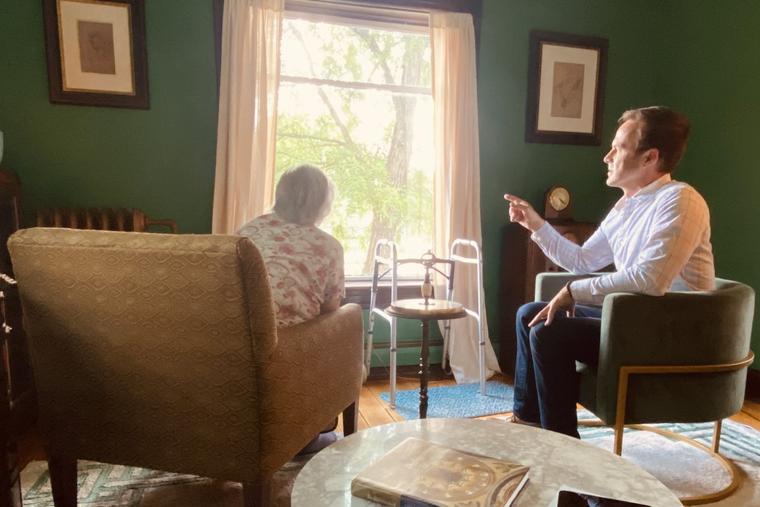
Suddenly, the obvious solution broke through: “There’s an extra room in this house. So why not?” With the family’s agreement, Grandma would move into my new home. My parents (who had moved into my house as well) signed off on the idea. It was settled. It’d be a multigenerational home.
The resolution of a major question brought with it a profound sense of relief. However, those precious plans I’d been carefully organizing for years about how everything would be “just so” in my home had been tossed out the window.
It’s been just over a year since Grandma took up residence here, a year of round-the-clock caregiving, laughter, routine adjustments both large and small, energy-sapping trials, dementia-induced mood swings, family bonding, and occasional tears. Evening routines consist in helping Grandma with dinner and her word-search puzzles, as well as singing along to old Spanish songs to help her get into a better mood.
Amazingly, she remembers many lyrics of songs dating back 60 years. Dementia is, among many things, a mysterious illness.
Of course, she’ll ask the same questions over and over. The most common are when she’s going home, where she’ll be sleeping tonight and, touchingly, where her mother is and why she hasn’t come to see her yet.
Through trial and error, I’ve gotten better at addressing and, at times, deflecting these questions. Each night carries with it an exhausting uncertainty. Will she sleep soundly, or will she get up multiple times? When she does get up, will she be clear-headed and relatively independent, or completely out of it and require help with each step to the bathroom? Sometimes throughout the day, she gets upset and impatient, and she lets us know with choice words. “It’s not her; it’s the illness.” We hear that a lot, and it is certainly true. The unpredictable mood swings and verbal arrows nevertheless take a toll.
Along with many caregivers, I’ve come to appreciate the necessity of patience. But as a Catholic, I’ve come to depend on supernatural grace and perspective when exhaustion sets in or impatience surfaces.
The other night, Grandma was more restless in bed than usual. Pulling up a chair next to her bed, I sat with her for a couple of hours. I brought a rosary, a few relics and a book (Crime and Punishment) to pass the time. An old lamp gave off a soft glow from the corner. I prayed, read about a young man’s sin and guilt, rested my hand on the relics, and occasionally held Grandma’s hand as she’d reach out. She eventually fell asleep.
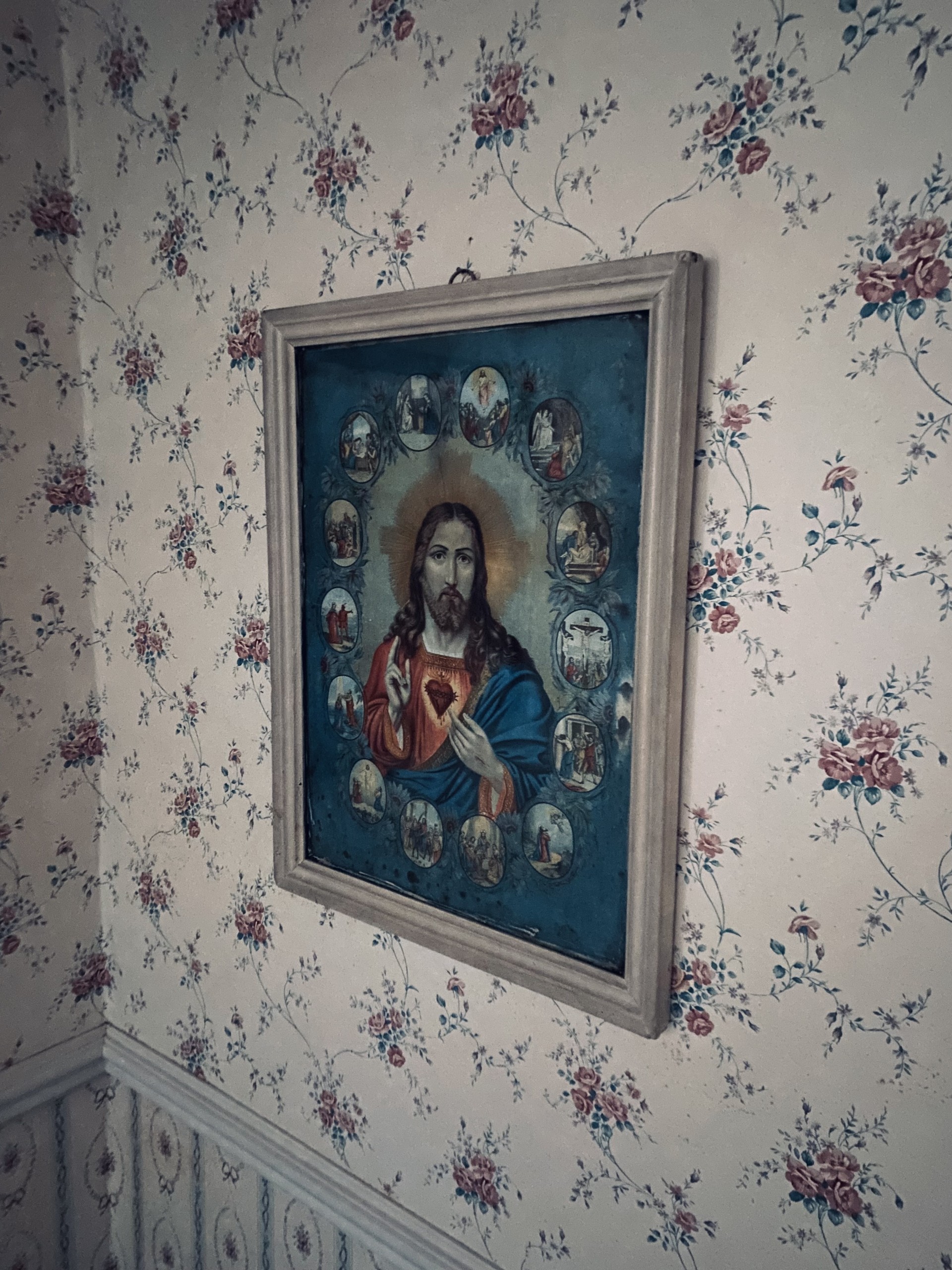
Experiencing the toll dementia takes on Grandma, as well as on each of us who cares for her, I’ve come to better understand why God did what He did with my carefully crafted “plans.”
He was asking me to give more, to love more — and ultimately to trust Him more. Plans certainly are important but, coupled with the effects of our fallen nature, they often are burdened with a desire to control.
The tendency in the many moments of frustration and weakness was to think of the house as mine, the time as mine, the plans as mine. I was supposed to be able to control and arrange everything, just as I had planned. I’d earned it, after all. The self-regard was clear. And God, the Physician of souls, needed to heal it.