‘On the Camino, I Gave My Life to Christ’: Amid the Crowds, the Way of St. James Still Offers Unexpected Encounters
More than 1,200 years after the tomb of St. James the Apostle was discovered in northwestern Spain, the Camino de Santiago remains one of the world’s most popular Catholic pilgrimages. Yet, despite modern tourism, the ancient route continues to move pilgrims to life-changing encounters with God.
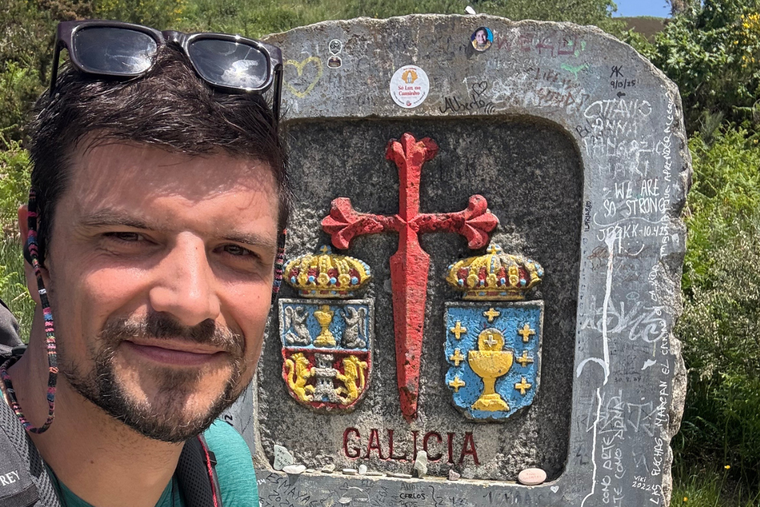
It is a 485-mile journey from Saint-Jean-Pied-de-Port to Santiago de Compostela.
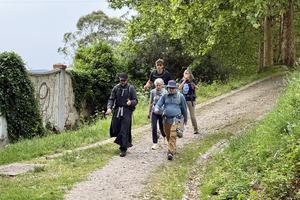
This so-called Camino Francés — know by most as the “French Way” — is not the only road leading to Santiago de Compostela, but it is by far the most popular one. Every year, from this small town in the south of France, tens of thousands of people set out on foot to the tomb of St. James the Apostle.
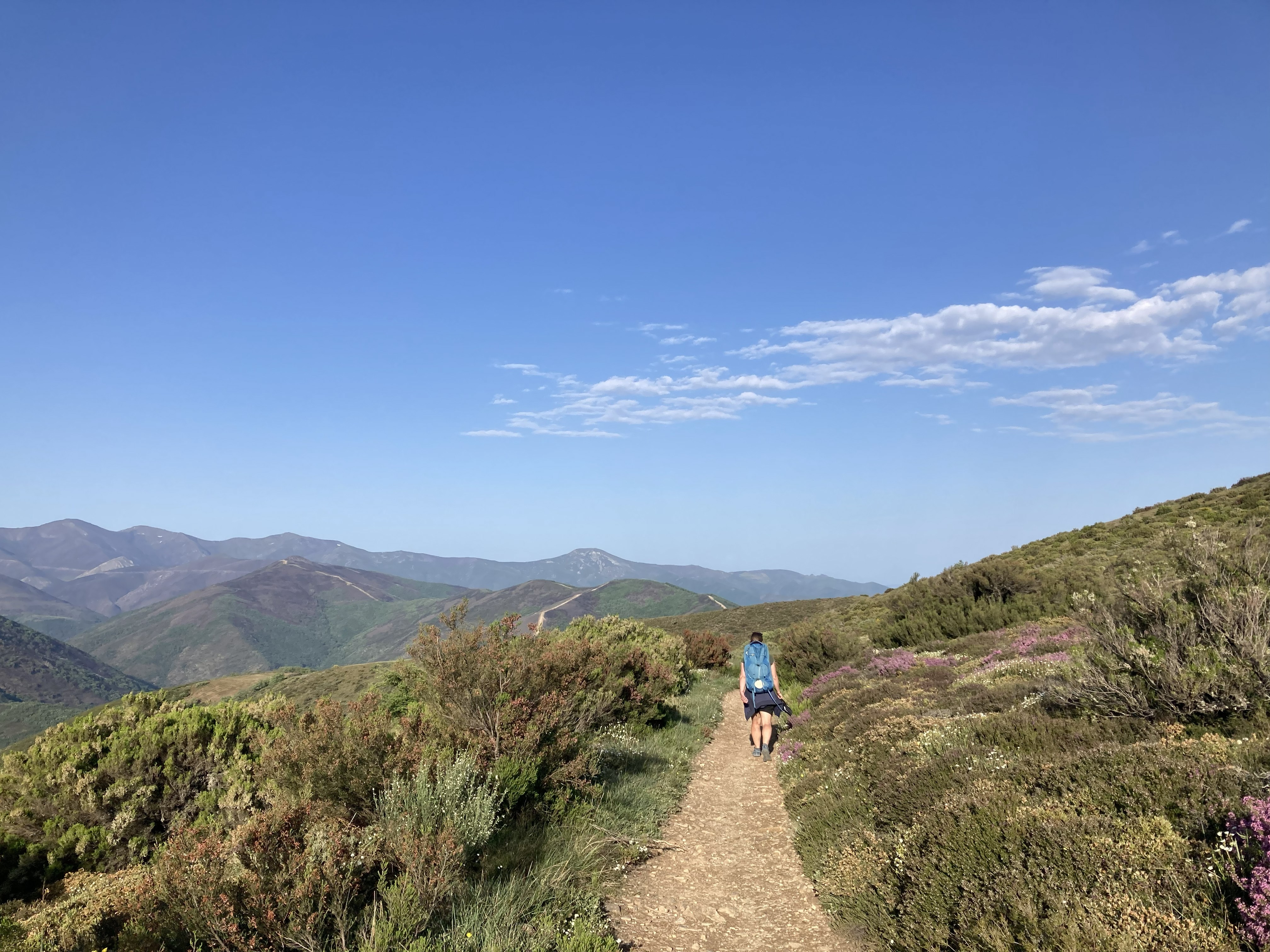
According to tradition, it is also the route that St. James, whose feast day is July 25, is believed to have walked following the death, resurrection and ascension of Jesus to bring Christianity to the Iberian Peninsula.
Upon his return to Jerusalem, St. James became the first apostle to be martyred by beheading at the order of King Herod Agrippa I around A.D. 44. According to legend, James’ disciples carried his body back to Galicia, burying his remains in the cathedral of what is now Santiago de Compostela. A major pilgrimage route of medieval Christianity was born.
But what was once a distinctly Christian pilgrimage is today drawing not only Catholics, but also atheists, agnostics and spiritual seekers from around the world.
They come for different reasons: adventure, healing, grief, curiosity, or simply the challenge of walking hundreds of miles.
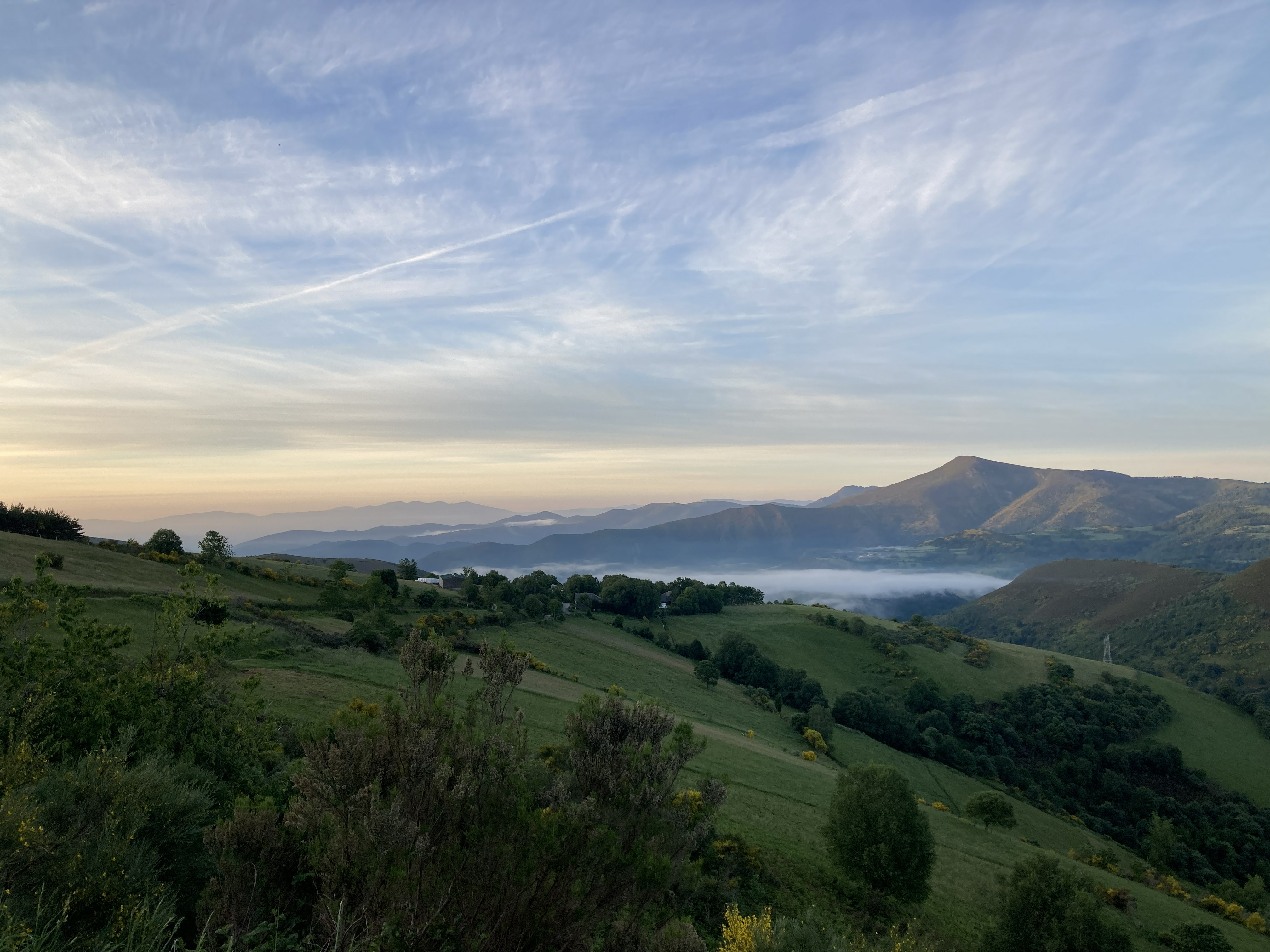
Yet, somewhere between the rugged peaks of the Pyrenees mountains, the vast and barren Meseta plains, and the climb up Mount Irago about a week from their destination, many discover something they were not looking for.
Camino of an Olympian
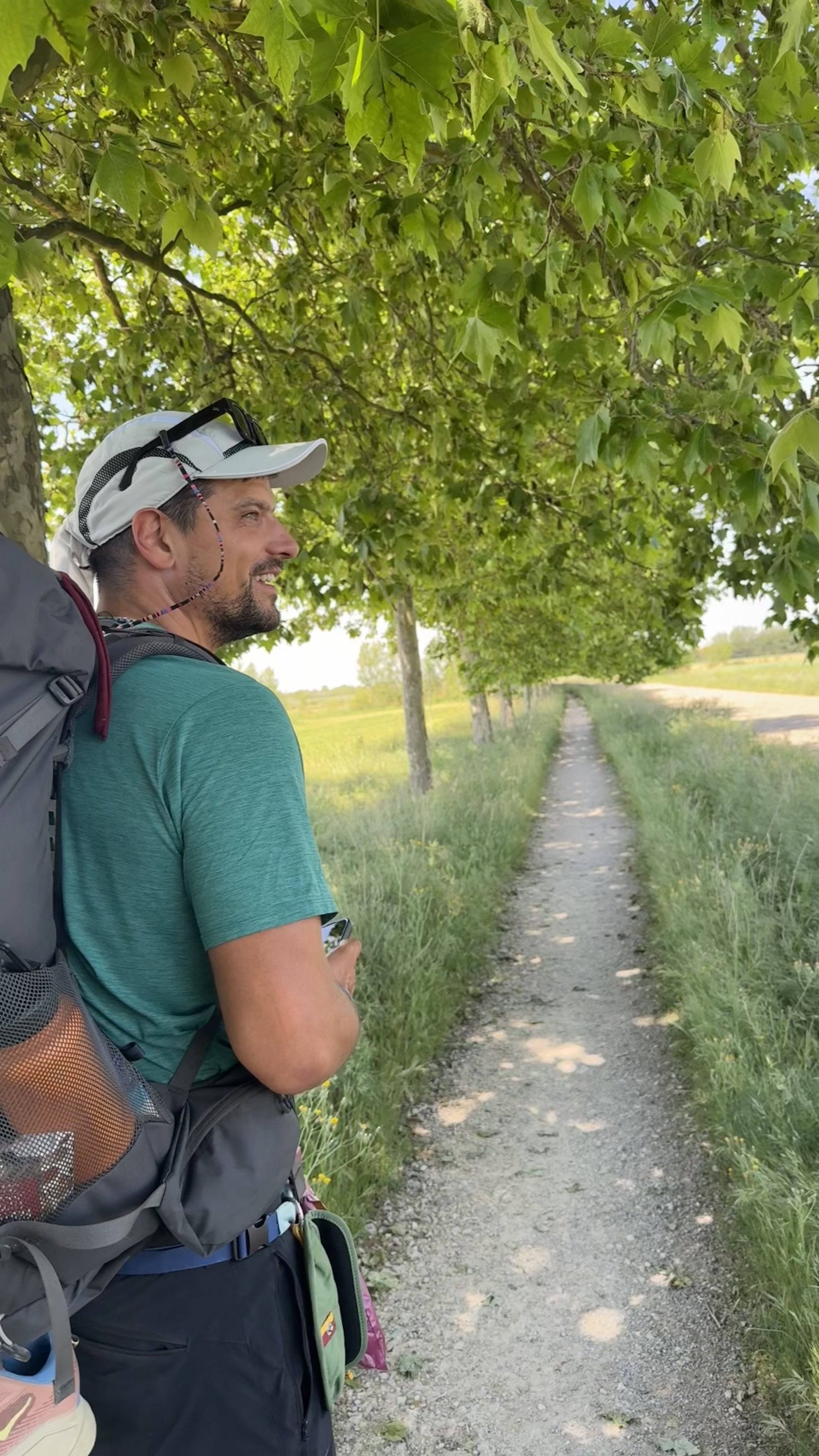
Croatian-born Goran Tomašević, 36, had studied in the United States, represented Australia in men’s water polo at the 2020 Tokyo Olympics and built a successful career as vice president of a Sydney-based global financial services group. When he first heard about the Camino, his life was in a period of transition.
“There was a big shift in my life,” Tomašević told the Register. “A big relationship came to an end. We were together for 10 years, we were engaged, living together, we even had a dog and a house together, and it all ended.”
Around the same time, he also left behind a decade-long career that had consumed most of his adult life. “The job was taking up 90% of my time,” he explained, “and I felt like I was just helping rich people become richer.” Leaving his job, he said, “it felt like a divorce as well.”
What followed was a journey of self-discovery, leading him down different paths — ranging from psychiatry to psychedelic experiences in South America. Hearing how the Camino had helped his niece find self-acceptance, self-love and peace after her struggles resonated deeply with Tomašević.
Because he knew that he “would rather spend time with [his] enemy than by [him]self,” as he put it, he decided to embark on a five-week journey to Santiago de Compostela, completely on his own.
He had long avoided the burdens he had carried throughout his life by immersing himself in work and water polo. The journey became a time to confront those struggles.
During the earlier, less-crowded stages of the Camino, “there would be just me for three or four hours in the middle of nowhere,” Tomašević said, thinking back to the desert-like Meseta plains. In those moments, he shared, “I felt that it was just me and God.”
Raised Catholic in Croatia, Tomašević had drifted away from the Church upon feeling that faith was being imposed on him as part of the culture. “But along the Camino,” he shared, “the amounts of churches and crosses and priests ... all felt very approachable. All felt very loving, like ‘we are here if you want.’ Nothing felt forced. It felt very gentle.”
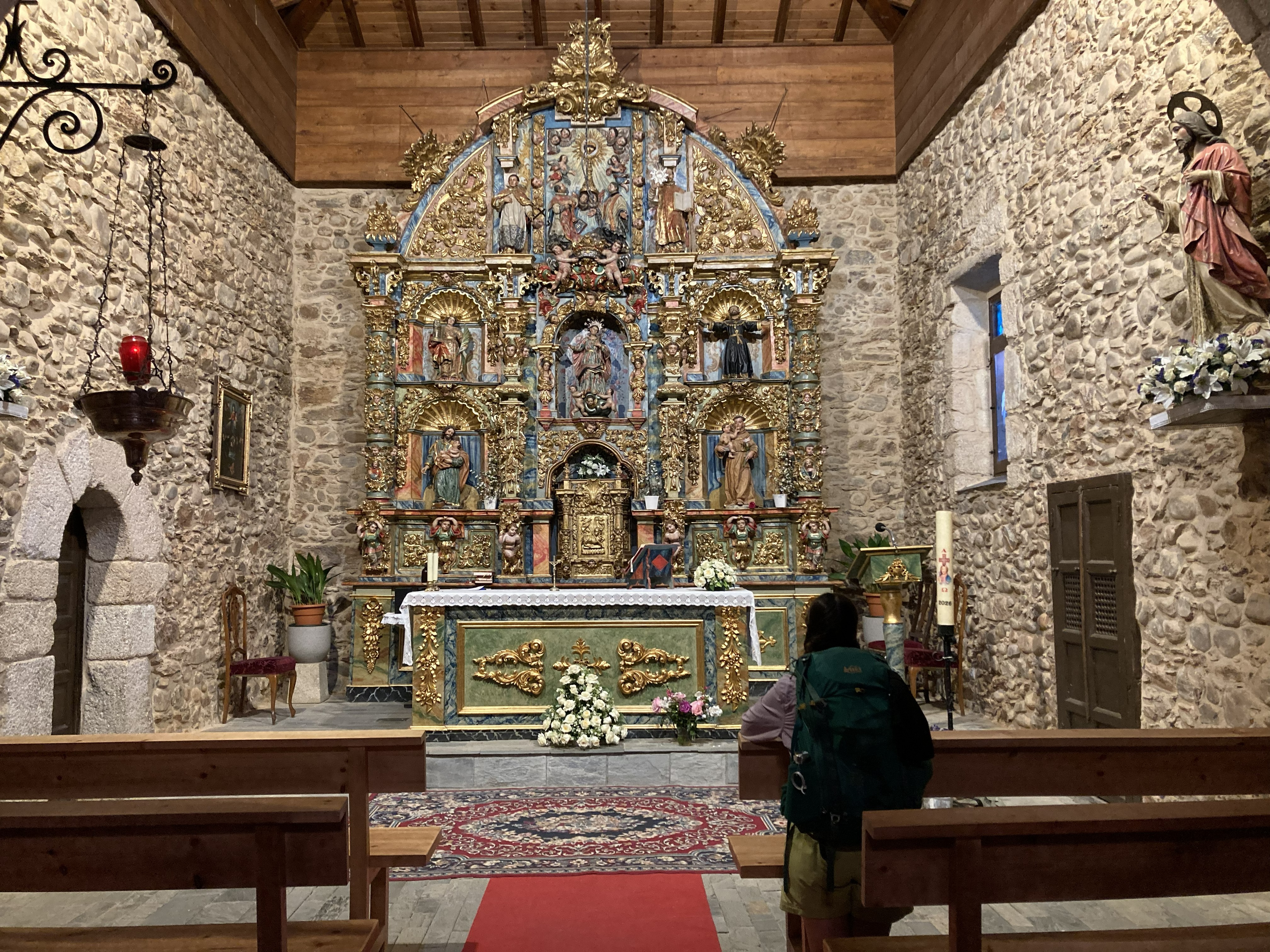
Through the people he met along the way, Tomašević found himself transformed. He encountered God not only in their stories of suffering, hope and love — from cancer battles and eating disorders to kidnapped children and the loss of a spouse — but even in the simple greetings from passersby.
“Once, I could see this girl running towards me, from the opposite direction. And as she ran by me, she said, ‘Hola, Jesus loves you’ and continued running, laughing. It was almost like she wasn’t real, like I imagined her. And I just started crying.”
“Another time at a hostel,” he recalled, “this lady just grabbed my face before I left and just repeated, ‘Goran, you just need to trust.’”
“The real surrender happened going up the mountain to O Cebreiro,” Tomašević said. “I knew that the last 7 kilometers were a steep uphill climb, and when it came to it, I really sped up. And I spoke to God and I said, ‘I am ready; I am at your service. I can carry whatever I need to carry for You.’”
Called to Pilgrimage
For Chad Lawrence, 36, the Camino had long been on his radar, dating back to his late teens. “It was always something that I wanted to do at some point,” the Canadian told the Register. “I told myself that it would be the first thing I would do upon retirement.”
But that plan suddenly changed one day while he was sitting at his neighborhood pub.
“The thought of the Camino passed through my mind like a cloud in the sky. But it had an absolute thunderbolt in it, and it struck my whole person. I knew it was something I had to pay attention to,” he shared, describing the experience as “something like a calling.”
The next day, Lawrence asked his boss for time off to make the trip, explaining that it was something he felt he “really needed to do” — a request that was “graciously approved.”
“I don’t know where that hunger came from,” Lawrence added, explaining that he was happy and fulfilled in his life, career and friendships, and had never felt that anything was missing or out of place. “I just knew I wanted some kind of breakthrough in my life.”
After a month of planning, Lawrence left for France, but not without trepidation. “Before I took off to the airport, I had this crazy wave of emotions come over me,” Lawrence recalled. “I had this really profound sense that I was not going to come back the same.”
From the moment he set out from Saint-Jean-Pied-de-Port, Lawrence found that the heart of his Camino would not be in the rugged terrain or the physical challenges, but the people he met along the way.
“I felt a gratitude I didn’t know I was capable of,” Lawrence shared, recalling his first days of walking together with newfound friends: “I think it was the first time I articulated a prayer directed toward God. I just said, ‘Thank you for bringing me here.’”
In addition to starting his days by reading a passage from Scripture, Lawrence developed “a habit of praying for everyone he had spoken with the day before, asking God to give them whatever they needed, whether through reflection or conversation, and simply thanking God for bringing them into [his] journey.”
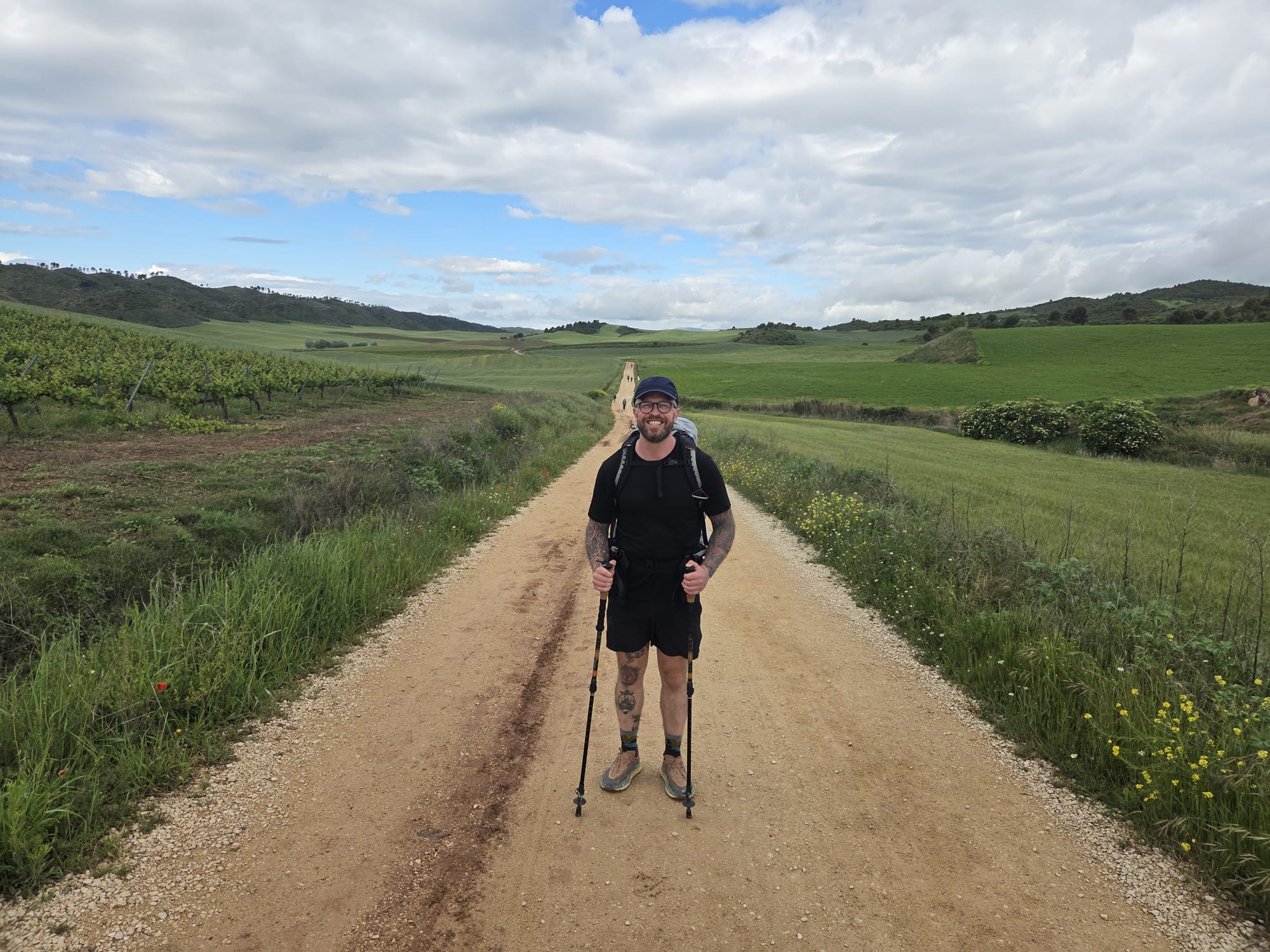
Reflecting on how he experienced God through friendships, he added: “My heart really felt at rest, at peace.”
Through later encounters with Catholic pilgrims, Lawrence began exploring theological questions about the differences between Catholicism and Protestantism, the Bible, the Harrowing of Hell, the problem of evil, and the relationship between God the Father and God the Son. This search for answers started to lead him closer to the Catholic faith.
Lawrence, who had “always been a little bit of a seeker” and “always had this secret hope in [his] heart that God existed,” explained that the Camino gave that hope a new urgency: “It felt like God called me to himself,” while still giving him the freedom “to choose him.”
His response to that call came on the Camino: “On the Camino, I gave my life to Christ.”
A Journey of Encounters
Despite being a highly touristy pilgrimage that draws millions of visitors each year across its various routes, the Camino continues to offer profound spiritual encounters to those who walk it.
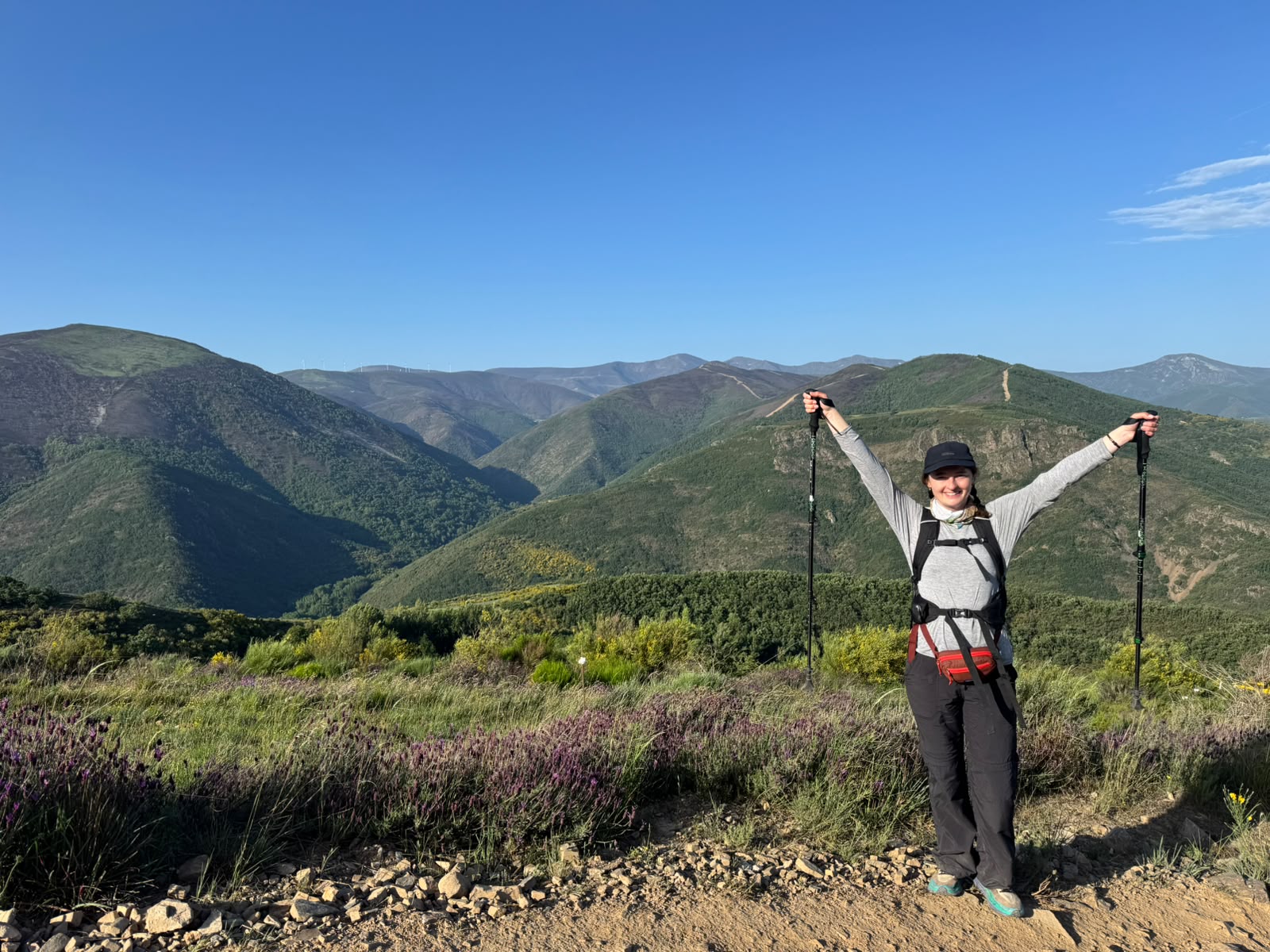
Desrae Presdee, 34, from Melbourne, Australia, who met Lawrence on the train to Saint-Jean-Pied-de-Port, is another pilgrim whose journey on the Camino sparked an unexpected encounter with the Catholic faith.
“I didn’t consider myself a religious person or someone open to the idea of religion,” Presdee told the Register. “However, I knew I wanted to soak in everything the Camino had to offer and be curious.”
“Along the way,” she shared, “I found myself attending Masses, which I had never done before, and popping my head into churches to pay my respects. My openness became more and more apparent throughout the Camino, and I found I had many questions on faith that needed answering, often via friends made along the way or the internet.”
Looking back on her 36-day journey, Presdee noted it was the people she encountered — their kindness, generosity and willingness to help — that left the deepest impression.
Having taken many hiking trips through beautiful places where neither “the history nor the spirituality formed part of it,” Presdee said the Camino stood apart because of the “history and tradition of Catholics walking the Way of St. James for centuries.”
“When you walk in the footsteps of pilgrims who struggled more than the modern-day pilgrim, it does make you stop and appreciate the experience for what it is today, but also what it had been from the beginning.”
For many, including Tomašević and Lawrence, who have started attending Mass on a regular basis back home, completing the Camino was among the most beautiful, emotional and overwhelming experiences of their lives.
Recalling the moment he walked into the square in front of the Cathedral of Santiago de Compostela, Tomašević said, “I laid down on my backpack and looked up at the towers. The sun was breaking through the clouds, right in between the two towers, shining straight into my eyes, and it just felt like I was being acknowledged, like God was telling me, ‘I see you. From now on, we are together.’ I was crying — my entire body was shaking.”
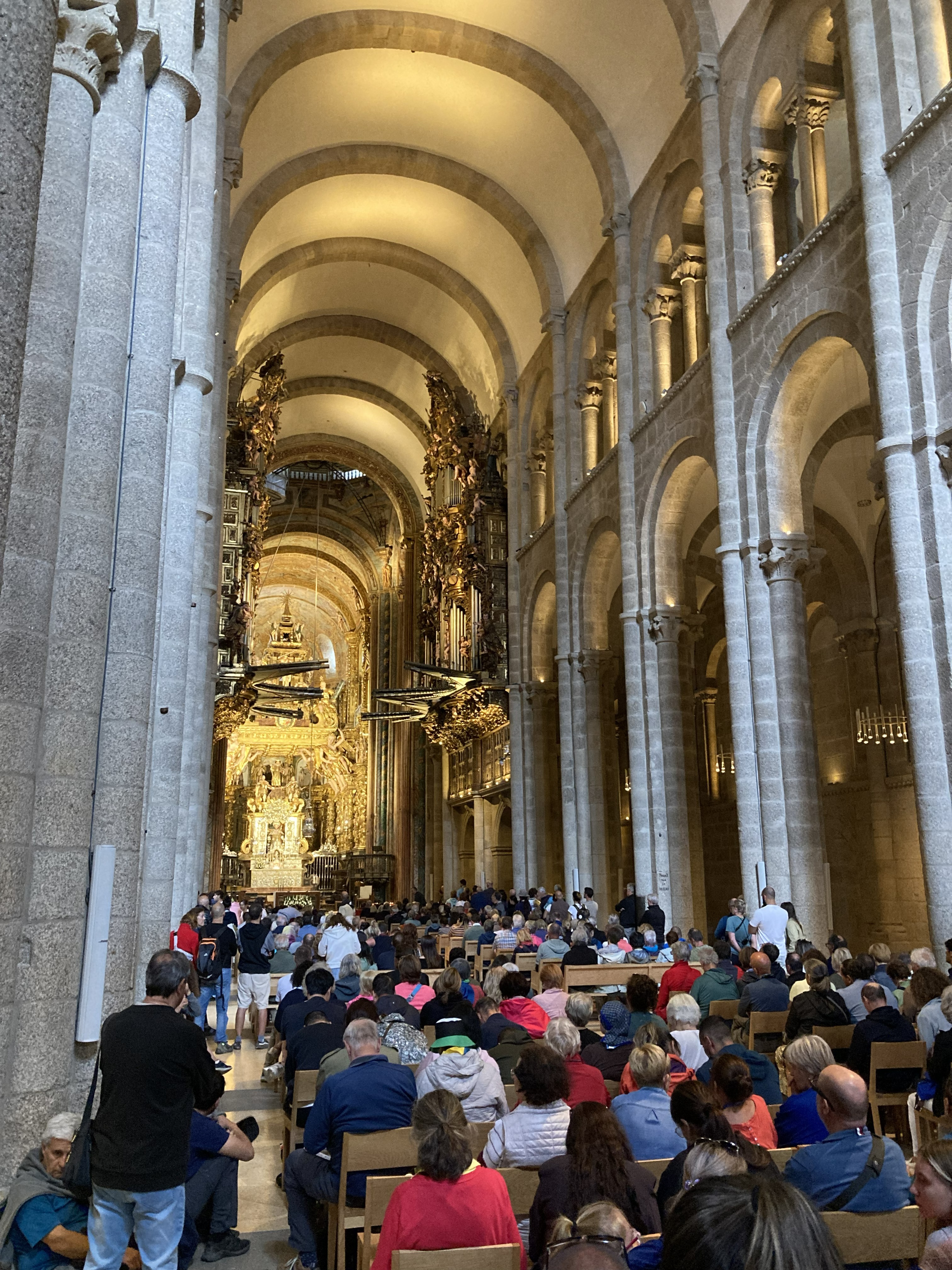
Through encounters, the Camino reminded him that God speaks and acts through others: “It always brought me people from whom I needed to hear something or to whom I needed to say something.”
The Way of St. James is, all the pilgrims agree, a journey of encounters — some planned, some unexpected, and others far more surprising.
“For the rest of my life, the Camino is going to be symbolic with finding a new life in Christ,” Lawrence added. “Now, I have a journey inside of me to make. It is the start of a new walk.”