Saved by a Miracle, Now Saving Lives: Twins Share Their Pro-Life Journey
Sisters endangered in the womb by ‘twin syndrome’ now serve together as sidewalk counselors and are committed to additional pro-life work.
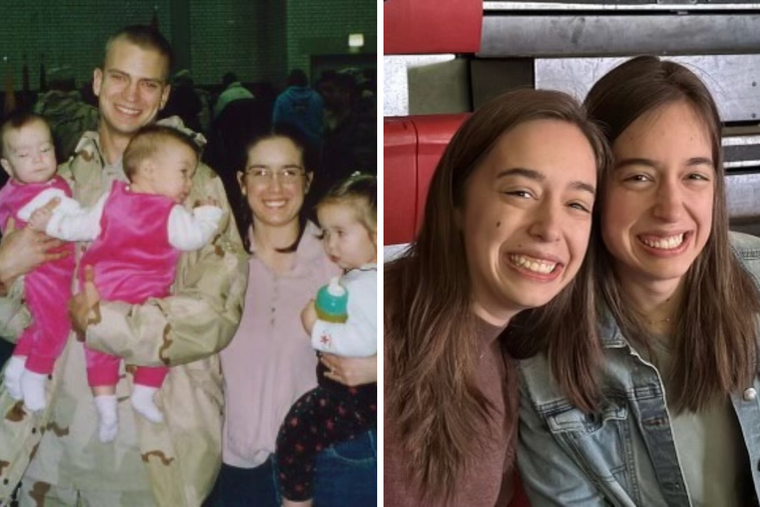
For two years, Clare and Catherine Kracht’s goal while sidewalk counseling outside a St. Paul, Minnesota, abortion facility on Wednesday mornings is to peacefully let all those they encounter there know that their lives are a unique gift of God.
At 7:30 a.m., when the 21-year-old identical twins can volunteer together, they’re more likely to greet the facility’s employees arriving for work than women seeking abortions. But the Catholic sisters seek to let God show them what to say to those they meet and whom to offer information about unborn babies, even if they don’t always feel equipped to answer every question about their pro-life stance.
“I guess one thing that I’ve always thought on the sidewalk is, I always know that God has already won the war, so I don’t have to really worry in the moment,” Clare told the Register.
The twins often counsel with three men each week through the St. Paul-based nonprofit Pro-Life Action Ministries.
Growing up in their family of 10 children that includes eight daughters, in West St. Paul, Minnesota, the sisters have been inspired by their parents’ and grandparents’ support for the pro-life movement. Along with their sidewalk counseling, their work in their paid jobs also reflects this dedication.
The pro-life movement has meaning for Catherine and Clare for another reason: One or both could have died if their mother had not been able to have a surgery before their birth, which then wasn’t widely available in the United States.
Like many twins, the sisters’ connection before birth has continued as a strong bond in life, but after their hour of sidewalk counseling together, they go in different directions to jobs that support life at different stages. Catherine works at a West St. Paul pregnancy-resource center, and Clare helps an elderly woman in her home as a personal care attendant and companion.
Catherine and Clare suffered from Twin-to-Twin Transfusion Syndrome (TTTS), which affects 10% of identical twins before their births in Weiden, Germany, in 2003.
The twins’ mother, Tracy Kracht, and their older sister, then 13 months old, were living at the U.S. Army Garrison Bavaria in Grafenwöhr, a few months after the start of the Iraq War, where their father, Ryan Kracht, was deployed to serve.
Returning to Germany five months into her pregnancy with the twins after a visit to the U.S., Tracy Kracht noticed something was wrong. An ultrasound revealed that her excessive amniotic fluid was caused by TTTS.
Identical twins share a single placenta and a network of blood vessels supplying oxygen and nutrients essential for their development, but those with the syndrome suffer from an imbalance in blood exchange, according to Johns Hopkins Medicine.
As a result, one twin gives the other more blood than she receives, putting the twin at risk of malnourishment and organ failure, the medical website explains. The other twin receiving the extra blood may suffer from an overworked heart and other cardiac complications. If the syndrome isn’t diagnosed by about 20 weeks, there is a high likelihood that both babies may die, according to the website.
At the time of the diagnosis, a minimally invasive laser surgery to correct the problem in utero by separating the infants’ circulation systems on the placenta wasn’t widely done in the U.S. — but it was available in Germany.
Tracy’s parents, Denny and Margie Adrian, who live in St. Paul but at the time were visiting their daughter in Germany, drove her, the unborn twins and their older sister about six hours north to Hamburg, Germany, for the surgery. Granted leave from his Iraq deployment, Ryan arrived at the hospital as Tracy was going into surgery, Tracy explained to the Register.
The surgery was successful; and two months later, in July 2003, the twins were delivered early, at 32 weeks. Because of the TTTS, Catherine was born somewhat smaller than Clare, but she caught up fairly quickly, according to their mother.
She added that she is happy that her daughters are now healthy young adults who actively support life.
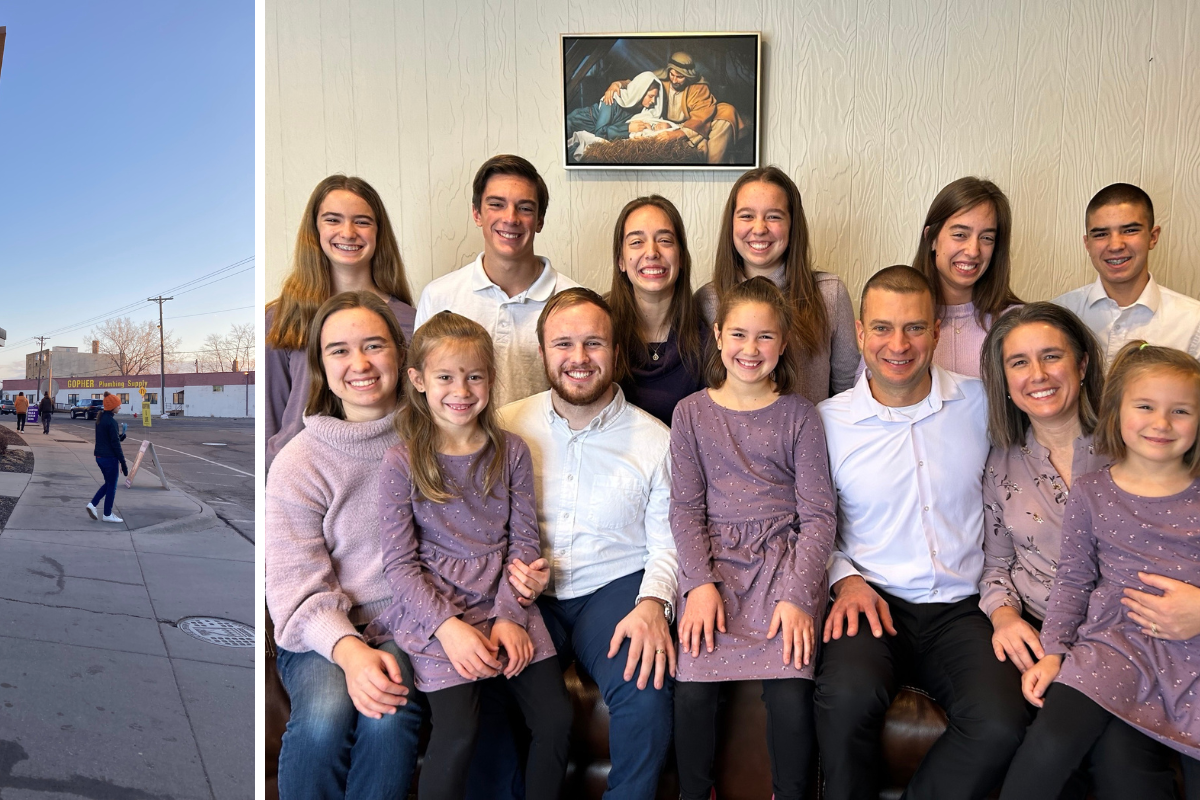
Catherine and Clare grew up not only learning about life from their immediate family but also helping their grandparents, the Adrians, minister to families in need.
Since 2012, the couple has delivered more than 3,700 cribs and roughly 3,800 car seats, along with blankets, quilts and sleepers to families in the Twin Cities area directly and through pregnancy-resource centers. The Adrians look for and accept donations of new and used items, refurbishing them if necessary, grandmother Margie said.
Clare helps locate items for the ministry on internet sites, she said, while Catherine refers families she meets at her job to her grandparents.
According to Clare: “I guess we’ve seen [the Adrians] have cribs around their house forever and car seats stacked to the ceiling, so we started learning about the pro-life movement at a young age.”
Margie Adrian, previously a volunteer counselor at a pregnancy-resource center before she and her husband started their ministry, said she’s amazed at her granddaughters’ sidewalk counseling and involvement in pro-life work. “I'm so proud of them,” she said of the twins, who by age are in the middle group of their 21 grandchildren.
“I think it’s so good that young people can be there, talking to some of these other young people because they can relate well to them,” added Margie, who sometimes prays with a parish group at the center where her granddaughters do sidewalk counseling. “I love that they do that and I hope they'll inspire more young people to do it too.”
Besides their grandparents, Catherine and Clare said they were inspired by one of their aunts and also by a friend who has also trained in sidewalk counseling through Pro-Life Action Ministries. According to its website, the organization trains counselors to “peacefully reach out to women experiencing an unplanned pregnancy with love, truth and support as they enter abortion facilities.”
Clare said, “I heard about it from my mom and I always had it in the back of my mind, something I should be doing.” Eventually, she said, “I dragged Catherine along with me, and then we kind of said, ‘If I do it, she’ll do it.’ She does it, and so that kind of helped.”
The sisters don’t know if any babies have been saved through their conversations as sidewalk counselors, but Catherine said, “I think we both know that God works through many ways, and we might not ever know the ways that we touch people’s lives. I think we know that he’s the one in the end [who touches hearts], and so he’s using us and every other sidewalk counselor there.”
A 45-minute conversation with a worker at a Minneapolis abortion facility was challenging, Clare said. “It was really hard because I didn’t have all the answers … but at the same time, I tried; and I’m here, and I feel like just even being there is a witness.”
Since they’re in their early 20s, the twins have found that younger women feel more comfortable talking to them. “I did have one woman I was able to talk with for a little while, and she mentioned to me that when she came around the block, she was dropped off by an Uber [ride] but then walked around the block,” Catherine said. “She mentioned to me that she was grateful to see another woman that she could relate to.”
In their volunteer work and jobs, they see the Lord’s hand, the sisters said. The Eucharistic chapel recently opened inside the pregnancy-resource center where Catherine works has been a great reminder to rely on the Lord every day to help them reach those they encounter.
“I’ve heard people often say about [the pregnancy-resource center] that it’s more than just saving babies,” she said. “It’s about saving the souls of the men and the women and others who come there. … I think it’s about all life matters, and has a purpose, as well.”
As she works with the elderly, Clare said she’s also seen the value of that phase of life.
Margie Adrian said her granddaughters’ faith inspires her. “They’re at chapel; they’re at Mass on a daily basis when they can get there,” she said. “They have just become really helpful when they can, and sometimes they inspire me, actually.”
Clare said she and her sister also find personal encouragement while sidewalk counseling. “We have passersby who wave and smile and pray for us — and just knowing that there are other people, and we’re not alone in it, is helpful, too,” she said.
Although sidewalk counseling can be challenging, Clare encouraged other young adults to be open to it. “Just as Pope St. John Paul II said, ‘Don't be afraid,’ we haven’t quit yet.”
Catherine also encouraged people to be pro-life by example and in the way they treat human life at all stages. We may never know how people we meet are struggling, whether or not they’re facing an unexpected pregnancy or other challenges, she said.
“I think everyone deep down has a wound that they’re trying to heal from, and so I think the pro-life movement can be expanded to everyone and just caring for everyone,” Catherine said. “I would say it can start with the people around them.”
- Keywords:
- prolife witnesses
- dignity of the unborn
- prolife women
- prolife work
- twins
- catholic families