The Priest Who Saved the Detroit Tigers — for One Day
When Ty Cobb’s teammates went on strike in 1912, a future Catholic priest found himself pitching for the Detroit Tigers.
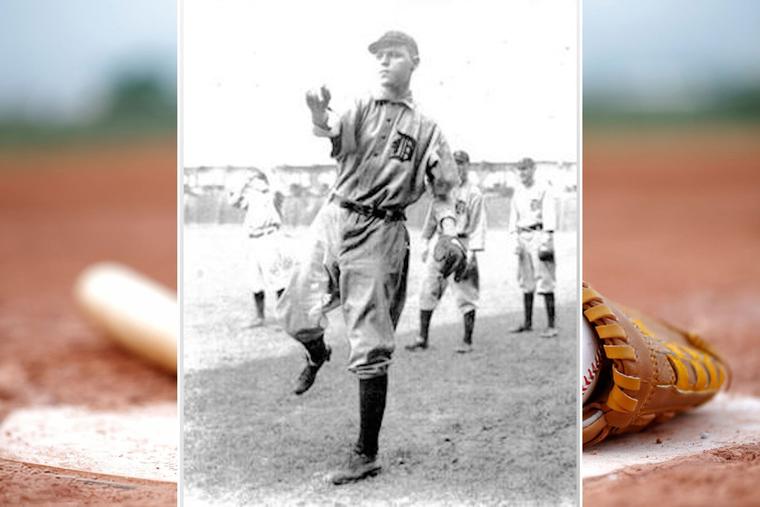
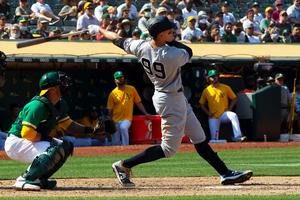
The first domino fell at Hilltop Park on May 15, 1912. It was the last in a four-game series in which the New York Highlanders (now the Yankees) had been hosting the Detroit Tigers. Tigers great Ty Cobb, infamous for his fierce temper, had been jeered by Highlanders fans all throughout the series.
Claude Lueker, a former printing-press operator who, like Cobb, had been born in Georgia, was the most abusive heckler of them all. Throughout all four games he’d been shouting insults and racial epithets at Cobb.
By the fourth game Cobb had finally had enough. He rushed up into the stands and began pummeling Lueker, digging his spikes into the unruly, yet crippled, fan who was helpless to defend himself. The surrounding fans pleaded for Cobb to stop, since Lueker was missing a hand, as well as three fingers on his other hand, due to an industrial accident during the previous year. Cobb reportedly shouted back: “I don’t care if he has no feet!”
Ban Johnson, the American League president, just happened to be present in the stands that very game. After witnessing the fiasco, he demanded that Cobb meet with him at his hotel room that very evening, allowing the player to explain his own side of the episode, ultimately informing Cobb that he would be suspended from baseball indefinitely.
The Tigers’ next game was on May 17 in Philadelphia, against the two-time defending champion Athletics. Cobb sat out the game. Though rather few of his teammates actually liked Cobb, as a person, they still agreed that Lueker’s verbal abuse had crossed the line. They voted to send Johnson a telegram that evening, informing him that they would go on strike until Cobb’s suspension was lifted.
Johnson, in turn, informed Tigers owner Frank Navin that he would be facing a considerable fine of $5,000 for each and every game in which the Tigers failed to field a team. Navin, in turn, threatened his players with fielding a replacement squad, should they follow through on their threat.
The circumstances leading to one of the most bizarre games in baseball history had been put in place.
It was on the morning of May 18 that Navin tasked Hughie Jennings, manager of the Tigers, with finding a team of willing replacements. Jennings’ problem was that he’d been notified of this task only a few hours before game time. Assistant coaches Joe Sugden, age 41, and Deacon McGuire, age 48, had agreed to come out of their retirements from playing, if need be. But this was before an era when AAA players could be called upon on short notice, and more players were still needed.
The idea of losing profits from a day’s gate receipts didn’t settle very well with Connie Mack, the legendary owner/manager of the Athletics. When Jennings approached him about his need to quickly recruit some local talent, Mack was willing to be of assistance. Mack recalled that the varsity baseball team of St. Joseph College had played the A’s in an exhibition game earlier that year, and had surprisingly won, since the A’s had mostly played their reserves rather than regulars. And Mack happened to know somebody, who happened to know somebody in touch with that particular team.
Jennings was introduced to Joe Nolan, a sports reporter for the Philadelphia Bulletin who happened to be a St. Joseph alum. Nolan, as it turned out, was acquainted with one of the team’s assistant coaches.
It was around lunchtime that Aloysius “Allan” Travers, a 20-year-old junior at St. Joseph College, heard the knocking at the front door of his parents’ house, where he lived. He was quite good as a violinist, playing for the college’s orchestra. But he was merely alright as a baseball player, and had settled upon his role as an assistant coach after having failed to make the cut on the varsity squad. He was somewhat surprised to meet Nolan when he answered the door, and even more surprised to get asked about the baseball team’s availability for that very day. He informed his acquaintance that, unfortunately, the St. Joseph team had played an away game the prior day, and was still in transit.
Hughie Jennings took it upon himself to inquire about the availability of the University of Pennsylvania’s varsity squad. Roy Thomas, the team’s manager, firmly forbade his players from serving as strikebreakers, much to Jennings’ dismay. Thomas, a recently retired Major Leaguer himself, wished to remain in solidarity with the striking players.
With mere hours until game time, Nolan asked Travers whether he just happened to know any amateur or semipro players who could suit up that day. Travers then began doing what seemed most practical, given the circumstances: combing the streets for any man in sight who looked athletic enough, and who just happened to have some free time that afternoon.
“Excuse me!”
“Yeah?”
“Do you play baseball?”
“A little.”
“How would you like to play for the Detroit Tigers today?!”
“Uh … sure?”
On street corners in North Philadelphia, Travers recruited sandlot players, as well as a couple of boxers, finding an adequate number of strikebreakers to prevent the Tigers from having to forfeit the upcoming game. Included among these backup Tigers was Billy Maharg, who would go on to have a prominent role in the 1919 Black Sox scandal. This ragtag crew of men, who’d all woken up having no clue that they would be Major League Baseball players by the day’s end, followed Travers to Shibe Park, entering through the gates and taking seats in the stands alongside the fans.
Ty Cobb warmed up with his teammates that afternoon. He was immediately dismissed by the umpire when it became game time. His teammates filed behind him to the locker room, proving indeed that they weren’t bluffing. Navin called to bring up the backup squad.
Nolan ushered Travers and the ragtag bunch from the stands to the dressing room. The regulars greeted the strikebreakers rather magnanimously, handing their uniforms over to the backup squad, some even lending them their gloves and shoes. It was there in the locker room that the replacements were given one-day contracts to sign.
Travers had never pitched before. Still, he agreed to be the starting pitcher, since he’d get paid extra for it. Jennings advised him to throw curve balls, rather than fastballs, to avoid the further humiliation of watching every Tigers pitch getting hit deep.
Connie Mack’s initial intent was to agree to postpone the game, once the strikebreakers showed up to the field, so the game wouldn’t need to be counted as a forfeit. Roughly 20,000 paying fans had shown up for the game though, and this was clearly an opportunity for his players to raise their batting averages, and so he reconsidered.
The Tigers regulars, dressed in their civilian clothes, left Shibe Park in dramatic fashion. They discreetly turned back around, purchasing tickets at the gate to watch from the stands.
“Play ball!” the umpire shouted. A game which could have been as inspiring as the story of David and Goliath had been set up.
The A’s, of course, clobbered the Tigers. The final score was 24-2.
Travers had pitched a complete game. In eight innings he gave up 26 hits, breaking the American League record, and walked seven players. His ERA was an abysmal 15.75. He also batted 0-for-3 in his plate appearances before Jennings himself eventually elected to pinch-hit for him. But he did manage to strike out an opposing pitcher.
Imagine hearing someone tell you: “Wait, you’re that one guy who Allan Travers actually managed to strike out?!”
Some of the fans, considering this game to be a farce, demanded a refund for their tickets. Connie Mack, of course, refused those demands. Other fans, especially the Tigers regulars watching from the stands, found themselves cheering for this squad of misfits.
It was after this game that Ban Johnson threatened the Tigers players with a lifetime ban, should their strike persist. Cobb himself, grateful for their loyalty, urged his teammates to resume playing. And so the strike was lifted, and Allan Travers’ career as a Major Leaguer ended as abruptly as it had begun.
Cobb’s “indefinite” suspension ultimately lasted 10 games.
Travers had some answering to do the next morning, when his mother became frantic upon seeing a photograph of her son in the newspaper, alongside some words damningly describing him as a “strikebreaker.” It was after he showed her the $50 he’d made, in a single day, that she calmed down.
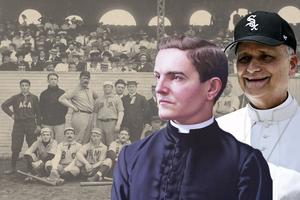
Aloysius “Allan” Travers was later ordained a priest, in 1926. He held many teaching positions throughout his ministry, until his death in 1968 at the age of 75. Father Travers remains, to this very day, one of the worst players in Major League history, as well as the only priest to have played in the big leagues.
“Play ball!”

Zubair Simonson Zubair Simonson, O.F.S., is a convert who was raised Muslim. He grew up in Raleigh, North Carolina, and has also lived in New York. He received his B.A. at the University of Michigan, majoring in Political Science. He is a professed member of the Secular Franciscan Order. He is a contributing author for the website the Catholic Gentleman. The story of his conversion was included in the book My Name is Lazarus, published by the American Chesterton Society. He has several books available on Kindle, including The Rose: A Meditation, a narrative guide through the mysteries of the Rosary, and Stars and Stooges: A Christmas Tale, a humorous take on the three wise men. His website is zubairsimonson.com. Follow on Twitter at @ZubairSimonson.