Ivy League Influencer: Why This Catholic Scholar Is Trying to Save Higher Ed
As the new provost of Dartmouth, Santiago Schnell is bringing a Catholic vision of higher ed to the heart of elite academia.
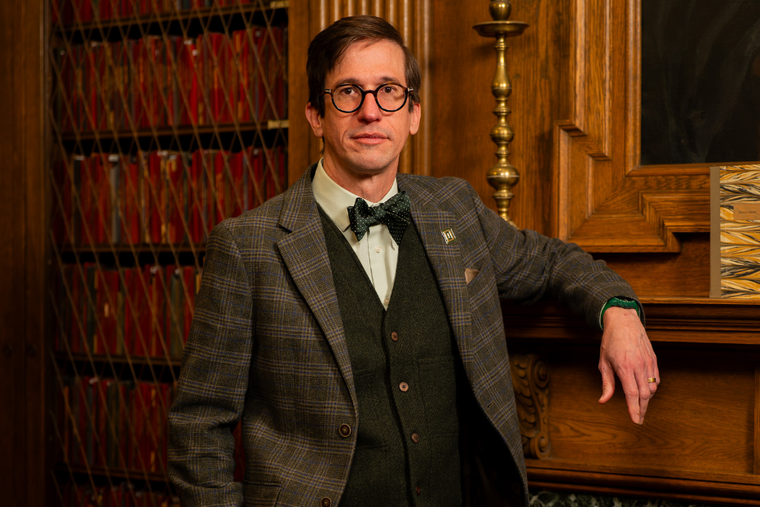
As a world-renowned mathematical biologist and a devoted Catholic, Santiago Schnell had something of a dream job at the University of Notre Dame. There, as dean of the College of Science, he played a leading role in forming the next generation of Catholic scientists, while pursuing fruitful collaborations with theologians and participating in the campus’ rich sacramental life.
But when Sian Leah Beilock, the president of Dartmouth College and an emerging leader of higher-ed reform, asked the Venezuelan-born scholar to join her as the Ivy League institute’s provost, Schnell accepted the offer.
Not for prestige, but for a purpose.
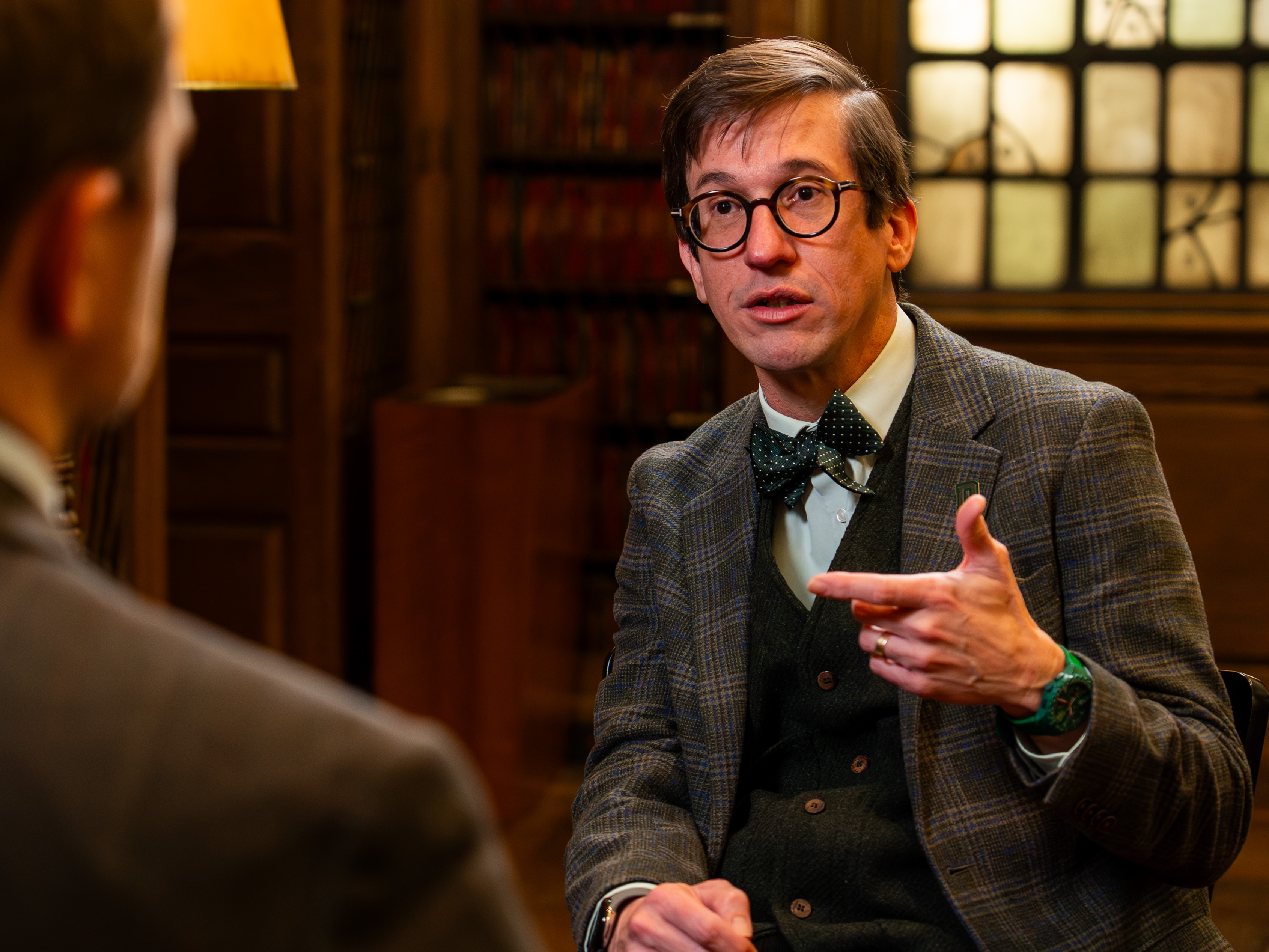
“I felt a moral obligation of leaving Notre Dame and serving on an Ivy to protect higher education,” Schnell told EWTN News during a recent interview at Dartmouth, where he’s served as chief academic officer since the start of the 2025-26 academic year.
In many ways, to protect higher ed from itself.
In recent years, American higher ed has been engulfed in crisis. Many universities — Ivy and otherwise — have become known more as havens for illiberal activism than the liberal arts. The Trump administration has responded by cutting billions of dollars of federal funding, while seven out of 10 Americans told Pew Research in October that they believe higher ed is “going in the wrong direction.”
“The Ivies have served as a role model in a very negative way on how higher education should be moving forward,” said Schnell. “And the time for reform has arrived.”
At Dartmouth, Schnell believes he has joined a leadership team trying to correct course, by “bringing higher education back to its original roots”: the pursuit of truth, beauty and friendship.
But instead of requiring Schnell to leave his faith off campus, his vision for reform demands the opposite. Because for Schnell, the roots of higher education are decidedly Catholic — so much so that he sees Trinitarian echoes in everything from the tripartite degree system (bachelor, master, doctoral) to the three ranks of professor (assistant, associate, full).
“The foundations of the university are very much the foundations that the Catholic Church provided,” he said. “We need that precisely because the Catholic Church wanted to educate society to be more fruitful, to allow individuals to flourish through the liberal arts.”
And while Schnell acknowledges that not every academic may see things the same way, he’s proud to live out what he sees as a profoundly Catholic vocation.
“The secular [scholar] can live the secular life of the academic enterprise in the way they want to,” he said. “But for me, I feel that I’m part of the heritage that has been moving through the centuries that I would like to keep alive.”
A Vocation to Truth
If reorientating higher ed to its more transcendent purpose sounds personal for Schnell, it’s because it is. In fact, he credits his own time as a university student for securing not only his academic vocation, but also his faith.
As a teenager in Venezuela, a cancer diagnosis and ongoing treatment left him angry at God and questioning the Catholicism he had been raised in. By the time he left for college, he had stopped going to Mass and considered himself a nonbeliever.
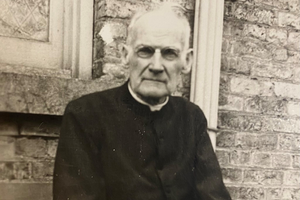
But at Simón Bolívar University in Caracas, all science majors were required to pick up a minor in philosophy. And, in a twist of Providence, Schnell’s first philosophy class was with Rafael Tomás Caldera, a renowned Thomistic philosopher.
In the words of Schnell, Caldera came not for his heart, “but for the mind.” The seasoned professor and the upstart intellectual discussed the historical evidence for Jesus, the logical necessity of God, and the existence of the immaterial realm of thought and the angels. The impact on Schnell was profound.
“This person actually changed me,” he said of Caldera. “He made me realize the power of a university education. If it wouldn’t have been for him, I would’ve been a lost soul.”
Now 54, Schnell lives a life defined by a desire to continue the search for truth and to share what he’s received with others.
Back at Notre Dame, the ex-dean’s love for and promotion of the Catholic intellectual heritage is likened by one former colleague to the zeal of a missionary.
“He once said that we should be forming apostles for the Catholic intellectual tradition and sending them out to form young intellectuals in their turn,” recalled John Cavadini, the director of the McGrath Institute for Church Life, who collaborated with Schnell on projects that connected science and faith.
And although Schnell is still settling in at Dartmouth, he’s already made an impression on the Catholic community in Hanover, New Hampshire. Catherine Horner, a Dartmouth senior, hosted a November 2025 “fireside chat” with Schnell at Aquinas House, the Catholic student center where Schnell often attends daily Mass.
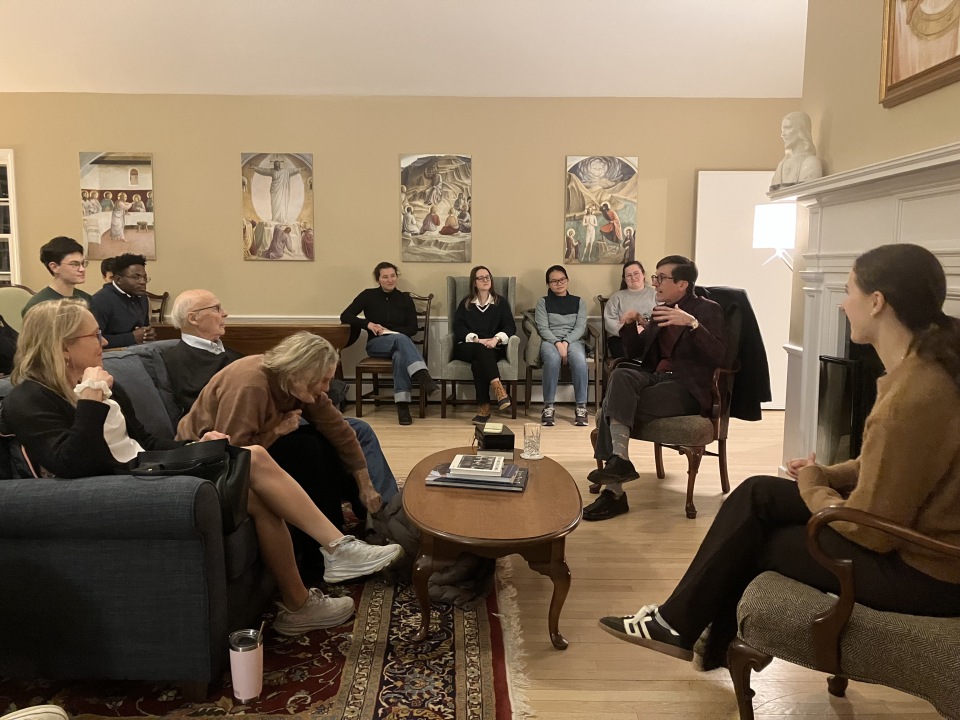
She said she was struck by how the Catholic academic came across as “a full human”: passionate about his faith and studies, but also everything else in life. For instance, Horner found it compelling that Schnell had been an amateur tennis player in Venezuela and took a keen interest in film (he told students Pulp Fiction was a favorite of his).
“[His witness] was a challenge for me to strive with trust in the Catholic faith to pave many paths in life that make up a full human experience, not just one path of focus,” she told the Register.
The sense of how Schnell’s Catholic faith underscores his capacious vision for education comes through in his office. Art depicting Mary, known in Catholic tradition as “the Seat of Wisdom,” is everywhere. For inspiration on academic leadership, the scholar is reading a volume of St. John Henry Newman’s letters from the English saint’s time founding a Catholic university in Dublin. And by his desk, he keeps a replica of the “Good Shepherd cross” worn by Pope Francis.
“As an academic leader, you serve like a shepherd,” Schnell said. “You want to make sure that everyone flourishes.”
Against ‘Unearned Certainty’
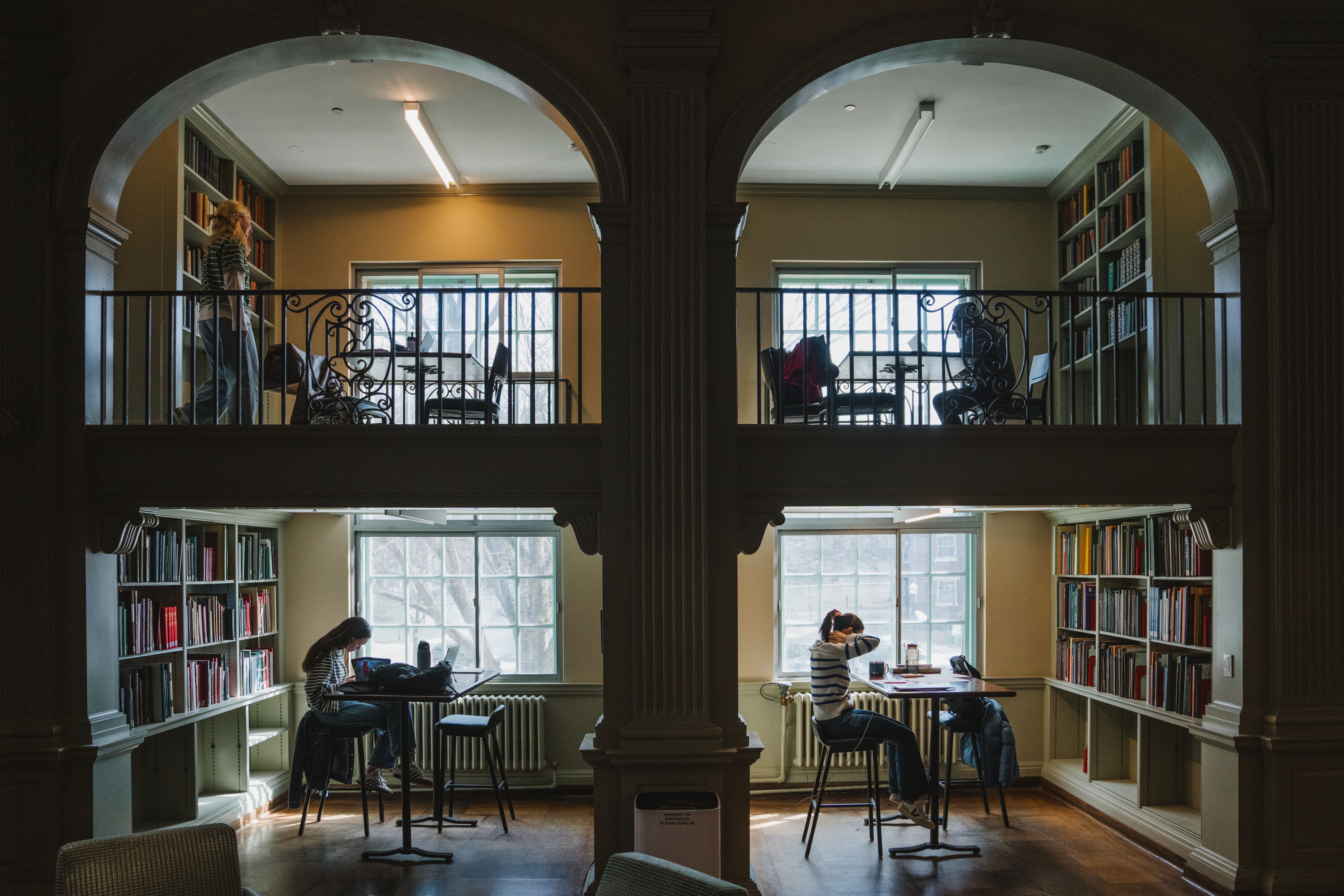
One might think that an Ivy League administrator speaking so openly about how his faith informs his vision for higher ed might sound alarm bells on a highly secularized campus. But Schnell says that’s not the case. For one, he says academics are more open than people give them credit for. And second, he maintains that the threat of “cancel culture” is overstated.
“If you are really good at what you do, if you are excellent, everyone is going to respect you for what you contribute, even if it’s different from what everyone else does,” he said.
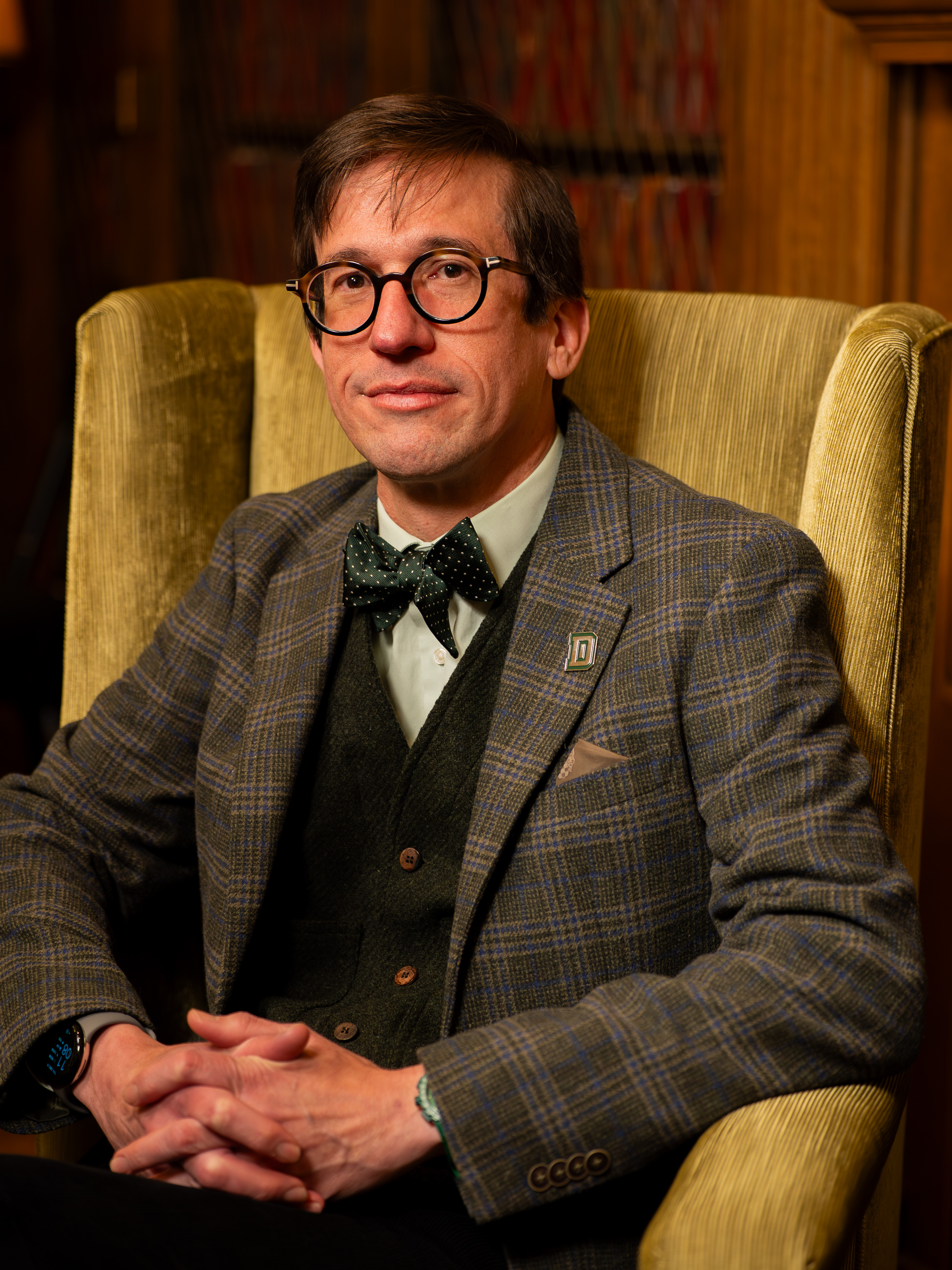
Of course, in Schnell’s case, he is “really good.” He is an Oxford-trained mathematical biologist, who even has a formula named after him: the Schnell-Mendoza equation, which measures how fast enzymes break down in a reaction. And in his three-piece, wool suit, with a bowtie, glasses and a green “D” lapel pin, he certainly looks the part of a Dartmouth provost.
In the effort to reform higher ed in America, Schnell believes the main opponent isn’t a person or group, but an attitude: what he calls “unearned certainty.” By this he means a tendency for academics to stop pursuing new ideas or to cut themselves off from other viewpoints.
Schnell believes this “unearned certainty” has led to everything from a false confidence in faculty’s proposed solutions for societal problems to a lack of originality in university mission statements and strategic plans.
“When you have unearned certainty, you don’t have doubt,” Schnell explained. “When you don’t have doubt, you don’t have mystery. And when you don’t have mystery, you just lack imagination.”
And Schnell believes truth, beauty and friendship are the antidote. For one, truth acknowledges that objective answers exist but must be continuously worked for. Experiences of beauty, whether through literature or art, help cultivate “a sense of awe and mystery.” And friendship underscores that learning isn’t done in isolation, but through dialogue — like Schnell experienced as a young student with professor Caldera.
As provost, he’s putting these principles into action, including investing $500 million in on-campus student housing to foster community, building an art district in the middle of campus, and promoting “Dartmouth Dialogues” to help students build skills to bridge political and personal divides.
Ironically, Schnell sees the emergence of generative AI as a potential boon for the revival of the liberal arts, as it may require a return to more personalized forms of education and evaluation, such as oral exams and the tutorial system.
‘Do Not Be Afraid’
Schnell’s focus is decidedly on Dartmouth. But just because he’s not at Notre Dame anymore doesn’t mean that he doesn’t have thoughts about Catholic higher ed.
Schnell critiques Catholic universities for “playing the rankings game,” seeking external affirmation instead of pursuing their own criteria for excellence. In effect, this leads to the secularization of their academic approach.
“And by secularizing yourself, you lose your way,” he said.
Instead, Schnell proposes that Catholic universities pursue a more distinctive goal: cultivating the future doctors of the Church, those individuals whose intellectual contributions will help “drive the Catholic spirit” forward and confront new challenges.
“That’s what I think should be the mission,” said Schnell. “That should be the distinguishing factor.”
Asked what advice he has for young Catholics discerning an academic vocation but concerned about the state of higher ed, Schnell quickly offered a familiar exhortation.
“Do not be afraid,” he said, echoing the words of Christ and a constant call of St. John Paul II.
The Dartmouth provost underscored that, for a Catholic, academic work is a vocation to “help reveal the mystery of creation.” In his opinion, “there is no way to be closer to God.”
But even more, the scholar stressed that academics play a profound role in shaping society through their influence. Citing his own experience, he said that although God has only given him and his wife two biological children, he has “hundreds in the classroom” whom he has personally formed and incentivized. Additionally, his perspective has been shared via numerable books and papers that “might influence future generations.”
“It’s a unique and special position to be in,” said Schnell.
And he hopes more Catholics will join him in academia, participating in the noble Catholic lineage of pursuing truth, friendship and beauty.