Korean Freedom
As cathedrals go,
When I first spied it tucked off a
bustling street in
Koreans have a long connection
with Buddhism. The first Catholic community didn’t gather on the peninsular
country until 1784. Not surprisingly, a lot of people didn’t take kindly to its
foreign ideas. Major persecutions of the Paris Foreign Missionaries — a group
dedicated to spreading the Gospel in
But the Korean Catholics weren’t
cowed. They built Myeong-dong in 1898 on the very
spot where
Consecrated with Our Lady of the
Immaculate Conception as its patron, Myeong-dong was
also
Then, after the end of World War
II and the Japanese surrender, the country was split in two. The Soviet Union
occupied the northern half and the
The Korean War in the early 1950s
solidified this split into two countries.
Enter Disciples
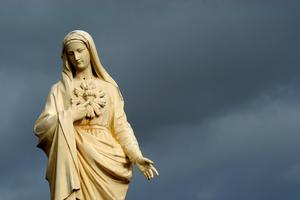
After my initial glimpse of Myeong-dong Cathedral from the street below, I eyed the parish’s Grotto of the Blessed Mother, dedicated by Archbishop Rho Ki-Nam in 1960 for peace on the Korean peninsula.
Wedged unceremoniously in between
the parish’s
Inside, I found the church rather drab. Gray walls and plain wood columns follow along the basic Latin-cross floor plan. The altar is modest, although the stained-glass windows — believed to have been crafted in French Benedictine monasteries — provide a welcome bright spot. The windows depict the mysteries of the Rosary, the Nativity scene and adoration of the Magi, and Jesus and the Twelve Apostles.
I was intrigued by the paintings
above the side altars, although the dim interior made it a bit difficult to see
their details. The two largest show the first
gathering of Christians in
There are also smaller portraits of Kim Bum-U, Rhee Byok and Rhee Sung-Hoon, three men instrumental in introducing the Catholic faith to Korea, and Kim Tae-Geon, or St. Andrew, the patron saint of Korean clergy.
There was something compelling about seeing Asian men in their native garb — flowing white robes and stiff, black hats with wide brims — clutching Bibles or crucifixes. Perhaps it was the realization of how much people have sacrificed over the centuries to spread God’s word to every corner of the globe, or perhaps how our religion seamlessly unites such a disparate group of people.
Pray for the
Once I moved away from the portraits, I realized there’s something else quite unique about Myeong-dong Cathedral. Unlike popular cathedrals in other large cities, here there are no softly chattering visitors snapping photos and poking around the treasures. Instead, you can hear a pin drop.
I noticed that everyone who entered seemed deeply reverential, with nothing but deep prayer in mind. Clusters of people moved along the Stations of the Cross, lips silently moving in prayer. Other guests slipped into the pews for contemplative time.
One lone figure slowly walked up the center aisle and bowed in front of the altar, than sank to her knees and bent forward, Buddhist-style, in prayer. I found this deeply moving.
I didn’t have time to see the basement, where there’s a small sanctuary and crypt directly beneath the main altar. Originally nine altars adorned the crypt; only two remain today. The crypt houses the remains of the beatified martyrs.
In 1984, on the 200th anniversary
of the founding of the
Today, more than 200 years after
the Catholic faith was introduced to the Korean peninsula, it’s one of
And Myeong-dong
Cathedral is not only the Catholic faith’s home base in
Melanie Radzicki
McManus writes from Sun Prairie,
Planning Your Visit
Myeong-dong Cathedral is
tucked into the heart of central
Getting There
There are numerous daily flights from
- Keywords:
- July 2-8, 2006