Is the Church as Troubled as the SSPX Claims?
COMMENTARY: While the Catholic Church faces serious difficulties, the situation is not as dire as the SSPX claims. The best counterargument the Church can offer is a renewed focus on the many things that are right with the Church.
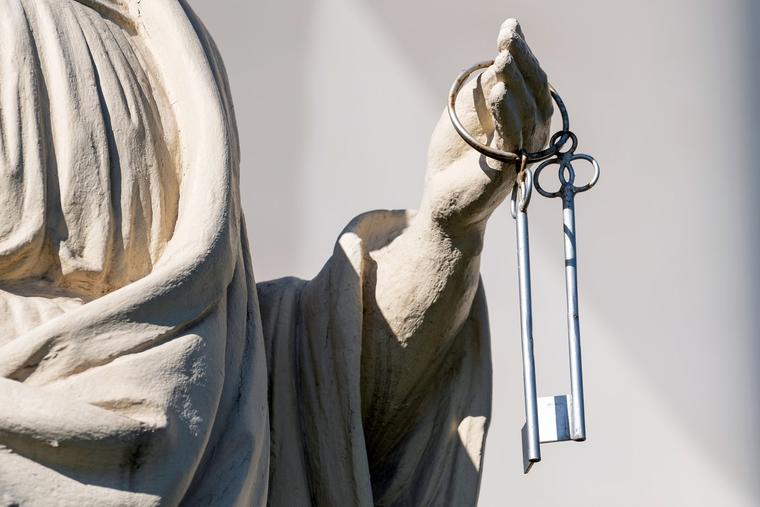
With all of the attention being paid to the new encyclical from Pope Leo, there has been a lessening of attention to many of the burning ecclesial controversies simmering on the back burner.
I am happy about that, since I think the ecclesial mood needs a greater focus on something positive rather than the constant barrage of negative news stories that do nothing but drag the Catholic Church down into the mud of negativity. Therefore, I am going to make a claim based solely on my own gut feelings. But I suspect that my feelings are shared by many others as well.
There is only so much controversy that one can absorb before our psychological defense mechanisms kick in and we become numb to it all, preferring the silent suffering of an exhausted soul over a constant engagement with things that are seemingly impossible to resolve and therefore disturb the soul all the more with a sense of anguished futility.
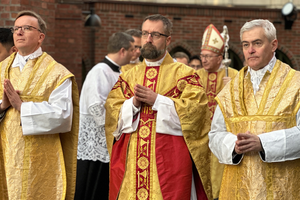
At the risk of engaging in a performative contradiction, allow me now to address one of the issues about which I am talking: the crisis of the Priestly Fraternity of St. Pius X (SSPX). I have written two articles in the Register on that topic so I will not go over it again. Suffice it to say that one of the negative side effects of the entire debate is that we have been forced to focus on the claim by the SSPX leadership that the Church is in such a grave crisis of apostasy that the society’s schismatic acts are warranted and, therefore, are not even really schismatic at all.
I reject such an assertion. But my point here is that what the debate has done is to focus our eyes on the negative.
Does the Church have many problems today? Yes, of course it does, as the Church has always been faced with various crises and problems. But what then of the positive things going on in the Church? Is it really as dark as the SSPX claims? No, it is not, and therefore the best counterargument that the Church can give to the SSPX is to begin a renewed focus on what is right with the Church and why it is not in a grave crisis, despite its problems.
On the other side of the ecclesial spectrum, you have the Germans and their Synodal Way, which seeks to morally legitimize homosexual relationships, turn Church governance over to a “board” dominated by laypeople, and ordain women and married men. Were this just a German thing, it could be easily dismissed. But the aims of the Synodal Way are also the aims of the Catholic left in general.
But once again, the implied assumption in so much of this liberal agitation is ironically similar to that of the radical traditionalists. To wit, all of these radical changes must be implemented since the Church is in a grave crisis. But in this case, the crisis is not one of apostasy, as the SSPX would assert, but rather it is a crisis of the Church’s lack of credibility in the eyes of “modern civilization.” Of course, what they mean by modern civilization is the thought world and moral values of Western, secular, liberal, democratic countries. In other words, their claim is that the Church will be in a crisis until, like a chameleon, it takes on the coloration of modern secularity.
What effect does this have on the mood of average Catholics in the Church? Especially because all of this comes in the wake of many decades now of the clerical sexual abuse revelations, which have already made all of us more cynical about ecclesiastical authority? That scandal was the emotional equivalent of running full speed in a race only to get unexpectedly clotheslined across the neck right before the finish line.
Stunned and wounded, the faithful nevertheless picked themselves up from that scandal only to be greeted with the constant turmoil of the Francis papacy, and now these current controversies. Add in the effect of social media with its balkanized and siloed world of endless complaints, and it is little wonder that an exhaustion with all of it has set in.
Of course, 90% of Catholics are doing just fine insofar as most practicing Catholics do not follow the twists and turns of ecclesial politics and are blissfully unaware of the turmoil beneath their feet and in the air around them. Nevertheless, the ecclesial exhaustion of which I speak pertains to those Catholics who are deeply engaged with the Church, involved in her ministries in various ways, are active on social media, and who occupy positions of influence.
And I also speak of the ecclesial exhaustion of priests, especially young and idealistic priests, who are caught between the warring factions on a daily basis, and whose pastoral decisions often gain them nothing more than a flurry of letters to the chancery complaining about them. And here too is the physical exhaustion of being in charge of two and sometimes three parishes, which only compounds the mental and spiritual exhaustion of a Church in constant inner conflict.
The salient point here is that one sees the ecclesial fatigue everywhere now, in the laity and in the priesthood. I fear that a quiet resignation has set in and that it is not the resignation of contemplative silence but rather the silent scream of those on the verge of “checking out.” There is a numbness in their souls, in their bones. It is the product of the anesthetic of jadedness which creates a spiritual acedia that robs us of the joy needed to sustain active discipleship.
And once the joy of the faith is gone, boredom with the Church is not far behind. Sacraments seem empty and pro forma exercises in futility. And this kind of boredom also tends to breed resentment. The answer to this boredom is not to resort to making the liturgy entertaining — as so often happens — but to make it ever more mystical, drilling deeply into the Church’s contemplative core, in order to “get beneath” the jaded and bored exhaustion in the pews, and bearing it up by grounding it in the cross of Christ.
I am not arguing here for a pious sentimentalism of warm feelings. The liturgy is not therapy and it is precisely our therapeutic culture of narcissistic navel gazing that has led to the balkanized focus on our own ecclesial hobby horses at the expense of all others, thus leading to the endless drip, drip, drip of negativity.
What I am arguing for is the theological idea of vicarious representation. Christ vicariously suffered through our sins and represented all of humanity by uniting himself to our nature. And we are described by Scripture as a “priestly people,” which means, among other things, that we are to participate in this vicarious representation of the High Priest, Christ.
Pope Benedict spoke often of this reality and made it clear that in the face of the various crises of our time — both ecclesial and worldly — our task is not to retreat into silent despair, but, paradoxically, to run headfirst into the crises, like a fireman rushing into a burning house, and to suffer through them in our souls and to offer this suffering up to the Father as reparation and healing.
Benedict’s point is that so long as we remain in the purely horizontal sphere, we will approach the Church as a mere sociological and political construct. And it is precisely this false horizontalism that leads to various ecclesial factions acting like political lobbyists in a constant state of conflictual agitation. When this happens, we must double down on charity, praying for all in the cenacle of our souls. The vicarious representation of Christ on the cross was largely a hidden and mystical suffering, wherein he mysteriously had placed on his soul the entire burden of the entirety of human perfidy and evil, drank it in to the dregs, and conquered it by continuing to love without qualification, thus transforming it from within.
If there was anyone who had more justification to retreat into exhausted resignation, it was Christ. But he did the opposite. We, too, must love our neighbor in the quiet cenacle of our souls if that is the only means left to us. When the thicket of controversies becomes so dense and impenetrable, and when it begins to choke out the life of God in our own souls, we can reignite the passion for our faith by recognizing that there are in the faith untamed dragons still, and that there is a hidden fire in the equations of prayer that cannot be extinguished.
- Keywords:
- sspx
- society of st. pius x
- catholic church
- schism
- scandal

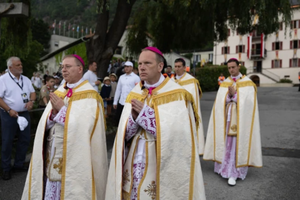

![‘The Holy See has made clear that the clergy of the Society [of St. Pius X] are now to be regarded as schismatic,’ Bishop Frank Caggiano said in a statement.](https://publisher-ncreg.s3.us-east-2.amazonaws.com/pb-ncregister/swp/hv9hms/media/2026070617078_0ab6902d-8c02-4eac-aba4-1ec174e52618.png "‘The Holy See has made clear that the clergy of the Society [of St. Pius X] are now to be regarded as schismatic,’ Bishop Frank Caggiano said in a statement.")