Corpus Christi: The Reality of the Eucharist
We do not partake of a symbol. The Eucharist is truly the Lord.
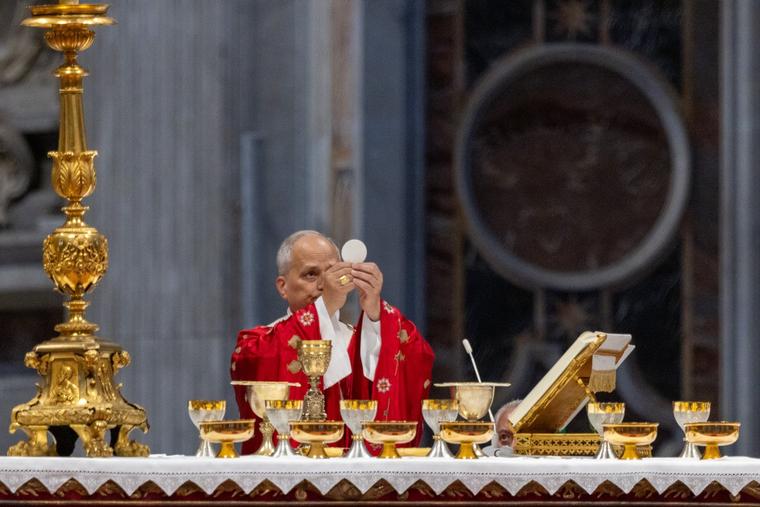
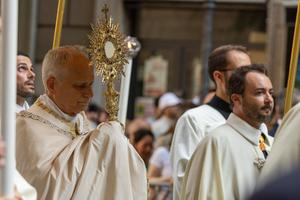
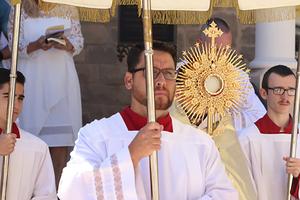
Sunday, June 7, is the Solemnity of the Most Holy Body and Blood of Christ. Mass readings: Deuteronomy 8:2-3, 14b-16a; Psalm 147:12-13, 14-15, 19-20; 1 Corinthians 10:16-17; John 6:51-58.
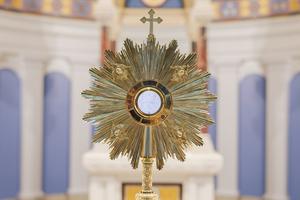
On this solemnity, we are called above all to faith in the fact (as revealed by the Lord himself) that the Eucharist, the Holy Communion of which we partake, is in fact a reception of the very Body, Blood, Soul and Divinity of Jesus Christ, whole and entire, in his glorified state. We do not partake of a symbol. The Eucharist is truly the Lord.
Scripture attests to this in many places (see Luke 22:19-20; 1 Corinthians 10:16; Luke 24:35; John 6:51), including 1 Corinthians 11:29: For anyone who eats and drinks without recognizing the body of the Lord eats and drinks judgment on himself.
Jesus says:
“Unless you eat the flesh of the Son of Man and drink his blood, you have no life in you” (John 6:53).
Jesus is our Living Manna from heaven. Holy Communion is essential for our survival.
One of the mistaken notions about the Eucharist is confusing this sacred meal with the table fellowship Jesus had with sinners. He was known to “welcome sinners and eat with them.” But Holy Mass is not one of those sorts of meals. The Last Supper, wherein the essential reality of the Mass was first set forth, was held in the context of the Passover. This was a sacred meal shared within the family. And thus Jesus celebrated that Last Supper with the Twelve Apostles. This was an intimate meal celebrated in the context of faith.
Those who think of the Mass as mere table fellowship think of the Eucharist as a come-one-come-all sort of meal. In their view, there are no requirements (such as being reconciled from sin).
Upon saying, “Amen” at the reception of Holy Communion, every Catholic implicitly affirms the longer formula of reception into Holy Communion at the Easter vigil: “I believe and profess everything which the Holy Catholic Church believes, teaches and professes to be revealed by God.”
This is why, in respect to non-Catholics, we cannot offer them Holy Communion. It is out of respect to them we ought not ask them to profess what they are not ready to profess. After instruction, if they are able to profess it, we are glad to receive them into the Church.
As Jesus tells us:
“Whoever eats my flesh and drinks my blood has eternal life, and I will raise him on the last day. For my flesh is true food, and my blood is true drink.Whoever eats my flesh and drinks my blood remains in me and I in him” (John 6:54-56).
- Keywords:
- corpus christi sunday
- church teaching on the eucharist
- corpus christi
- solemnity of the most holy body and blood of christ