Church-Run Daycare Helps Parents in Bangladesh’s Garment Industry
The Catholic-run Mamata Day Care Center offers loving care for families with two working parents.
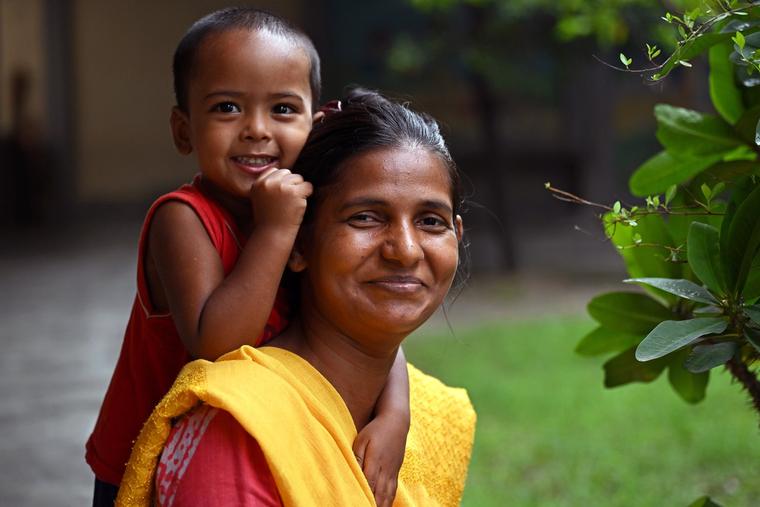
DHAKA, Bangladesh — For hard-pressed families with two parents who both work in Bangladesh’s garment industry, the Catholic-run Mamata Day Care Center is a godsend.
Three-month-old Sifrat Ullah Al Soyath starts his day early in the morning with his parents. But right after breakfast, the infant boy goes to the daycare center with his mother, Sathi.
After placing her baby in the caring hands of the center’s staff, his mother goes to work in a YP Gazipur Limited garment factory, as does his father, Mohammad Masud Rana.
“We don’t have any other way without sending my child to daycare, as we, both husband and wife, work in a factory,” Sathi, who is 28, said. “If I don’t go to work, my husband can't afford to run the family alone. At the end of the month, we earn 30,000 taka ($245), and we can easily run our family well. Without getting the daycare support, I can’t continue my job.”
She added that there is no equivalent childcare support in her garment factory.
Sifrat is the only child of his family, which lives in Zirani, Gazipur, on the outskirts of Dhaka. Most residents in the area are not locals; they’ve migrated from across Bangladesh in search of industrial jobs, particularly in garment and manufacturing factories.
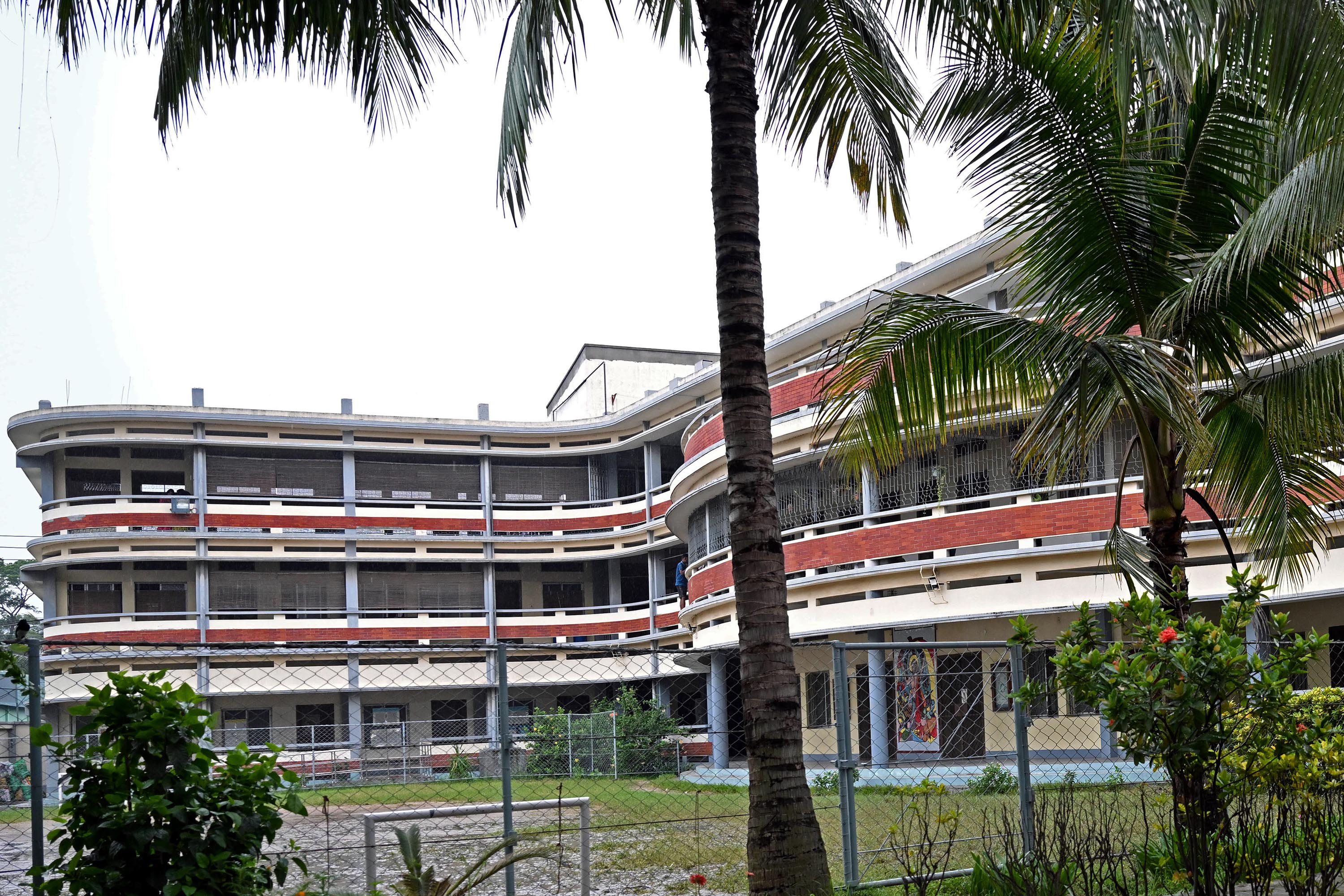
The Mamata Day Care Center is located in a church compound at Zirani called the Jesus Worker Center. In 2013, it was established by Caritas Bangladesh, which operated it for five years. Since 2018, it has been run by the sisters.
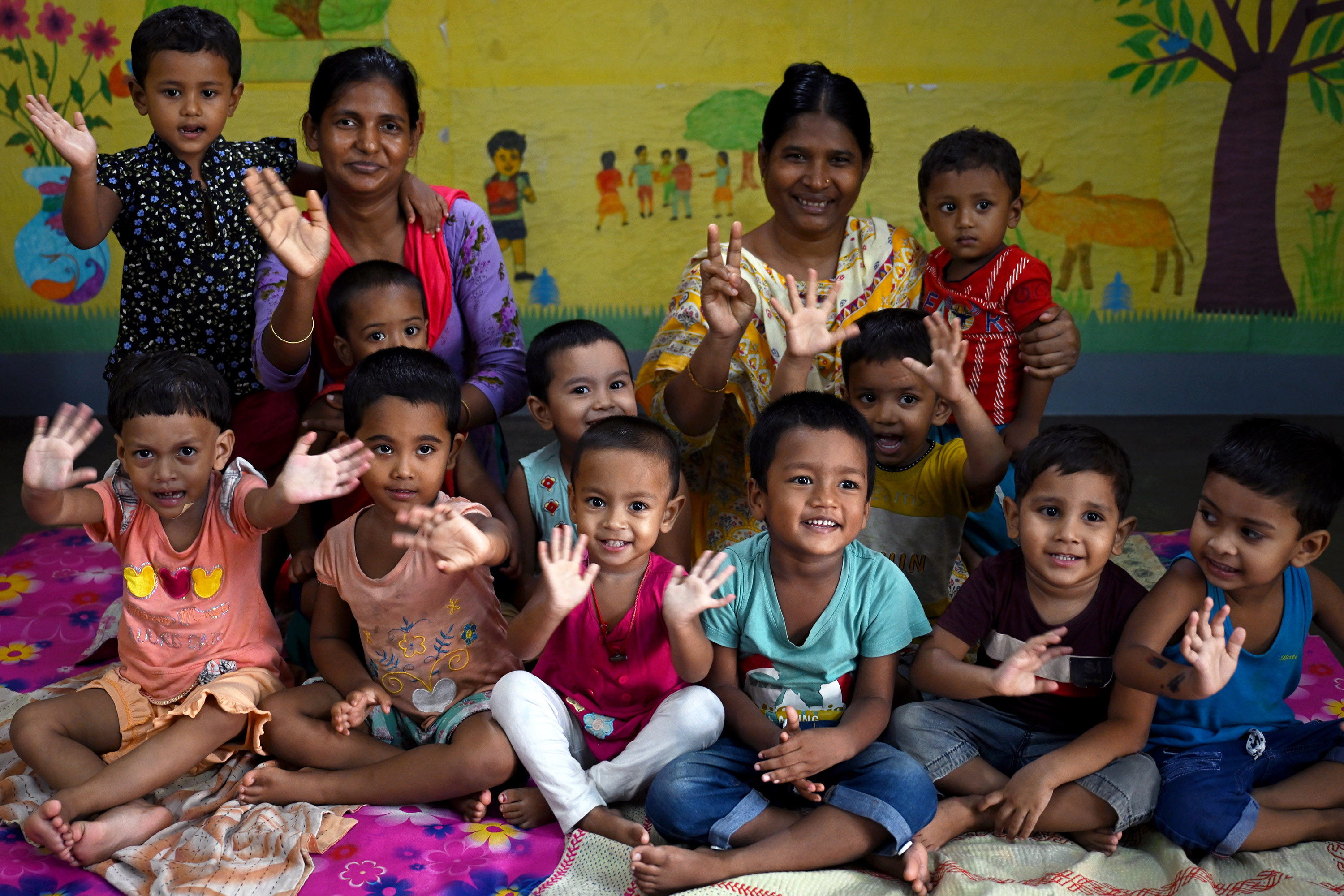
The daycare serves children aged 1 to 5, with a maximum of 20 children under its care at a time. It welcomes children of all religions and ethnicities. The center is open from 7 a.m. to 8 p.m. There are paid two support staff called “day mothers” who take care of the children, working alongside the nuns who assist them throughout the day. The center tries to teach the children discipline, pre-schooling and good manners during their playtime.
Parents pay only $18 per month for each child.
“We accept only those children whose parents are both working,” Pontifical Institute for Foreign Missions Sister Flora Purification, who is in charge of the daycare center, said. “The center not only serves the children but also supports the parents in their economic development. By providing a safe place for their children, especially enabling mothers to work and earn, we contribute to the overall well-being and growth of their families.”
She added, “I feel relaxed and happy to spend time with the children.”
Rosemary Renuka Kisku, a 26-year-old garment worker and mother of two children, has lived in this area for nearly 12 years. Her older daughter stays in a Catholic-run girls’ hostel in Dinajpur, about 180 miles north of Dhaka, while her younger daughter, 3, lives with her and her husband, Bishu Hembrom, 32.
Bindu spends her day at the daycare center, and Rosemary is happy that her daughter is growing up in a good environment. She said, “My daughter is learning songs, poems and basic education during playtime. Hope it helps my child when I admit her to a school.”
Industry-Wide Childcare Shortage
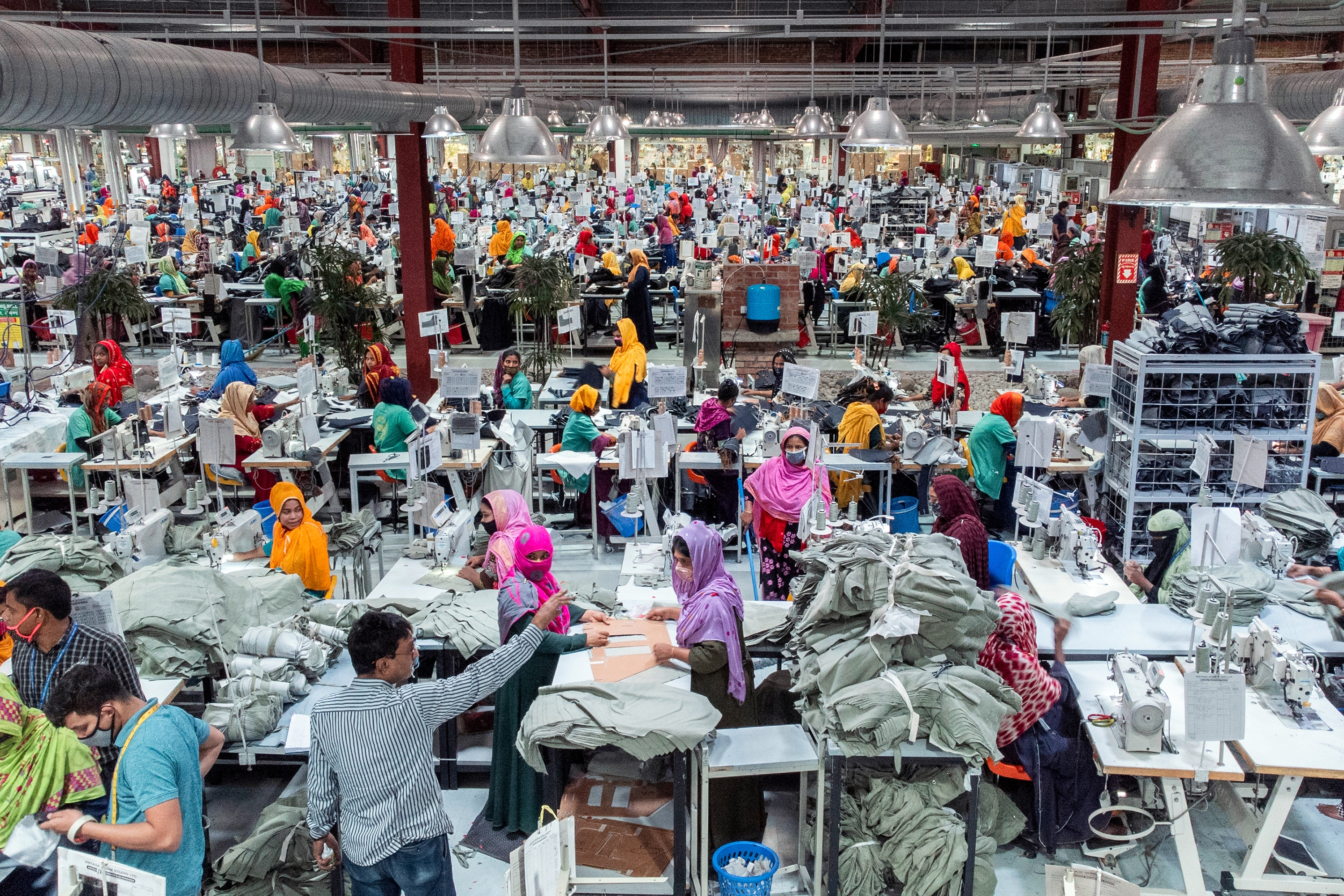
Bangladesh’s ready-made garment (RMG) industry is the country’s largest export-earning sector. More than 5 million workers are employed in garment factories in the country, and 56% of them are women. Despite contributing immensely to the country’s economy and the global fashion industry, many of these female workers face a significant challenge: the lack of access to adequate daycare facilities for their children.
According to labor laws in Bangladesh, factories with more than 40 female workers are mandated to provide a daycare center. However, most factories either ignore this requirement or operate makeshift, non-functional facilities to check off compliance on paper. As a result, working mothers are left with few or no reliable childcare options.
According to a 2019 study of 306 companies by the International Finance Corporation, a member of the World Bank Group, only 23% were providing childcare facilities for their employees, and 61% advised they had no intention of offering such support.
Joly Talukder, vice president of the Garment Workers Trade Union Centre — one of several leading national unions representing garment workers and advocating for fair wages, safe conditions and labor rights — said, “Most factories in Bangladesh do not have daycare facilities. We have been demanding for a long time that every workplace must have a daycare center.”
Because of the shortage of such facilities, most children of garment workers grow up in villages with their grandparents or other relatives, without the love and care of their parents.
“It is inhumane that children are being separated from their parents at such a young age,” said Talukder.
Mahmud Hasan Babu, the newly elected president of the Bangladesh Garment Manufacturers and Exporters Association (BGMEA), said it is very important to have daycare facilities in garment factories, not only in Bangladesh but also worldwide. He said about 80% of the 4,500 garment factories affiliated with BGMEA in Bangladesh have such facilities.
The Bangladesh government is also taking steps to address the childcare inadequacies. In 2023, the government announced a plan to establish 60 daycare centers at the district level across the country to support working mothers and enhance women’s active participation in economic activities. The project aims to accommodate around 3,000 children annually, ensuring they receive quality care and support. The initiative will be implemented over the next three years by the Department of Women's Affairs and the National Women’s Organization.
Currently, 119 daycare centers are operated by the Ministry of Women and Children Affairs, along with 20 additional centers under the Ministry of Social Welfare.
A Day at Mamata Day Care Center
The Mamata Day Care Center starts its daily operations between 7 and 8 a.m., when the pair of day mothers welcome the children. Each day begins with a “Good Morning” session, where children learn basic social skills and good manners through songs and rhymes.
After this instructional session, they go outside to play on the church campus field, enjoying the fresh air and the feel of grass under their feet.
At noon, the children take a bath and have lunch. Some eat by themselves, while others are assisted by the day mothers. From 1:30 to 4 p.m., the children nap, and the caregivers take their lunch break.
After waking up, the children freshen up, play with toys, listen to short stories, and wait for their parents to pick them up.
Snacks are provided twice a day, once in the morning after the “Good Morning” session and again in the afternoon after their nap.
If a child is injured or becomes ill, the staff provides first aid, informs the parents, and arranges medical care if needed.
Throughout the day, the children build strong friendships and learn to help one another. The center remains closed on Fridays and all government holidays.
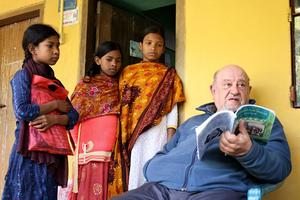
Pontifical Institute for Foreign Missions Father Gian Paolo Gualzetti, known as “Grandfather” to the children, is the pastor of Jesus Worker Center, where the daycare is also located. Whenever he gets time during the day, he tries to spend time with the children. He said, “Some factories are doing well by providing daycare service inside the factory, but many factories in this area do not provide this support. So, we thought of providing this service. We like to teach the children here by playing.”
He added, “I enjoy spending time with them. However, sometimes it hurts to see some children go home with their parents in the evening, while others wait because their parents are working overtime. It makes me feel bad.”
- Keywords:
- bangladesh
- charities
- corporal works of mercy