‘Magnifica Humanitas’: In the Face of Christ, the Truth About Man
COMMENTARY: In his long-awaited first encyclical, the Holy Father insists that the fullest truth about man is revealed ultimately and most completely in the face of Jesus Christ.
As anticipated, Pope Leo XIV’s first encyclical, while wide-ranging in its scope, primarily addresses the rise of artificial intelligence (AI), which he identifies among the res novae, the “new things,” confronting the modern world, much as Leo XIII treated the new things of his time in Rerum Novarum, issued 135 years ago this month.
Early in Magnifica Humanitas — and again at its conclusion — Pope Leo describes the present moment as a “change of era” and an “epochal change,” echoing language used frequently by Pope Francis. Thus, the document views AI as arising not simply within an “era of change,” in which many developments occur within an otherwise steady framework, but within a true “change of era,” in which the tectonic plates of the world’s social life are shifting beneath our feet.
Accordingly, Leo insists that it is not enough for Christians simply to be “watching and waiting, observing from afar and merely hoping for the best.” The Holy Father believes that something more profound is underway than simply the emergence of another powerful technology, and that concerted thought and action is needed.
Modern Catholic social doctrine has itself arisen and developed over the last 135 years precisely amid this great civilizational transition, as Christianity has increasingly been displaced as the governing vision of Western culture. That fact provides an important interpretive key for reading the social encyclicals generally, and for this document in particular.
Catholic social doctrine presupposes and emerges from the drama of salvation and the eternal truths of the Gospel, but it is not confined to the internal life of the Church. Leo notes this explicitly, quoting Pope St. John XXIII: While “the Church’s primary mission is the sanctification and proclamation of eternal goods, she does not neglect the concrete needs of people’s daily lives.” A social encyclical, therefore, is addressed not only to Christians speaking among themselves, but to all men and women of good will, including those outside the Church, and this necessarily shapes both its language and its method.
Leo thus argues that Catholic social doctrine must employ an “evangelical language” capable of presenting principles derived from the Gospel in a way that can be applied within contemporary society through what he calls “standards of discernment.”
Keeping this in view will help us to avoid a serious error that has been all too common: that of reducing the content of the Gospel by treating the social doctrine of the Church and social justice as the entirety of the Gospel itself. Such a reduction can easily drift into utopianism — the notion that Christianity’s ultimate goal is the construction of a perfectly just and peaceful social order for all here on earth, within the confines of history.
Leo repeatedly cautions against this temptation. The Kingdom of God cannot be engineered through politics or technology; it comes about through the action and the grace of Christ, and cannot be achieved by merely human effort.
The encyclical, therefore, attempts something ambitious: a summary and synthesis of Catholic social doctrine as a coherent whole, offered not only to Catholics but to all people seeking moral clarity amid immense technological and cultural upheaval. Because the substance of that body of wisdom has been developed across more than a century, in differing historical circumstances, apparent tensions and philosophical dissonances within this great treasure-house are inevitable. Leo works to bring these various strands together to present a comprehensive picture.
The heart of the document is the third of its five chapters: “Technology and Dominance: The Grandeur of Humanity in Light of the Promises of AI.” Here, Leo addresses with remarkable clarity the deeply human questions surrounding artificial intelligence that can cause us such unease.
Quoting Romano Guardini, he observes, “Contemporary man has not been trained to use power well.”
Leo does not demonize the new technologies, but notes that they need to be properly oriented to the reality of what it is to be human lest they turn against humanity and become destructive. He urges all parties to consider what kind of social world we are in the process of building: whether it is to be a new Tower of Babel built on the pride and power of a few, or, with the example of Nehemiah in mind, a cooperative effort to rebuild the walls of Jerusalem, founded on truths about humanity that come from our origin in God.
Leo deftly defines AI first by what it is not. Artificial “intelligence” is different in kind from the intelligence of human beings. “So-called artificial intelligences,” he writes, “do not undergo experiences, do not possess a body, do not feel joy or pain, do not mature through relationships, and do not know from within what love, work, friendship, or responsibility mean.” Nor do they possess a moral conscience or bear responsibility for their actions.
This insistence on the uniqueness of the human person made in the image of God, and the corresponding need to protect the fundamental dignity of every individual, becomes the document’s central anthropological claim. Leo directly confronts transhumanist and posthumanist currents that increasingly view human limitations — “incapacity, illness, old age, suffering, vulnerability” — as defects to be eliminated rather than conditions through which human beings mature, enter into communion with others, learn compassion, and ultimately rise to the worship of God.
It is here that the encyclical becomes especially penetrating. Leo identifies a danger that is already plainly visible: immersion in the digital world can cause people gradually to “lose the very desire to form genuine human connections.” The crisis posed by AI, then, is not merely economic or political. It is spiritual and civilizational. It concerns what human beings understand themselves to be.
For that reason, the Holy Father appropriately issues a direct appeal to those developing these technologies, urging them to exercise responsibility and moral seriousness commensurate with the immense power they now wield, and issues a call to those in positions of influence and authority to think creatively about how to “disarm” these new powers so that they do not end by destroying the very humanity they are attempting to exalt and empower.
The encyclical also addresses a wide range of related issues shaped by emerging technologies: communication, education, labor and unemployment, and warfare. Leo’s reflections on the importance of family as the basis of civil society and the formation of young people are particularly important, though one could wish he might have developed them yet further, given how profoundly digital technologies are reshaping domestic life and human formation itself.
The document concludes beautifully by shifting from a general appeal to all people of goodwill to a specifically Christian exhortation. Leo directs the reader’s gaze toward Christ himself:
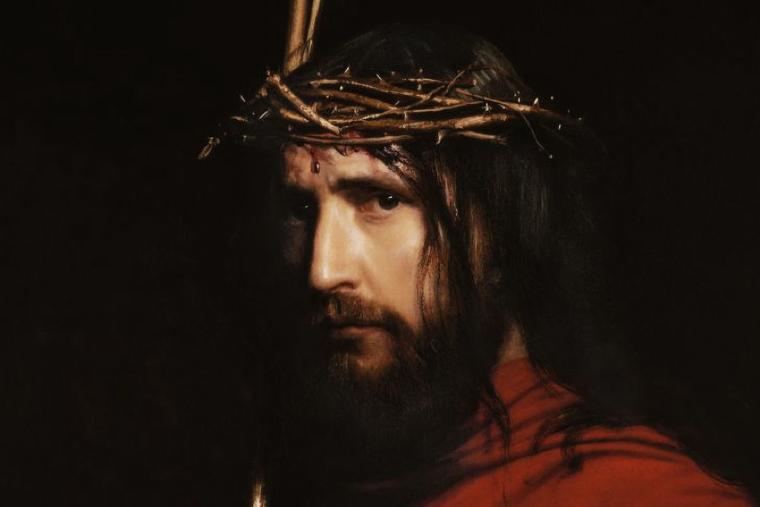
As a believer among believers, I invite everyone to contemplate, in the face of the Son of God, the grandeur of humanity that shines light also on the era of AI.
That ending reveals the encyclical’s deepest concern. The Church does not approach artificial intelligence principally as a technical problem, nor merely as a regulatory challenge. She approaches it as a question about the human person.
In an age increasingly tempted to measure humanity according to efficiency, optimization and power, Leo XIV insists that the fullest truth about man is revealed ultimately and most completely in the face of Jesus Christ.
Msgr. James Shea is the president of the University of Mary.
- Keywords:
- magnifica humanitas
- ai
- artificial intelligence