Do We Really Love the Poor? Pope Leo Offers 8 Questions to Help Us Find Out
‘The Church is fully the bride of the Lord,’ says the Holy Father, ‘only when she is the sister of the poor.’
We have all at some point had a teacher, parent, boss or pastor pull us aside and say, “We need to talk.” Hearing the words is a message that we have somehow gone wrong.
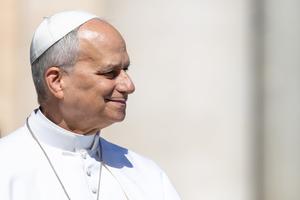
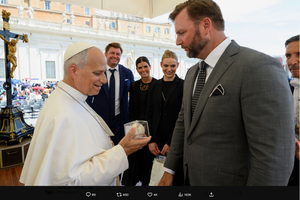
This past week, Pope Leo XIV pulled us all aside to talk. The question is: Will we listen? In writing his exhortation Dilexi Te (On Love for the Poor), Leo summons us to examine our personal and social consciences to ask ourselves whether we are loving the poor, and thus whether we are living as true Christians.
Dilexi Te is Leo’s first apostolic exhortation — and, in a sense, Pope Francis’ last. Francis began it as a continuation of his encyclical Dilexit Nos on the Sacred Heart of Jesus.
Upon Francis’ death, Leo took up the exhortation and made it his own. The Vicar of Christ is pulling all Christians aside to remind us to love the poor. The implicit message is strong: We are individually, socially and politically failing to do so.
We can sense the urgency of Leo’s words in the weight he puts behind them. He brings not only his own Petrine authority to bear on the question of loving the poor, but the full weight of the Christian tradition. His exhortation reaches back to Scripture and draws from the Church Fathers, the monastic and mendicant traditions, Catholic social teaching, and the witness of the saints.
Are We Living Out Our Orthodoxy?
Leo clearly is concerned that too many of us not only lack the will to actively love the poor but also lack the belief that this is integral to our faith. It is not just a failure of right action but a failure of real orthodoxy.
He tells us this when he writes, “I have chosen to recall the age-old history of the Church’s care for the poor and with the poor in order to make clear that it has always been a central part of her life.”
Leo’s concern should be ours. There is no room for a cafeteria Catholicism that neglects the poor. Leo urgently places the question before our hearts: Are we really living out the faith of the Church?
Is Our Love for the Poor Central?
Our actions show that we think love of the poor is not central. He brings this out several times, noting “the close connection between Christ’s love and his summons to care for the poor.”
But he does not merely note this — he “insists on this path to holiness.” He insists on this because too many of us think this love is “not the burning heart of the Church’s mission.” We substitute a worldly logic for Christian logic, making love of the poor a peripheral matter for Christian life. Leo urgently places the question before our hearts: Do we make this love peripheral or central?
Are We Living Out Our Love?
Leo seems shocked by this downplaying of one of the most essential missions of the Church, writing, “I often wonder, even though the teaching of Sacred Scripture is so clear about the poor, why many people continue to think that they can safely disregard the poor.” The danger that the Holy Father speaks of is twofold.
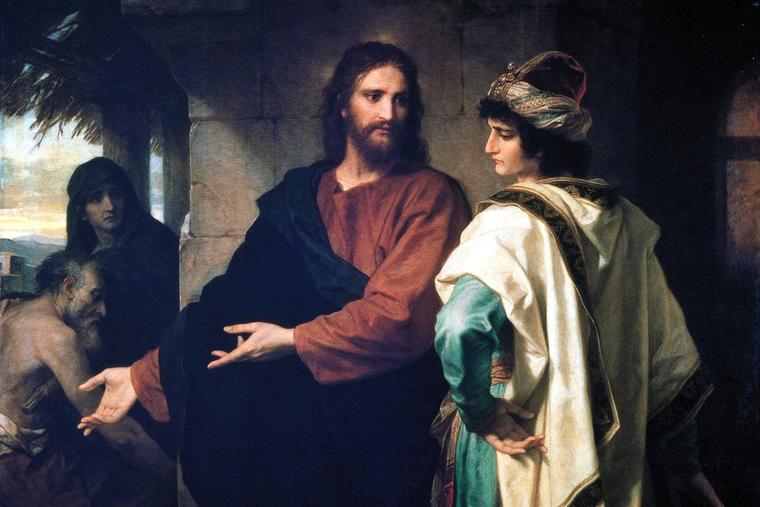
The first danger is to the poor. Our failure to love and help the poor harms them, leaving them destitute and abandoned like Lazarus on the doorstep.
But the second danger is to us, for the rich man who does not help Lazarus is damned. Salvation is through Christ’s grace, the outpouring of the Holy Spirit into our hearts in the sacramental life of the Church.
But salvation is also through living the works of mercy in giving to the least of these: the hungry, thirsty, imprisoned and migrant. Leo urgently places the question before our hearts: Are we living this love?
Do We See Christ in the Poor?
Leo summons the tradition to show that true belief and right practice necessitate the active love of the poor by ourselves and in our communities. “Charity,” as he teaches, “is not optional but a requirement of true worship,” and thus it is “a condition for salvation.” This is because “love for the Lord is one with love for the poor.”
You do not love Jesus if you do not love the pauper, the migrant and the imprisoned who are, in Leo’s powerful words, “the very ‘flesh’ of Christ.” Our lives center on our Eucharistic Lord in the Mass and at adoration; so too must they center on the flesh of Christ in the impoverished. Leo urgently places the question before our hearts: Are we loving the flesh of Christ in the flesh of the poor?
Are We Humbling Ourselves?
This connection between the poor and the Church is intimate and essential. Leo insists on this repeatedly and beautifully: “The Church is fully the bride of the Lord only when she is the sister of the poor.”
Our elevation as Church and our being a sacrament of the Risen One depends on our humility, for “when the Church bends down to care for the poor, she assumes her highest posture,” and “when the Church bends down to break the chains that bind the poor, she becomes a paschal sign.” What it is to be the Church is to be a home for the poor. Leo urgently places the question before our hearts: Are we bending down to be with the poor?
Are We Answering the Door to Christ?
This applies not only to the poor in our communities. It applies to the poor outside of our communities, whether imprisoned, or foreigners far away, or migrants nearby. Regarding immigrants, Leo reminds us that “the Church like a mother accompanies those who are walking.” To be transformed in the life of the Church is to see as the Church sees, not as the world sees. Certainly political communities face important prudential questions, Christians should be shaped by the Church in their work of welcoming rather than rejecting immigrants and especially refugees. “Where the world sees threats, she sees children,” he says. “Where walls are built, she builds bridges.”
Grounded deeply in Matthew 25, he teaches us that “in every rejected migrant, it is Christ himself who knocks at the door of the community.” Leo urgently places the question before our hearts: Are we answering the door to Christ knocking?
Do We Live the Preferential Option for the Poor?
A particular challenge of Leo’s message is his desire to confront us with the ways we equivocate on the centrality of the privilegium pauperum, the preferential option of the poor. We are called in our personal, social and political lives to privilege the poor, but too often we explain away this obligation as merely “prudential.”
Pope Leo writes that “no ecclesial interpretation has the right to relativize it. The Church’s reflection on these texts ought not to obscure or weaken their force.” He further quotes Pope Francis that “there can be no room for doubt or for explanations which weaken so clear a message … that there is an inseparable bond between our faith and the poor.” Too often, we speak of the works of mercy and the political and economic obligation to the poor as something that always precedes a “but”: “We should love the poor but. … We should love the migrant but. … I would give more to Catholic Charities but. …”
The Holy Father calls us to cut out the “buts” and get to work actively loving the poor. Leo urgently places the question before our hearts: Do we equivocate on the preferential option for the poor?
Are We Loving the Poor?
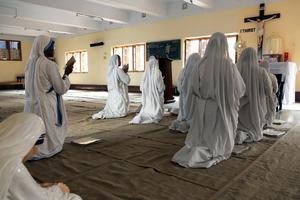
Pope Leo is pulling us aside for a talk in this exhortation. So what can we do? We can commit to overcoming and changing the structural injustices that form social sins. We can center our lives on Matthew 25 and live the works of mercy. We can shape our nation so that it, too, is modeled on those works. We can support groups like Christ in the City, the Missionaries of Charity and Catholic Relief Services. We can greet the grimy homeless person with love. We can go with less, so others can go with more.
Leo calls us to examine our conscience. He reminds us that the mission to the poor is the mission of the Church. He demands that we bend down to the poor and, in being so bent, be elevated by them. He requires that we stop equivocating and start loving.
In Dilexi Te, he exercises his Petrine office and urgently places the question before our hearts: Are we loving the poor?