St. Thérèse: The Courageous Heart of the Little Flower
COMMENTARY: She was much more than a delicate flower caressed by the wind. She had a strong resolve that enabled her to endure storms of suffering with patience and fortitude.
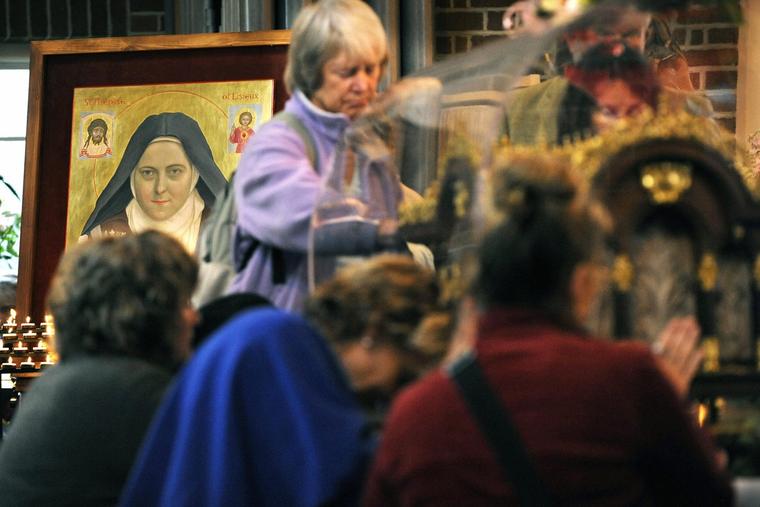
As a child, I learned about the saints in school and concluded there was no way I’d ever bear such a title. The missionaries had such courage, traveling to distant lands and suffering for their faith, while I was reluctant to leave my mother’s side for summer camp.
However, I could somewhat relate to St. Thérèse, known as the Little Flower, since in my childhood books she was portrayed as a sweet little girl who had lived a sheltered life. She had entered a cloistered convent at age 15 and died when she was 24. From the little I knew about her, it seemed her life had been all sunshine and roses.
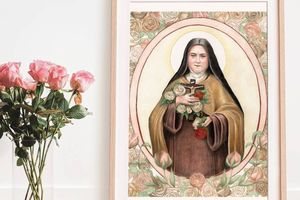
As an adult, I discovered this saint had remarkable courage and resilience, which is worth noting on the 100th anniversary of her canonization, May 17. Although many books portray her smiling serenely and surrounded by flowers, Thérèse was no stranger to suffering.
For example, when she was only 4 1/2 years old, her beloved mother, Zélie, died of breast cancer. In The Story of a Soul, her autobiography, Thérèse wrote: “At that moment, my happy disposition changed completely.” After this tragic event, her sister Pauline, 16, became a substitute mother for her. Five years later, however, the child experienced another bitter loss when Pauline entered the cloistered convent at Carmel.
When writing about her childhood, she said there were no words to describe how much she loved her father. Still, she quietly suffered one Christmas Eve when she was 14 and overheard a remark he made. In France, there was a tradition for children to leave their shoes out on Christmas Eve and the parents would fill them with gifts. By their teen years, most children had outgrown this practice, but Thérèse clung to the tradition. Then came the night she heard her father, Louis, sigh and say, “Thank goodness that’s the last time we shall have this sort of thing.”
The remark cut her to the quick, and it took an extreme act of self-control to remain calm and pretend nothing was wrong. Instead of crying, she went downstairs and exclaimed over the gifts. Later, however, she described this Christmas experience as her “conversion” because she believed Jesus had come into her heart to teach her to forget herself and please others.
When she was 15, Thérèse dearly wanted to enter the convent, but the rules stated she had to be 21. After the bishop denied her fervent request to enter early, her father took her and Celine on a pilgrimage to Rome. There, she was granted the grace of meeting Pope Leo XIII and asking for his permission to enter early. The Holy Father blessed her and responded, “You will enter if God wills it.” Not long after this meeting, her prayers were answered when the bishop allowed her to enter Carmel at age 15.
I was surprised to learn Thérèse struggled with spiritual darkness in the convent, since as a child I thought of her as someone whose faith never faltered. After her death, her sister Pauline revealed that, one day, when Thérèse was kneeling in the chapel, she seemed to hear a voice whispering: “Heaven, for which you have been striving so feverishly all your life does not exist — God, Whom you love so ardently does not love you.”
It’s hard to imagine the pain this voice must have caused in someone who had given her whole life to Christ. As a way to declare her commitment to the Lord, she took her book of the Gospels and wrote, upon the flyleaf, the entire Apostle’s Creed in her own blood. The voice continued to plague her, but she remained steadfast in faith. She continued making acts of faith, praying and offering her suffering to God as a prayer. About her struggle with darkness, she said that “God sent me this heavy cross just at the time when I was strong enough to bear it.”
Thérèse also endured physical discomfort while in the convent, which she didn’t talk about until she was dying. There was no heat in her cell where she slept, nor in the chapel where she spent most of the day. Many winter nights she shivered so violently she couldn’t sleep at all, but rather than complain to her superiors, she turned her suffering into a prayer for sinners.
But this discomfort pales when compared to her battle with tuberculosis. As I read about the final days of her life, my childhood image of a sweet little saint decorated with flowers gave way to an image of a woman with enormous courage.
Her agony began four months before her death, when she coughed up blood and started having trouble breathing. As the disease progressed, she experienced slow suffocation, a continual, unquenchable thirst and intense stomach pains — but she refused morphine injections. One day, she told the sisters that if she hadn’t any faith, she would not have hesitated for one instant to take her life. “Never would I have believed it was possible to suffer so much,” she said.
Her agonizing death, which came on Sept. 30, was a sharing in the passion of Christ, who suffocated on the cross. As she held her crucifix in her hands, her last words were, “My God ... I love you!”
The title of “Little Flower” fails to encompass Thérèse’s strength and courage. She was much more than a delicate flower caressed by the wind. She had a strong resolve that enabled her to endure storms of suffering with patience and fortitude. She had a remarkable trust in the Lord and a willingness to share in his passion. Her life was definitely not sunshine and roses, but something much deeper, a fervent love for Jesus Christ, who walked with her through every storm.
- Keywords:
- st. thérèse
- st. thérèse of lisieux