Renewing America Begins With Renewing Catholic Universities
COMMENTARY: They prepare men and women who are not only professionally competent, but also capable of civic friendship — the shared pursuit of the common good in a divided age.
The immense trust our society once placed in universities has eroded. Institutions of higher learning — founded to seek truth, form character and prepare students for service to society — now often seem unmoored from those noble commitments.
Yet this is not only a story of decline. It is also a moment of real opportunity. Cultural renewal begins after we have taken stock of what is broken and then shift our focus to repair and renewal. Aristotle tells us the first step in reasoning about right action is to identify the end, suggesting that the most important question for our moment is: What is the purpose of a university?
The history of the university is inseparable from the history of the Catholic Church. The university was born from Catholic monastic and cathedral schools, ordered to the unified pursuit of truth in the harmony of faith and reason.
As Pope St. John Paul II’s apostolic constitution on Catholic universities, Ex Corde Ecclesiae, reminded us, the university is not only “born from the heart of the Church” but has the “honor and responsibility … to consecrate itself without reserve to the cause of truth … serving at one and the same time both the dignity of man and the good of the Church.”
This integrated vision is precisely what the modern world has sacrificed — and what Catholic universities are now called to reclaim.
Today, Catholic universities in particular stand at a crossroads. They can drift with the cultural currents that have swept so many institutions into confusion, or they can return with clarity to the Church’s own vision of education.
Providentially, the Church has provided a road map that charts the course for the needed revival. Sixty years ago, Pope Paul VI’s declaration on Christian education Gravissimum Educationis reminded us that education must form the whole human person — intellect, heart and character — and prepare students for life in both the earthly and the heavenly cities. Later, Pope St. John Paul II in Ex Corde Ecclesiae insisted that Catholic identity must permeate every aspect of university life: research, curriculum, governance and culture. Fidelity to the Church’s intellectual and moral tradition is not a constraint on academic excellence; it is its foundation.
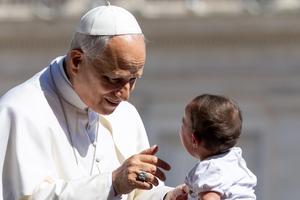
Most recently, Pope Leo XIV’s apostolic letter Drawing New Maps of Hope, issued on the 60th anniversary of Gravissimum Educationis, calls Catholic schools and universities to become “cartographers of hope” for a world that has lost its way.
The Holy Father warns against reducing the human person to a skills profile or a predictable algorithm. Education, he insists, cannot be measured only by efficiency or market value, but by its capacity to form persons in dignity, justice and service to the common good.
In this light, the familiar dysfunctions of higher education in our country come into focus. We see ideological rigidity replacing honest inquiry, consumerist models that treat students as customers, administrative expansion that obscures educational purpose and the loss of a shared moral horizon.
Too often, universities no longer cultivate the habits of mind and heart needed for genuine freedom.
But Catholics cannot afford simply to regret what was. We must build alternatives. Catholic universities have a responsibility not only to identify what ails higher education, but to show what a healthy educational culture looks like — from the inside.
The path to reform begins with the ancient conviction that every person is made for truth, for virtue and for communion. This is what the Catholic tradition cultivates best through a liberal arts education. It does not ignore professional preparation, but it refuses to reduce education to career training, recognizing this as the critical question: What kind of person will our students become?
Authentic liberal arts education in the Catholic sense helps students grow in the virtues that make real freedom possible: humility before the truth, wonder at creation, courage to pursue what is right even when it is unpopular, perseverance in the hard work of understanding, and fostering the friendships that bind a learning community together. Such an education orders students to reality as it is — and ultimately to the God who is Truth. It forms them not only to make a living, but to live well.
Our republic — 250 years old this year — depends on such formation. The American experiment presupposes a people capable of self-government — citizens who practice prudence, justice, temperance and fortitude. That kind of character is not produced by accident, nor by technical training alone. It requires institutions intentionally dedicated to forming the whole person. If our universities continue to form young people in fragmentation, relativism and isolation, our civic life will continue to fray.
It is here that faithful Catholic universities have an irreplaceable role. When they are true to their mission, they become places where the coherence of truth is visible and where the unity and dignity of the human person are honored. They prepare men and women who are not only professionally competent, but also capable of civic friendship — the shared pursuit of the common good in a divided age.
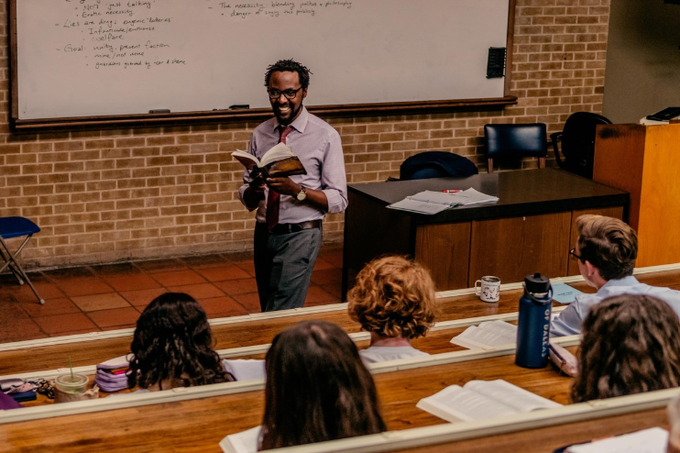
The path toward renewal is not mysterious. The Church — through the sage voices of Pope Paul VI, Pope St. John Paul II and now Pope Leo — has given us principles. Thankfully, a small number of institutions like the University of Dallas are already showing evidence of what this renewal looks like in practice. While families may still be tempted for any number of reasons to choose others, the growing enrollment of traditional liberal arts colleges and the growing number of classical K-12 schools should give us hope that renewal is possible.
What remains is the courage to seize this moment and for more families to take the path the Church has laid out before us.
Jonathan J. Sanford, Ph.D., is a professor of philosophy and the president of the University of Dallas.
- Keywords:
- catholic higher education
- udallas