Pope Leo XIV at Six Months: Assessing the Serene Start of a Unity-Focused Pontificate
COMMENTARY: If Francis could be called the pope who had been in a hurry, Leo is the pope who is prudently taking his time.
Nov. 8 marks the end of the first six months of Pope Leo XIV’s pontificate.
At this point in the papacies of several of his recent predecessors, the Church had a very clear notion of what might lie ahead.
Six months after the election of Pope St. John Paul II in 1978, for example, he had issued his first encyclical, Redemptor Hominis (The Redeemer of Man), with its memorable opening line:
“The Redeemer of Man, Jesus Christ, is the center of the universe and of history.”
It served as the great manifesto of his 26-year papacy and was embodied in his enduring, unofficial motto, “Be not Afraid!” Six months into the Francis pontificate in 2013, the late Holy Father had made international headlines first at World Youth Day in Rio de Janeiro, when he called on the young people present, “Hagan lio!” (“Make a mess!”) and then on his way home from Brazil when he uttered, “Who am I to judge,” when he was asked about a priest who had same-sex attraction.
Looking at Leo’s first six months, there were no dramatic moments, no tectonic catchphrases, and strikingly little controversy. In fact, he has emulated not Francis and “Hagan lio” but Benedict XVI and his first words when he was elected pope in April 2005: “the cardinals have elected me, a simple and humble laborer in the vineyard of the Lord.”
Benedict ’s first months were not filled with stern encyclicals as many had hoped, and some had feared. Instead, he settled serenely into the role, with arguably the two most notable events in his first days celebrating World Youth Day in Cologne and promulgating the Compendium of the Catechism of the Catholic Church.
Leo has gone about doing the job with little drama and with such relative ease that the secular media has paid limited attention to him on a regular basis, beyond cheering his love of the Chicago White Sox, highlighting what they interpret is an attack on Donald Trump, or calling attention to some assumed positive comment about the LGBTQ community. For his part, Leo does not seem to be in a hurry or feel any pressure to make news, reorganize the leadership of the Roman Curia, or issue major writings such as his first encyclical.
If Francis could be called the pope who had been in a hurry, Leo is the pope who is prudently taking his time. Put another way, if we are to look for a manifesto or a blueprint of what might follow, it is best to say that his pontificate is the blueprint — he is subsumed into the papacy and is living it out every day through the deliberate embrace of hard work, authenticity, and thoughtful governance.
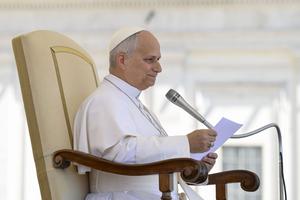
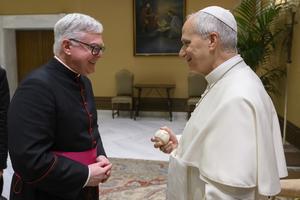
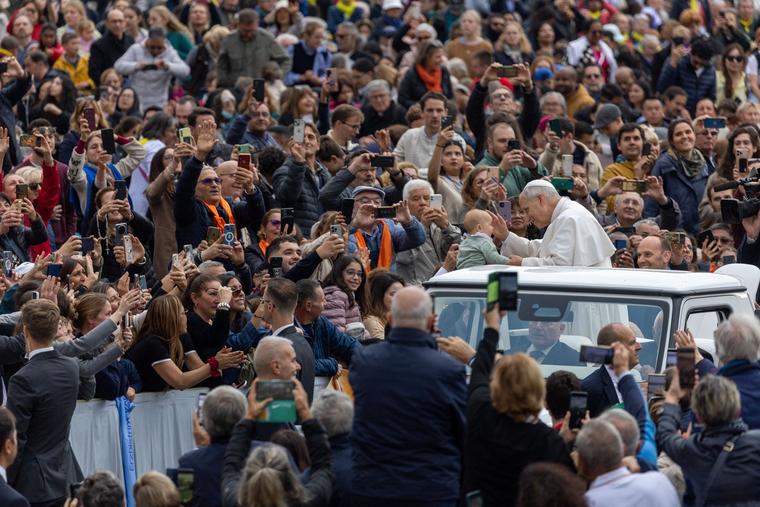
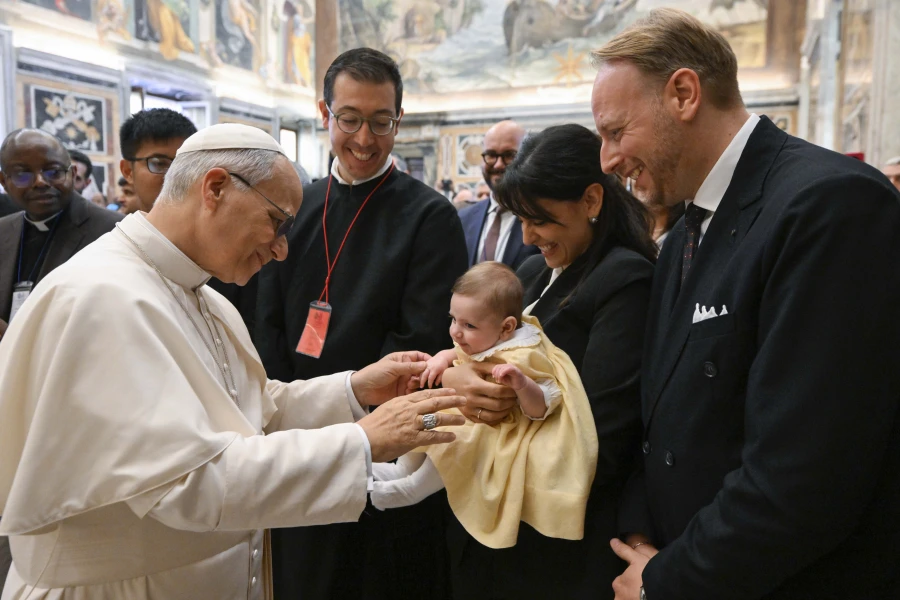
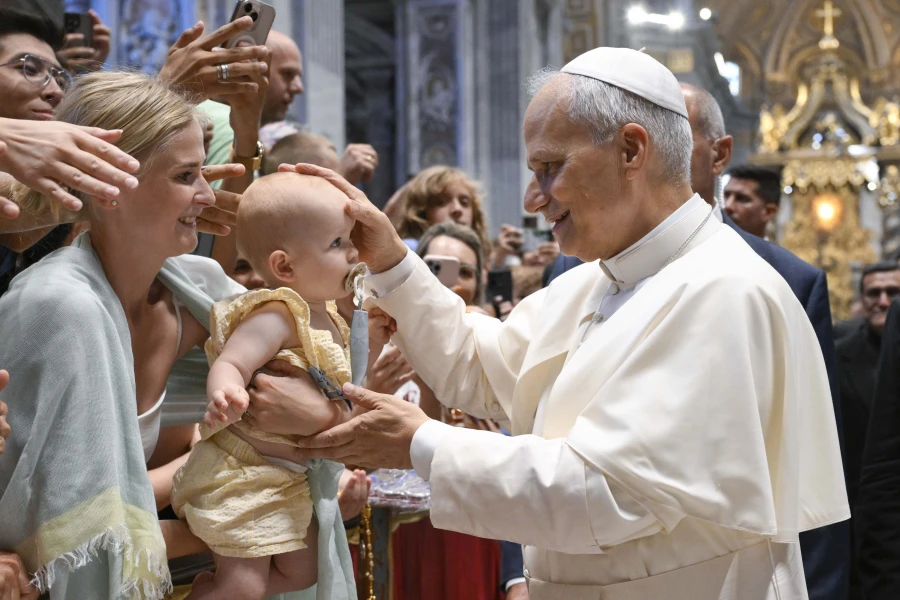
The seeming effortlessness belies the energy that he has brought to the office. He just turned 70, but he is a pontiff of vigor and quiet but robust enthusiasm. That has been apparent in his raucous Wednesday general audiences, where he is regularly handed babies to bless and pizzas from Chicago to eat. It was visible especially in June when he carried the Jubilee Cross like an ordinary pilgrim from the Vatican’s Paul VI Hall to the Holy Door at St. Peter’s Basilica.
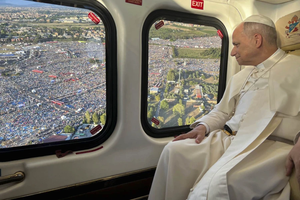
And his vivacity has touched young people especially, most so at the Jubilee for Youth in August, where he again carried the Jubilee Cross and was given a joyous welcome from an estimated 1 million young adults at the Tor Vergata, just outside of Rome. The largest event of his pontificate so far, Pope Leo used the moment to bring young people’s minds and hearts not to him but to Christ. He told them to “study, work, and love according to the example of Jesus” and asked them to pray: “Stay with us, Lord.”
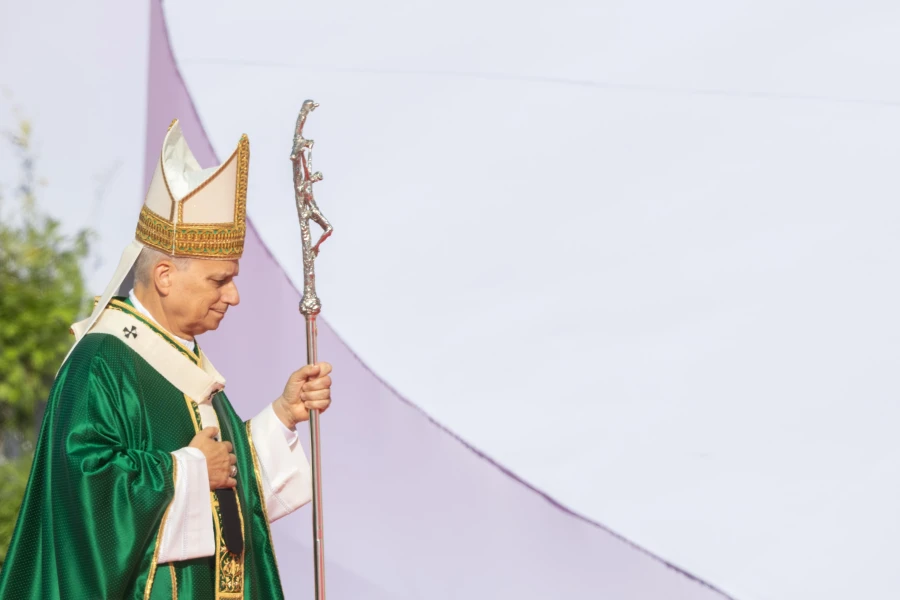
Meanwhile, the limited personnel choices he has made demonstrate a desire for experience and competence. Consider his choice to succeed himself as prefect for the Dicastery for Bishops — a long-serving curial official, the 67-year-old Italian Carmelite and canon lawyer, Archbishop Filippo Iannone, who had been prefect of the Dicastery for Legislative Texts since 2022. Archbishop Iannone, of course, is only the first major appointment, and Leo will be presiding over a sea change of officials in the Roman Curia and key archbishops around the globe, including many Francis appointees who are now over the traditional retirement age of 75.
In assessing the Holy Father’s other moves, Leo sees himself in continuity with his immediate predecessor, even as he makes his own vision plain in how he goes about it, and, as was obvious on the day of his election, he holds unity as his greatest aspiration for the Church and world.
The line of continuity was visible in his recent exhortation on the poor, Dilexi Te (I Have Loved You), that he had inherited unfinished from Pope Francis. The exhortation builds on Francis’ focus on those living on the margins (periferia), and Leo certainly has critical things to say about caring for the poor, but he abstains from Francis’ acerbically personal rhetorical style. Instead, Leo adopts a more reserved and nuanced tone that warns against abandoning the role of faith in caring for the poor and looks sharply at the failings of both the free market and the state.
“Separating this religious aspect from integral development,” he writes, “they even say that it is the government’s job to care for them, or that it would be better not to lift them out of their poverty but simply to teach them to work. At times, pseudo-scientific data are invoked to support the claim that a free market economy will automatically solve the problem of poverty.”
On the issue of immigration, Leo has echoed the longstanding stress of modern popes on care for migrants and the dangers of globalization. His most biting language, in fact, has been around this issue, acknowledging in a speech on Oct. 23 to participants in the World Meeting of Popular Movements, that “States have the right and the duty to protect their borders, but this should be balanced by the moral obligation to provide refuge,” and then stating pointedly, “Ever more inhumane measures are being adopted — even celebrated politically — that treat these ‘undesirables’ as if they were garbage and not human beings.”
Leo, however, has refrained from making comments that could be perceived as overtly political or directly targeting the Trump administration. On Oct. 8, outside Castel Gandolfo, the Pontiff refused to answer a reporter’s question about President Trump’s plan to send federal troops into Leo’s hometown of Chicago, saying, “I prefer not to comment at this time about choices made, political choices within the United States.”
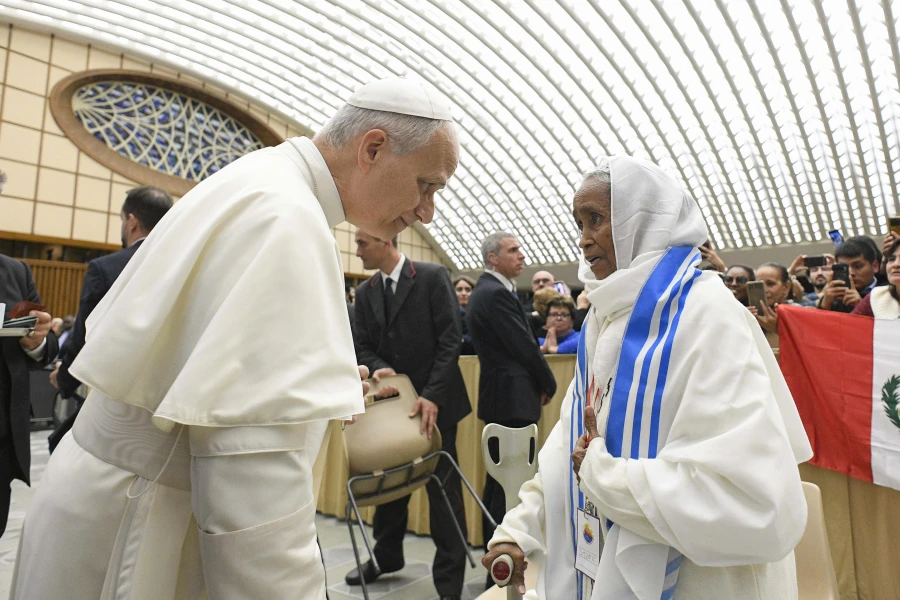
He is not passive, however, in the face of mass deportation and has called on the U.S. bishops to meet this challenge and work together because, as he reportedly told Bishop Mark Seitz of El Paso, Texas, “The Church cannot stay silent before injustice. You stand with me, and I stand with you.”
He also expressed concerns about the denial of sacraments for illegal immigrants in ICE facilities. It is a fine line to walk, but it also leaves room for dialogue with the Trump administration and for the U.S. bishops to stand together — with his support — at a time of tensions in American domestic politics and among the bishops themselves.
That measured-but-firm approach can be seen especially in Leo’s vision for synodality, a pillar of Francis’ last years. While not departing dramatically from the broad goals of synodality that had emerged under Francis, Leo has returned to the more fundamental vision for it.
“I think there’s great hope if we can continue to build on the experience of the past couple years and find ways of being Church together,” he noted in his interview with Crux published in September. “Not to try and transform the Church into some kind of democratic government.”
He echoed those words when he spoke to the participants in the Jubilee of the Synodal Teams and Participatory Bodies on Oct. 24. Synodality, he said, “is not a campaign, it is a way of being and a way of being for the Church. … We are speaking of conversion to a spirit of being Church by being missionary and building up the family of God.”
That building up, that unifying, is also the strongest of his themes over the last months. He said on the afternoon of his election, “All of us are in God’s hands. So, let us move forward, without fear, together, hand in hand with God and with one another other!” Recognizing the divisions within the Church, he has struck both a conciliatory tone and a frequent appeal to unity.
On the controverted matter of the traditional Latin Mass, he met with Cardinal Raymond Burke — whose relationship with Pope Francis had its times of marked tension — and permitted him to say the pre-Second Vatican Council liturgy in St. Peter’s Basilica on Oct. 25, something that had not been allowed for several years in the wake of Traditionis Custodes (Guardians of theTradition), Francis’ document that restricted the older form. And in his interview with Crux, he spoke of his openness to meet with proponents of the TLM, something almost unimaginable over the last years.
Even the latest doctrinal note from the Dicastery for the Doctrine of the Faith on the titles of Mary, Mater Populi Fidelis (Mother of the Faithful People of God), is a case in point of Leo’s wider curriculum.
In discouraging the possible use of the title Co-Redemptrix for Mary, Pope Leo is also trying to build a new bridge to other Churches and ecclesial communities while taking away any potential obstacles that could obscure the absolute centrality of Christ. He is thus re-focusing our gaze as Christians — Mary among us as the first and greatest disciple and as Mother of the Church — on unity in Christ.
The Holy Father has many major decisions and important travel ahead of him, starting with Turkey and Lebanon at the end of November. Next year will bring key appointments, determinations on what to do with the TLM, release of perhaps his first encyclical, and almost certainly more travel, including possibly to the United States for the country’s semiquincentennial celebration.
Based on what he has done so far, Pope Leo XIV will likely continue to be deliberative in his discernment of situations, firm but thoughtful in the execution of his plans. And will display his customary energy and calm enthusiasm. There will be new crises, controversies and challenges, but his appeal to unity will remain.
As he said on May 18 at the Mass for the beginning of his pontificate, “Brothers and sisters, I would like that our first great desire be for a united Church, a sign of unity and communion, which becomes a leaven for a reconciled world.”
- Keywords:
- 'pope leo xiv'
- pontificate