Saints and Devotions to Bring Home Fallen-Away Catholics
COMMENTARY: Our Lady of Šiluva and other saints and devotional practices offer hope to those interceding for prodigal sons and daughters.
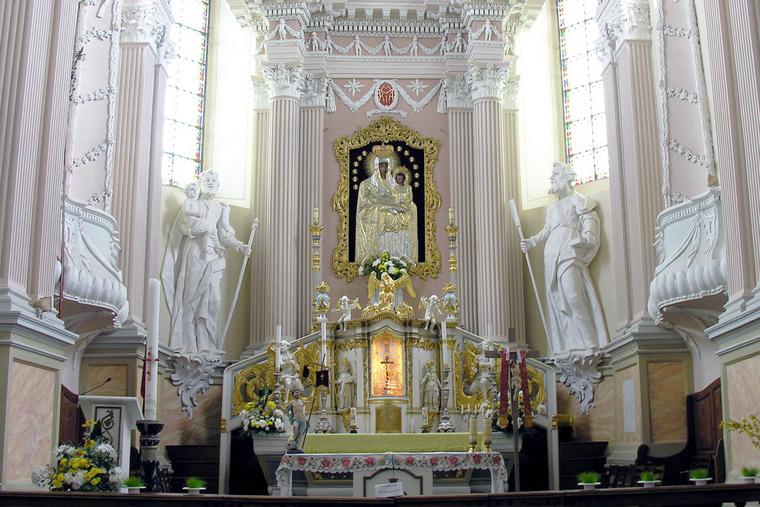
Catholic prayer warriors appealing to heaven for loved ones who have drifted away from the Church can turn to particular saints known for inspiring conversions — and especially to our Mother in Heaven. Calling on Our Lady of Šiluva, a Church-approved Marian apparition, is especially fitting, given that she helped bring the entire town of Šiluva in Lithuania back to the Catholic faith.
The story begins with the baptism of Grand Duke Jogaila in 1387, which allowed him to marry the queen of neighboring Poland. From that point, the faith spread throughout the previously pagan region. In 1457, a Catholic church was built by Peter Giedgaudas, a diplomat for Vytautas the Great, a ruler of Lithuania. While in Rome, Peter bought a magnificent painting of the Blessed Virgin Mary holding the Child Jesus and placed it in the sanctuary of the Šiluva church.
But in 1532, the Protestant Reformation reached the town.
The governor and other prominent locals became zealous Calvinists and seized Catholic property. The parish priest rescued the treasured painting of the Blessed Virgin and Child, along with liturgical vestments and documents proving that Vytautas the Great had given the land to the Church. He buried them in an ironclad box near a large rock.
Eighty years later, Catholicism had all but vanished from Šiluva.
A Beautiful Woman Appears to Children
Then, one summer day in 1608, shepherd children tending sheep near the rock suddenly saw a beautiful young woman dressed in flowing blue and white robes, with light-brown hair. She stood upon the rock holding a baby in her arms and wept. A strange light surrounded them both.
The children were in awe, but afterward felt frightened. One boy ran to tell the Calvinist pastor, who dismissed the story as imagination. Still, the children spread the story to parents and neighbors. By the next morning, many of the townspeople had gathered near the rock — some believing the children and others scoffing but still curious.
The Blessed Virgin Reappears
The Calvinist pastor arrived, claiming the event as Roman superstition and demonic. Then the sound of sobbing was heard. As people turned to the rock where the sound came from, they were amazed to see a weeping lady with tears pouring down and a baby in her arms.
The pastor asked, “Why are you weeping?”
She replied, “There was a time when my beloved Son was worshipped by my people on this very spot. But now they have given this sacred soil over to the plowman and the tiller and to the animals for grazing.” Then she vanished.
Return to the Church
The townspeople realized the Mother of God was crying because they had left the Catholic Church. According to the official Our Lady of Šiluva website, “So complete was this return that a decade later, on the feast of the Nativity of the Blessed Virgin Mary, more than 11,000 people received Holy Communion during a Mass offered at the scene of the apparitions.”
The bishop ordered an investigation. During this time, a very elderly blind man from a nearby village recalled helping bury the chest with church treasures beside a large rock decades earlier. He was led to the field of the apparitions, and upon reaching the spot, his sight was miraculously restored. He fell to his knees in joy and pointed to the spot where the chest lay buried.
When it was dug up, it held the perfectly preserved painting of the Madonna and Child, several gold chalices, vestments, church deeds and other documents. The painting is enshrined now in the Basilica of the Birth of the Blessed Virgin Mary and is venerated as the Miraculous Image of Šiluva.
Many miracles have been reported over the years. Pope St. John Paul II raised the shrine to the status of a Minor Basilica on May 6, 1988, and later visited in 1993.
Because the town returned to the practice of Catholicism, Our Lady of Šiluva is invoked as the patroness of those who have left the faith. A Novena to Our Lady of Šiluva continues to be prayed for this intention.
Saints for Prodigals
In addition to Our Blessed Mother, several saints are especially associated with helping people who are rejecting the Church.
St. Jude, one of the Twelve Apostles and a martyr around A.D. 65, is also known as Thaddeus, meaning “gentleness of character.” He is one of the most invoked saints for intercession in desperate situations. If you’ve prayed long and hard for loved ones away from the Church, their situation can seem impossible, but nothing is impossible for God.
Another saint with a reputation as an intercessor for seemingly impossible causes is St. Rita of Cascia. She lived a life of extreme hardship, including a difficult marriage, the murder of her husband and the deaths of her two sons — all of whom converted through her example and prayers. At age 36, Rita entered an Augustinian convent, living a life of prayer, contemplation and spiritual reading for 40 years. On Good Friday of 1442, while contemplating an image of Jesus, she spoke of her willingness to relieve his suffering by sharing even the smallest part of his pain. A thorn from his crown penetrated Rita’s forehead, causing an open wound that remained visible until the day of her death in 1457.
St. Monica is the patron saint of “prodigal children” and the mother of St. Augustine, who lived a wayward life before his conversion — a conversion for which she had prayed long and hard. Her story inspires other parents to follow her example of perseverance, faith and patient prayer for the well-being of our loved ones.
As a parish priest, St. John Vianney, also known as the Curé d’Ars, is considered the patron saint of parish priests. He is known for his deep devotion to the Church and his dedication to the sacrament of confession. Although he struggled with academics in seminary, his humility, selflessness and unwavering faith got him through. He was sent to the remote town of Ars in France where men filled taverns rather than church.
Initially, his prayers, penances and fasting made him seem odd to the people of Ars who were indifferent to the faith. But over time, hearts softened, and people returned to the faith and to the small church where Vianney would hear confessions for countless hours. His fame as a holy priest spread beyond France so that not only did he convert his town, but drew people from all over the world for his spiritual guidance in the confessional.
Finally, there is our wonderful foster father of Jesus, whom God entrusted with the care of his Son on Earth. We can turn to him in everything for his fatherly guidance and prayers. This prayer to St. Joseph is specifically to lead our loved ones away from sin and into heaven, where they may one day be blessed with eternal happiness.

Patti Maguire Armstrong Patti (Maguire) Armstrong is an award-winning journalist and was managing editor and co-author of the bestselling Amazing Grace Series. Her latest books are the humorous and inspirational second-edition Dear God, I Don't Get It, Dear God, You Can't Be Serious!, What Would Monica Do?, Holy Hacks and Michelle Duppong: Hope in the Depths of Suffering. Patti worked in social work and public administration before staying home as a freelance writer while she and Mark raised their 10 children in North Dakota. Follow her on Twitter at @PattiArmstrong and read her blog at PattiMaguireArmstrong.com.