America’s Housing Shortage Is Turning Into a Moral Crisis
The lack of affordable housing is impacting everything from family formation to participation in parish life.

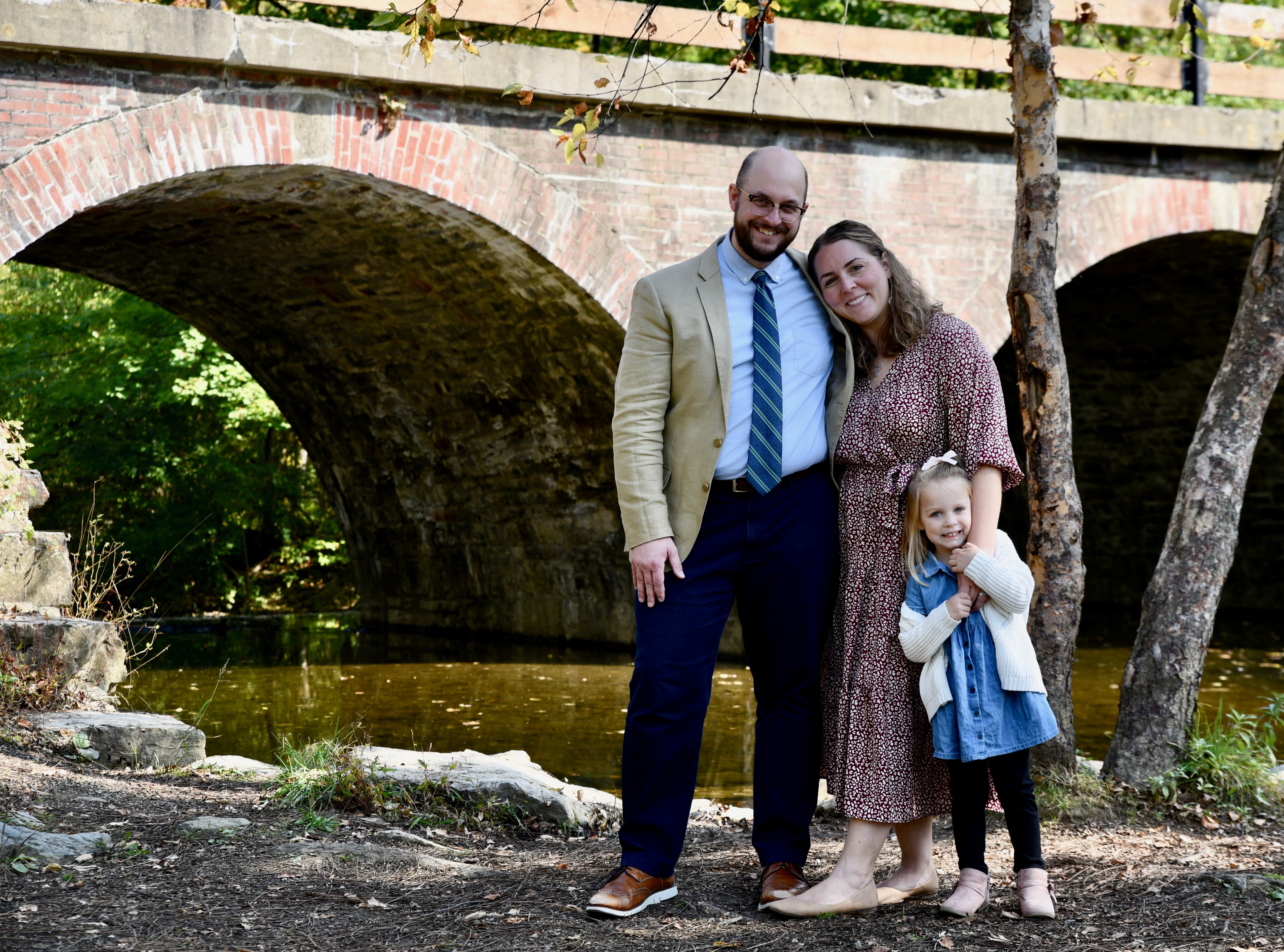
Daniel Drain and his wife, Mary Colleen, are the parents of a young daughter and have dreamed for years of owning a house in Philadelphia, where they live.
But despite drastic lifestyle changes, including cutting costs and putting the majority of Daniel’s income into savings, there’s no clear path to homeownership for the Drains in Philly, where the cost of an average single-family home has risen 69% in the past eight years.
While waiting for the market to become more favorable, the family currently lives with Mary Colleen’s parents in the outer suburbs. From there, Daniel commutes an hour and a half each way to his job downtown as director of the Office of Life and Family for the Archdiocese of Philadelphia.
It’s frustrating, Daniel told the Register, because his family and countless other Catholic families they know are “not in search of perfect dream homes or McMansions” — above all, they want “a layout that allows us to respond to the Lord’s call to say ‘Yes’ to life.”
“Modest, three-bedroom homes that can be a place for our family to grow into seem just out of reach,” said Daniel, who, along with his wife, is 33 years old.
Across the country, the Drains’ experience is far from uncommon. U.S. home values have risen in recent decades much faster than the incomes of the people trying to buy them, making homeownership hard to come by for many young families. Currently, a house in America costs around five times a family’s median annual income, a figure far higher than the the ratio of roughly 3.2 seen throughout the 1990s. As a result, home sales are stuck at a three-decade low and the average first-time homebuyer is 40 years old — significantly older than the average age of a first-time parent (30 years old).
For Catholics, this development constitutes not merely an economic challenge, but a moral one. Observers have repeatedly warned that the lack of affordable housing is causing young people — Catholic and otherwise — to delay major life decisions, such as marriage and children, or even simply achieving basic independence from their parents.
“Housing is directly tied to family formation and in that sense tied to what it means to be able to call people to mature, grow up, and become contributing members of a community,” said Patrick Brown, a fellow at the Ethics and Public Policy Center who has written extensively on the social impact of housing unaffordability.
Moral Dimensions
Given the connection between housing and human flourishing, the Catholic Church has long taught that there are moral dimensions to real estate, even teaching that housing is a right. For instance, in his 2016 exhortation Amoris Laetitia, Pope Francis taught that “the family has the right to decent housing, fitting for family life.” For his part, Pope Leo XIV has said that working together to provide housing is “not ideology — it is truly living the Gospel.”
Holy Cross Father Stephen Koeth, a scholar of urban, religious and political history at the University of Notre Dame, told the Register that Catholics often rightly recognize that those who are homeless or on the brink of losing their homes are the ones most in need of attention amid the housing crisis. But he said that it’s also clear that today’s housing crisis is not only affecting those at the lowest socioeconomic levels, but also those in the middle.
When even college graduates with good jobs can’t find affordable housing close to work, family or a good parish, it greatly affects the flourishing of young Catholics and of the parishes where they may or may not be able to live near, he said.
“What about family size? What about marriage rates? What about participation in parish life? … Housing and the affordability of housing touches on all of these things,” said Father Koeth, who wrote a book exploring the ways suburbanization shaped Catholicism in postwar America.
Impact on Family and Parishes
The lack of affordable options for families is particularly acute in major cities, where large shares of renters and homeowners are spending more than 30% of their income on housing, leaving them little margin for other important things — such as Catholic school tuition or parish tithing.
In Chicago, Dominic Lynch and his wife Karisma found most home prices near their rental blew their budget out of the water, even for homes that needed tens of thousands of dollars in repairs.
When the Lynches, who are in their early 30s and became parents last December, finally did buy a home this month, they had no choice but to choose one far away from the Chicago parish they had come to love, St. Andrew.
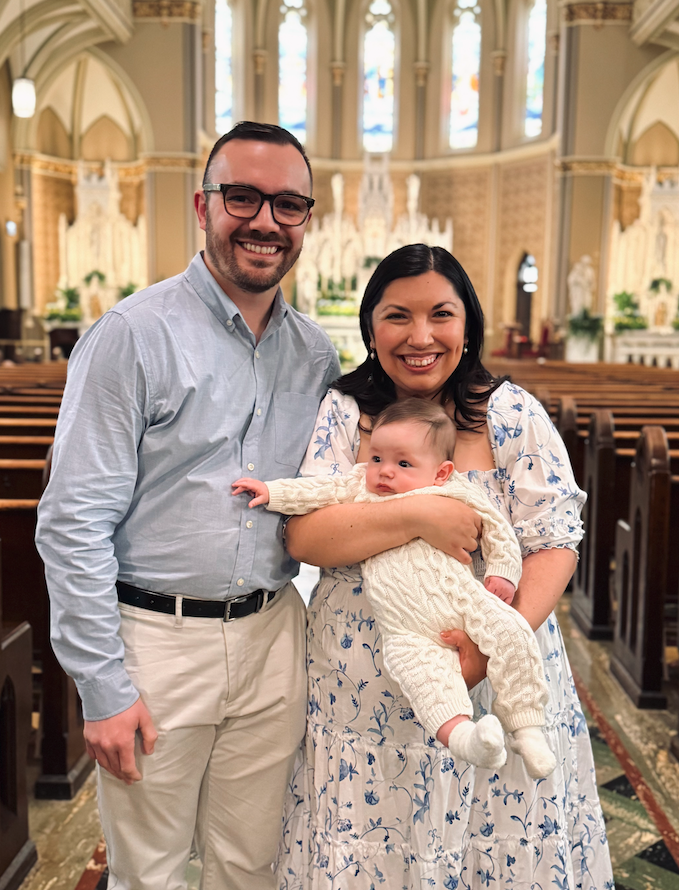
“We can still be active parishioners ... but we’ll now be 20-30 minutes away instead of literally five minutes from the parish,” Dominic, who works at a nonprofit, told the Register.
Another common scenario is Catholic parents feeling stuck needing two incomes to pay for a decent house, even if one spouse would like to cease working for the good of the family.
For one Catholic mother of four in her 30s, housing costs in the Nashville area are “literally the reason” she has been unable to make the transition to being a stay-at-home mom. She and her husband finally decided to sell their current home and begin renting again to allow her to stay home with the children, she told the Register, asking not to be named due to the sensitivity around the issue of personal finances.
It’s a dynamic familiar to the Lynches — Karisma would like to step back from work and spend more time at home with their son, but with their new mortgage there’s no clear path to allow that to happen, Dominic said.
“It’s not what either of us wants, but it’s how it has to be for now,” he said.
The housing crisis, of course, also affects the unmarried; Brown noted that high housing prices exacerbate the moral and societal problem of nonmarried couples feeling they have no choice but to cohabit. And on a deeper level, financial pressure created by housing is almost certainly causing people of all ages to “put their lives on hold,” including delaying or forgoing parenthood and staying in their parents’ homes well into adulthood, Brown said.
Father Koeth said current housing market dynamics have created a scenario in which many baby boomers have been able to achieve and sustain homeownership but are finding that “their own children can’t afford to live near them,” making broader family ties harder to maintain, he continued.
Housing Dynamics
A major reason for the rise in housing unaffordability is a nationwide lack of supply, notes a recent paper from the Federal Reserve Bank of St. Louis. Among the many factors affecting supply are high building costs and outdated building codes in many areas that disincentivize new construction.
Ironically, social factors affecting family formation may also be contributing to the shortage of housing options for families. Delayed marriage, for instance, has led to a rise in single-person households, meaning that the same population requires more housing units than it would have if more adults lived with spouses or other family.
Inflated expectations around the quality of housing — the idea of a “white picket fence” — may also be a factor, Father Koeth noted, as a widespread desire in American culture for a house of a certain perceived quality or size only tends to drive prices even higher due to scarcity. Some Catholics have suggested that part of the solution is to adjust expectations — combining kids into a smaller number of rooms in a smaller house, for example.
But while families in the past could probably get by settling for a fixer-upper — “the worst house in the nicest neighborhood” — the proliferation of corporate ownership of single-family starter homes has made even those kinds of compromises difficult.
In some metro areas, such as Atlanta, large corporations have snapped up most cheap homes and now own nearly one-third of all single-family rental properties. Though rentals can play a positive role for families who can’t afford to buy, widespread corporate ownership can hamper the homebuying ability of families who are renting or who already own a home.
While the Catholic Church affirms the right to private property, it also teaches that this right is not absolute. Furthermore, the Catechism of the Catholic Church (2406) states that the “political authority has the right and duty to regulate the legitimate exercise of the right to ownership for the sake of the common good,” a principle that has implications for housing policy.
Chuck Marohn — a Catholic and a leading voice in the movement to make U.S. cities more livable — has lamented the fact that because homes have become such an indispensable part of the U.S. economy, markets tend to penalize any kind of drop in housing prices.
Tying most individuals’ wealth to housing prices also creates a disincentive for established homeowners to advocate for more local affordability, lest their nest egg lose value. Quite simply, Marohn said at a recent talk at Notre Dame, it’s an economic climate that makes it “harder to practice Catholicism.”
Strong Towns, the organization Marohn leads, advocates for the relaxation of burdensome permitting for smaller or denser housing, as well as fixing issues surrounding zoning — the regulation of land use — to allow new, entry-level affordable homes to be built.
A ROAD to Housing?
In an effort to make housing more affordable, Congress passed the 21st Century ROAD to Housing Act earlier this year. The bipartisan bill, which was supported by the U.S. bishops and became law on July 11, prohibits large institutional investors from purchasing certain types of single-family homes. It also aims to cut red tape in order to make cheaper, “modular” construction of modest starter homes easier to achieve.
Brown with the EPPC was eager to see the bill passed. Houses were cheap in the post-World War II era largely because there were so many being built, he said, and while a reasonable care for God’s creation through consideration of the environment is indeed essential, burdensome regulations have largely been an “overcorrection.”
The federal bill does address those factors, as did a March executive order on the issue, but most of the work to improve these policies — such as fixing zoning regulations — will need to be done at the state and local levels, Brown said.
For a family like the Drains, who are prepared to do almost anything to achieve homeownership, the necessity to be “hypermobile” and follow the market has come at the expense of beginning to build a sense of home. It’s a situation that’s hard to reconcile with a family-minded sense of “bloom where you are planted,” Daniel commented.
The family is doing what they can, but at this point, quite simply, “either the housing market has to change or incomes have to go up,” he said.
Until then, dreams of homeownership for the Drains and many other young families remain in limbo.
Are you a Catholic family struggling to find affordable or adequate housing? Would you like to share your story with the Register for a future article? Please contact [email protected].
- Keywords:
- economy
- young adults
- home life