God Is Merciful — Assisted Suicide Is Not
COMMENTARY: An open letter to New York Governor Kathy Hochul
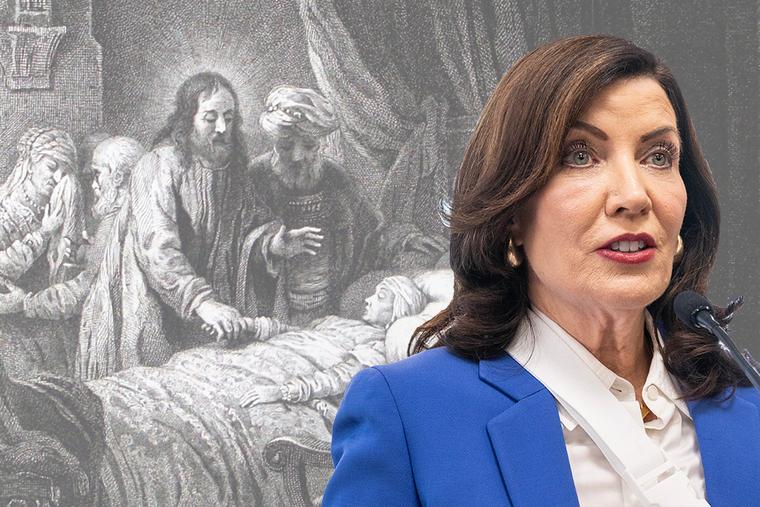
Dear Gov. Hochul:
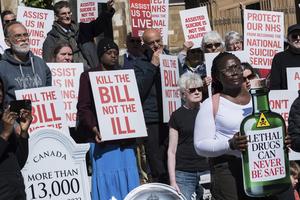
Last month, you announced that New York will soon become the 13th state to legalize doctor-assisted suicide when you sign the Medical Aid in Dying Act into law. You cited inspiration coming from a Catholic Mass, considering that God is merciful so we must also be merciful. But following God is not to be confused with playing God.
This legislation will allow New York residents with a prognosis of six months or less to live to self-administer life-ending medication prescribed by a physician. You say there will be “guardrails” to protect against abuse. As a Catholic, you already know that the Ten Commandments are God’s guardrails to heaven. “Thou Shalt Not Kill” includes enabling people to kill themselves and implicates physicians who will prescribe life-ending drugs.
Consider that stories abound of miracles, doctors miscalculating life expectancy, patients beating a terminal diagnosis, and misdiagnoses. For instance, in Syracuse, New York, Eugenia Horan was diagnosed with lung cancer and given only weeks to live. That was five years ago. Eugenia endured surgeries and experimental treatments and ultimately defied all expectations. She’s still alive.
Regardless of whether a doctor is right or wrong, God is always right. Whatever time a person has before death is God’s mercy. It can be a time of purification that allows one into heaven, a time of reconciliation with others, and an opportunity for holiness for patients and those who care for them.
You have not acknowledged that there are pain relief and compassionate care options for people at the end of life. That is some of where our own mercy comes in. But whatever the suffering, it has meaning and purpose, clearing the way for grace and spiritual transformation.
The story of Michelle Duppong: Hope in the Depths of Suffering is a stark contrast to what you plan in New York. This biography on the life of Servant of God Michelle reveals that through suffering, the supernatural enters in.
Msgr. Thomas Richter was Michelle’s spiritual director when she became director of faith formation for the Diocese of Bismarck in North Dakota after eight years as a FOCUS missionary. He administered last rites to Michelle days before she died after a year of fighting cancer at age 31 on Christmas in 2015.
“This painful experience was not an interruption to her mission of evangelization; it was a continuation and, in fact, the fulfillment of her work of evangelization,” Msgr. Richter explained during the funeral homily.
“She suffered not because she was distant from Jesus. … He was loving her, and she was loving him at the cross. Redemptive suffering is not the experience of someone who is alone and unloved but of someone who has drawn so near to God that just as Jesus’ suffering and death brought the saving and healing love of God to us, so does that happen through the person’s nearness to Jesus. Michelle was not alone and unloved; she was near God. We can see in her another Christ.
“Was there suffering? For sure. But in the midst of this it was very clear in Michelle that she grew in her concern for others, and she grew in great trust of God. She was sharing in the Paschal mystery of Jesus.”
Gov. Hochul, consider that St. Paul expressed his understanding of redemptive suffering in the New Testament: “Now I rejoice in my sufferings for your sake, and in my flesh, I complete what is lacking in Christ’s afflictions for the sake of his body, that is, the Church” (Colossians 1:24).
Nothing about Christ’s offering was lacking, but St. Paul was noting that the salvation of the world is not yet complete, and people are still being redeemed as they come to know and accept Jesus’ salvation through faith in this life. Our suffering can call down grace to soften someone’s heart toward God; it can bring about an encounter with God that can spark conversion. Just as our prayers for others are heard by God and incorporated into his loving action in the world, so too is our suffering incorporated into his plan of salvation. Our suffering is not meaningless.
The Church teaches that God does not expressly will that someone get cancer; but, in his mysterious ways, he can permit the laws of nature to produce such an illness and can bring about greater transformation and grace through it.
Even Jesus, in the Garden of Gethsemane, cries out for the suffering to be removed, and yet he surrenders himself to God’s will: “Father, if thou art willing, remove this cup from me; nevertheless, not my will, but thine, be done” (Luke 22:42). He did not choose suicide to avoid suffering. Jesus gave us the example of trusting that if God did not heal us, he will bring about a greater victory.
Gov. Hochul, assisted suicide is not a greater victory. We are not our own savior, and assisted suicide is not God’s plan.
Rejecting God’s authority is rejecting God. God has a plan for our life, right up until the end.
Please pray for the intercession of Michelle Duppong for the strength to do God’s will.

Patti Maguire Armstrong Patti (Maguire) Armstrong is an award-winning journalist and was managing editor and co-author of the bestselling Amazing Grace Series. Her latest books are the humorous and inspirational second-edition Dear God, I Don't Get It, Dear God, You Can't Be Serious!, What Would Monica Do?, Holy Hacks and Michelle Duppong: Hope in the Depths of Suffering. Patti worked in social work and public administration before staying home as a freelance writer while she and Mark raised their 10 children in North Dakota. Follow her on Twitter at @PattiArmstrong and read her blog at PattiMaguireArmstrong.com.