Back to Basics for the Military Chaplain Corps
COMMENTARY: A renewed emphasis on ordained ministry can strengthen the spiritual care provided to America’s warfighters.
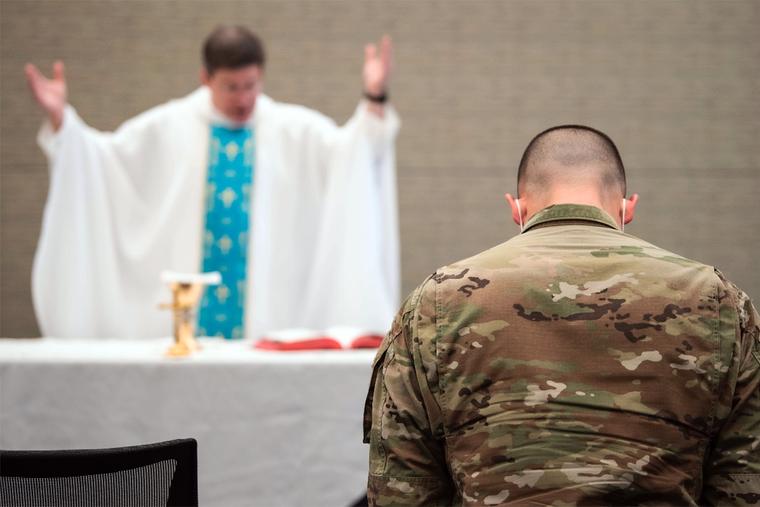
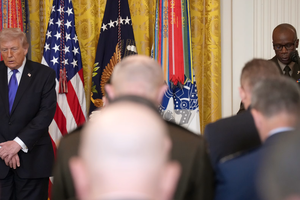
Secretary of War Pete Hegseth sent out a video message in December to the military wherein he pledged to root out watered-down religion and New Age philosophy from our military’s Chaplain Corps.
The video is just over three minutes long and went viral immediately. He concluded his message with a turn of a Trumpian phrase: “We are going to make the Chaplain Corps great again.”
On the very day it was released, no fewer than five friends forwarded it to me. It sure seemed like welcome news to my former military compatriots.
I don’t know who is advising Secretary Hegseth on these matters, but he and his advisers are tapping into a very real tendency in the Chaplain Corps — namely, the impulse to accommodate a (once?) growing secularism and the philosophy that trumpets slogans like, “I’m spiritual but not religious,” to appear tolerant or relevant.
During my 25 years as an Air Force chaplain, most of my colleagues tried to resist this trend, but certainly not all did. Two examples come to mind. In one instance, I had a supervisory chaplain, who was a low-church Protestant, tell me he didn’t want me saying daily Mass anymore. He said that he needed me, instead, to use that time to walk around military work centers, providing a “ministry of presence” to the troops.
Needless to say, he was way out of line in trying to tell a Catholic chaplain — or really, the Catholic archbishop for the Military Services — what is a valid and invalid expression of our faith. After a few phone calls on my part, and about 24 hours later, this colonel-chaplain got word from the Pentagon to “cease and desist” in this inappropriate meddling in our faith group requirements.
The other example was when a High-Church Episcopalian proposed at a gathering of chaplains that we get out of the business of leading worship services altogether and instead drive government buses filled with GIs to local churches off base for Sunday services. That’s what she thought chaplains should be doing rather than leading services according to their faith traditions. Thankfully, that suggestion was roundly derided by most of us chaplains in the room.
I will admit that it seemed to me that chaplains with a low-denomination identity, or a more egalitarian theology of ministry, find that doing other things, apart from the specifically religious, helps fill up their schedules in order to justify their positions. It’s an attractive default position for some.
In my experience, most military bases have three religious services on the weekend. One is a “General Protestant” service, which is often a hodgepodge of mainline liturgy and evangelical praise and worship. Another is a “Gospel Service,” which incorporates elements of traditional African American styles of worship. The third is the Catholic Mass. (Bases that have the few Orthodox Christian, Muslim or Jewish chaplains we have on active duty usually offer one of those services as well.)
So, if there’s a staff of five to eight chaplains at a base, at least half of them don’t lead weekend services, let alone weekday services. To offset this “free on weekends” perception, many chaplains busy themselves with other social-outreach programs, which are fine in and of themselves, but they are not central to the core of being an ordained minister. This is the low-hanging fruit that Secretary Hegseth is looking to prune from the tree of the Chaplain Corps — to get us back to first principles and to our primary calling.
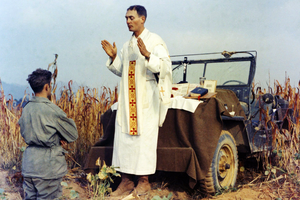
Readers will be happy to know that this blurring of primary responsibilities is generally not a big issue for the Catholic chaplains. Everybody knows what their role as ordained priests is. They know priest-chaplains are required to offer daily Mass and provide a comprehensive religious education program, OCIA, sacramental preparation, regular confessions and Mass on Sundays and holy days of obligation. Yes, Catholic chaplains are required to do other things as well, but their primary duties are well known and, for the most part, understood and respected. Any change in emphasis coming to the Chaplain Corps will not be a shock to the system for Catholic chaplains.
I spent 25 years as an Air Force chaplain, and I’m happy to report that the majority of my colleagues in the Corps were conscientious and hardworking ministers who took their ordinations seriously. Yet I acknowledge that in the face of growing secularism, along with people who proudly claim to be “spiritual but not religious,” the Chaplain Corps embraced too many ancillary projects in order to seem relevant to those GIs and their commanders.
The recent military action in Venezuela underscores the need for chaplains to be laser-focused on their roles as ordained ministers in order to provide the faith-based care to our nation’s warfighters that only they can. As a recently retired military chaplain myself, I welcome Secretary Hegseth’s push to have the Chaplain Corps get back to basics, and I know most of my former colleagues do as well.
- Keywords:
- military chaplains