Maduro’s Ouster Exposes Deep Global Divisions
COMMENTARY: The U.S. action has triggered praise and protest — underscoring how fractured global views on Venezuela remain.
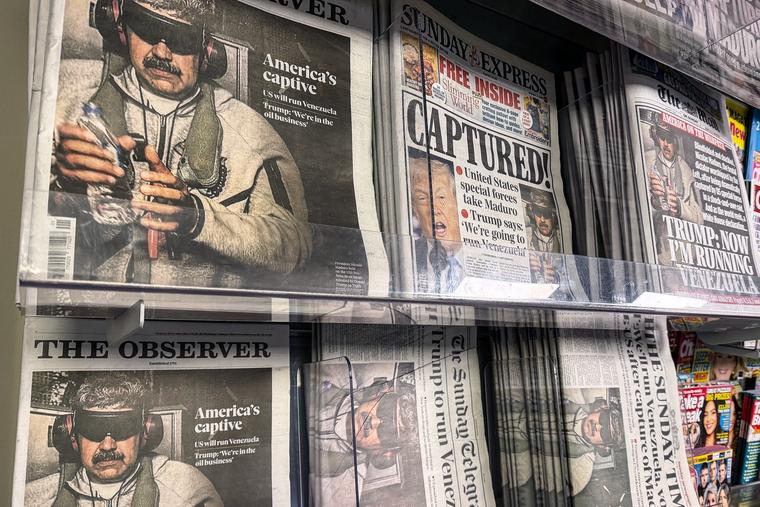
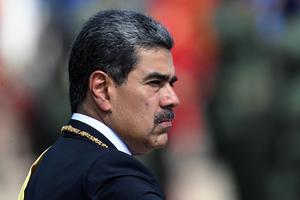
To say that the bold U.S. military operation that snatched Venezuelan ruler Nicolás Maduro and his wife on Jan. 3 ignited controversy is an understatement.
Polls show that the overwhelming majority of Republicans approved of it, while the overwhelming majority of Democrats condemned it.
In Europe, the EU’s “foreign minister” Kaja Kallas from Estonia, appeared to criticize the United States’ action, speaking on Jan. 4 of the need to uphold the principles of international law and the United Nations Charter. U.N. Security Council members — which would include the United States — “have a particular responsibility to uphold those principles.”
In contrast, France’s president, Emmanuel Macron, did not criticize the United States at all, either directly or indirectly, in his statement. Condemning the Trump administration most vociferously were Venezuela’s allies in Russia, China, Iran and Cuba. The action seemed to have particularly enraged the Islamist Houthi military regime in Yemen.
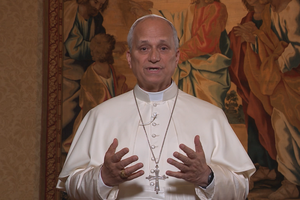
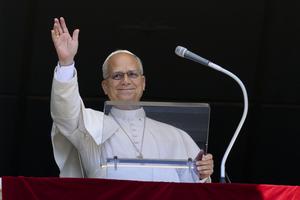
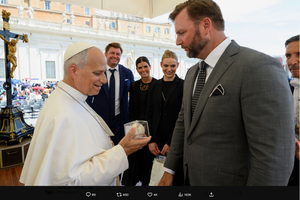
There were also fissures in the Catholic Church. Bishop John Stowe of Lexington, Kentucky, condemned the “surprise attack on Venezuela” and what he called the Trump administration’s “pursuit of its own ill-defined goals and with reckless disregard for human life and rule of law.” Both Pope Leo XIV and the Conference of Venezuelan Bishops (CEV) were much more measured in their responses.
The Venezuelan bishops called for rejecting any type of violence and urged that any further decisions “be always for the well-being of our people.” Both the bishops and the Pope appealed to the patroness of Venezuela, Our Lady of Coromoto, a title drawn from a Marian apparition in 1652.
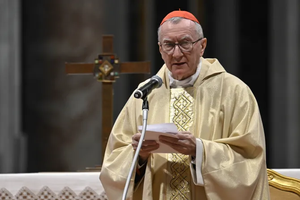
The Vatican knows the situation in Venezuela well. Not only did Pope Leo spend many years in South America, but the current secretary of state, Cardinal Pietro Parolin, served as apostolic nuncio — the Vatican’s ambassador — in Venezuela from 2009 to 2013. Cardinal Parolin’s deputy, Archbishop Edgar Peña Parra, is himself Venezuelan.
There was also the bizarre juxtaposition of Venezuelan exiles — more than 8 million Venezuelans have fled their homeland — celebrating Maduro’s ouster, while foreigners, often members of leftist political parties, protested it. Spanish-language social media is rife with clips of heated arguments between exiled Venezuelans and anti-American protesters.
In Spain, the contrast was particularly sharp, with leftist political parties — long accused of having been on Maduro’s payroll — calling for isolating the United States and even breaking relations with Washington. Meanwhile, COPE, the official media outlet of the Spanish bishops’ conference, featured a careful explanation of why the arrest of Maduro and his wife was entirely legal.
Latin Americans, in general, seem to be much more favorable toward the operation than observers elsewhere. A poll carried out by Altica Research immediately after the operation found large majorities in Colombia — which borders Venezuela and hosts the greatest number of Venezuelan refugees — Costa Rica, Chile, Panama, Peru and Argentina strongly in favor of Maduro’s removal. In Mexico, 43% were in favor while 42% opposed the American action.
The contradictions surrounding Venezuela do not seem limited to the initial operation that removed the Maduro couple, both wanted in U.S. courts for drug trafficking. The controversy has now shifted to the situation on the ground inside the country.
The Trump administration, at least initially, has decided to work with remaining officials in the Maduro regime to avoid an Iraq-like situation in which the U.S. would have had to send tens of thousands of soldiers to occupy and administer the country.
Whether or not the Americans will be able to effect change, and especially a transition to democracy, while working with Maduro’s own brutal henchmen remains an open question. But this approach certainly does conform much more with the calls from both the Venezuelan bishops and the Holy See to avoid violence.
Many are calling on the United States to impose on Venezuela the ticket of Edmundo González and Nobel Peace Prize winner María Corina Machado, who by most accounts overwhelmingly won the July 2024 presidential elections. So far, the American administration has kept its distance from them.
On Jan. 4, Secretary of State Marco Rubio, the administration’s point man on Caracas, expressed great admiration for Machado and González on Face the Nation. But according to other media accounts, U.S. officials concluded that the winners of the 2024 Venezuelan election had very little clout or influence over the Venezuelan military.
If the military had supported them last year, González and Machado would already be in office. But many who were silent on Venezuela before now expect the Americans to fix everything immediately.
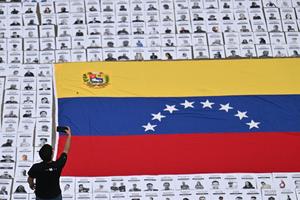
There is understandable anger in the Venezuelan diaspora at the world’s reaction. The sense is that much of the world did not care that nearly one-third of the country’s population was driven into exile; that the country — once the wealthiest in Latin America — was looted and impoverished; that the Maduro regime has killed 10,000 people over the past decade. People were reduced to slaughtering zoo animals to feed themselves in the country with the largest oil reserves in the world.
Now everyone is an expert on Venezuela. Now they care — mostly as a tool to either criticize or praise (but, to be frank, mostly to criticize) President Trump and the United States.
The Venezuelans are right to be indignant, and there is no doubt that the removal of the narcodictador from power will unleash processes and consequences that no one — neither American nor Venezuelan — fully understands today. Things can always get worse, although with 86% of the country already living in poverty, and with corruption and crime rampant, it would not take much change to improve the situation for most people.
Venezuela was not ruined in a day; the current regime has been in power for more than a quarter-century. It is always easier to break countries than to mend them. And mending can be painful.
- Keywords:
- nicolas maduro
- venezuela
- latin america