How I Made Peace with Pope Francis, Who Restricted the Latin Mass that I Love
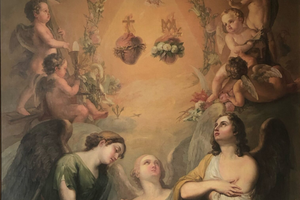
COMMENTARY: Thus, it was hard for me to pick up what would be Pope Francis’ last encyclical and read it with receptivity. But from the beginning, I felt my heart embracing his words.

It all began last November — the host of my book club on religious works decided we should read Pope Francis’ encyclical on the Sacred Heart, Dilexit Nos, that had just come out. She had learned about it from the Abiding Together podcast and loved what she had heard. Earlier in Pope Francis’ papacy I read several of his encyclicals, and even wrote positively about Laudato Si and Amoris Laetitia, though I never cared for his off-the-cuff statements. I lived and worshipped God in my pocket of the Church that pressed on strongly in the traditions of the Church. And then, with the release of Traditionis Custodes in 2021, I felt a deep rending in my heart.
It felt like the wounds healed over the previous 14 years since Pope Benedict XVI’s Summorum Pontificum — in which he expressed a desire for the new Mass and the traditional Latin Mass (TLM) to mutually enrich each other — were ripped open again. And Traditionis Custodes only brought more heartache to the Church in America as individual bishops implemented the motu proprio.
Thus, it was hard for me to pick up what would be Pope Francis’ last encyclical and read it with receptivity.
But from the beginning of the encyclical, I felt my heart embracing his words.
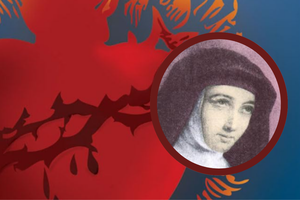
His opening chapter on “the importance of the heart” inspired by the writings of Jesuit Father Diego Fares contains many ideas similar to those of the well-loved philosopher Dietrich von Hildebrand. Francis spoke to me (and perhaps himself) in every paragraph, such as when he said, “Let us never forget that our hearts are not self-sufficient, but frail and wounded.” He then exhorted: “Let us turn, then, to the heart of Christ, that core of his being, which is a blazing furnace of divine and human love and the most sublime fulfillment to which humanity can aspire. There, in the heart, we can truly come at last to know ourselves and we learn how to love” (§ 30).
A few weeks after I read this opening chapter, I spent Thanksgiving weekend with my extended family. One morning as I sat on a couch between my parents, I noticed that the children’s book my niece had placed on my lap was a book about Pope Francis. I turned to my dad and said, “I need to soften my heart towards Pope Francis.” Saying it out loud was the beginning of a healing process for me. I set aside the encyclical during Advent, reading other spiritual works, but in February, I decided to finish the letter. Bringing it with me to Eucharistic adoration, I was drawn more and more into it and received his message openly, as he quoted many of my most beloved saints, such as St. Thérèse of Lisieux, St. Francis de Sales and St. John Henry Newman.
My finishing of the encyclical coincided with Pope Francis’ entry into the hospital and the final days of his papacy. As his condition worsened, I realized that I needed to make an act of forgiveness from my heart towards him, and I wanted to do it before his death. I brought this intention to adoration and forgave him for his acts that hurt my heart, offering the suffering he had caused me for him in his hospitalization.
Over those last weeks of Francis’ life, I reflected on how his papacy had formed my experience of Catholicism. I came to love the traditional Latin Mass while taking a graduate class on Vatican II and another titled “Tradition and Development of Doctrine” under the papacy of Pope Benedict. I saw inconsistencies with the documents of the Council and how it was implemented, especially when it came to liturgy. I became bitter and angry at those who made these changes, was uncharitable in my heart during many Masses, and spoke unkindly with family and friends about the implementation of the liturgical documents. In 2012, when I moved to Minnesota and joined a parish that has both the traditional Latin Mass as well as the new Mass celebrated according to tradition, I began to see continuity between the old Mass and the new Mass.
But it was during Pope Francis’ papacy, especially after Traditionis Custodes, that I had to come face-to-face with the effects of my attitude about the liturgy on the whole of the Church and what I would personally do if the TLM was no longer available in my area. Benedict, with Summorum Pontificum, had a goal of bringing about unity, and I was not doing my part to help the Church be unified. Over the past four years, I have had a change in my heart and change in how I speak about the liturgy. While I still value and devoutly attend the Mass of the 1962 Missal and believe it should be preserved and widely available in the Church, I have come to understand more of the desire of Pope Francis to bring an end to the “angry traditionalism” that once ruled my heart. Pope Francis showed the world that the Church is big enough for many expressions of authentic, orthodox Catholicism and that Christ’s love is available to all, no matter what music or language one prefers at Mass.
The morning Francis died, I spent some time praying with his final urbi et orbi message and blessing from Easter morning. I felt that this, too, spoke to my heart from his: “Love has triumphed over hatred, light over darkness and truth over falsehood. Forgiveness has triumphed over revenge. Evil has not disappeared from history; it will remain until the end, but it no longer has the upper hand; it no longer has power over those who accept the grace of this day.” I was thankful that I had made peace with him in my heart, even as I still do not endorse or understand aspects of his acts as pope. I want to encourage others also to spend time in prayer with his final encyclical on Jesus’ heart, especially this month of the Solemnity of the Sacred Heart.
We can join in prayer with the final words of Pope Francis’ encyclical: “I ask our Lord Jesus Christ to grant that his Sacred Heart may continue to pour forth the streams of living water that can heal the hurt we have caused, strengthen our ability to love and serve others, and inspire us to journey together towards a just, solidary and fraternal world” (§ 220).
- Keywords:
- sacred heart of jesus
- solemnity of the sacred heart
- sacred heart devotion
- traditional latin mass
- francis' pontificate
- pontificate of pope francis
- christian charity