What the Alliance of the Sacred and Immaculate Hearts Means for Catholics Today
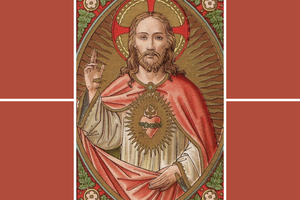
The union of Jesus’ Sacred Heart and Mary’s Immaculate Heart is more than poetic — it’s a spiritual key to understanding God’s love and our response to it.

Nineteen days after Pentecost, the Friday after the Solemnity of Corpus Christi always marks the Solemnity of the Sacred Heart, followed next day by the Memorial of the Immaculate Heart of Mary.
In describing the connection of these two hearts, St. John Paul II was the first pope to use the word “alliance.” During a 1985 Angelus address, he said, “When the side of Christ was pierced with the centurion’s lance, Simeon’s prophecy was fulfilled in her: ‘And a sword will pierce through your own soul, also’ (Luke 2:35). The words of the prophet are a foretelling of the definitive alliance of these hearts: of the Son and of the Mother; of the Mother and of the Son.”
Then on Sept. 26, 1986, he told the participants of the International Symposium on the Alliance of the Hearts of Jesus and Mary, “Thus by dedicating ourselves to the heart of Mary we discover a sure way to the Sacred Heart of Jesus, symbol of the merciful love of our Savior.”
Speaking to the Register about these two essential feasts, Vincentian Father John Kettelberger, spiritual director of the Central Association of the Miraculous Medal, said, “It’s so wonderful that they’re back-to-back to show the unbreakable connection between Jesus’ Sacred Heart, Mary’s Immaculate Heart.”
“There’s great symbolism in both hearts,” he said, emphasizing that to have these two feast days after Corpus Christi — “the great feast of God’s love for us in the Eucharist” — on Friday to remember the Sacred Heart, a symbol of God's love and the day we traditionally remember Jesus’ suffering and death for us; followed the next day, Saturday, remembering “the Immaculate Heart of Mary, so united to her son Jesus throughout his whole life and especially at that moment when he is on the cross, uniting her sufferings with his sufferings and encouraging us to do the same.”
Referring to the heart as a universal symbol of love, Father Kettelberger, also rector of the Basilica Shrine of Our Lady of the Miraculous Medal, told the Register, “The Heart of Jesus obviously is a symbol of all of the love that God has for us, that we’re created by God, that we’ve been redeemed by God, that God ultimately wants us to spend eternity with him in heaven.” This shows the “tremendous love that God has for us and in sending Jesus to redeem us … so that heart is a symbol of all of the love that God has for us.”
“We know that Mary has been given to us by Jesus from the cross as our mother,” he added. “And like any mother, she also has great love for all of us. She pleads and intercedes for us with her son. When she appeared to St. Catherine Labouré, she encouraged Catherine to come to the foot of the altar where great graces would be given through her heart, which is united to the heart of Jesus. These graces flow to each of us.”
Father Kettelberger enumerated that there might be a grace to help us in sickness, in moments of anxiety, through family tensions — all of the great graces that God wishes to bestow on us from his heart through Mary’s heart. “We look at the heart of Mary, recognizing that she, too, like us, had a life that was filled with great happiness and joy, but also a life that had its sorrows. The sword pierced her heart. So she’s there to be with us in the difficult moments of our life, interceding and praying for us and the Heart of Jesus on fire with God’s love.”
Thumbnail History of the Devotions
On May 28, Pope Leo XIV mentioned this devotion to the Hearts of Jesus and Mary. In a message to the Bishops’ Conference of France for the 100th anniversary of the canonization of Sts. John Eudes, John Mary Vianney and Thérèse of the Child Jesus and the Holy Face, the Holy Father wrote, “Was St. John Eudes not the first to celebrate the liturgical worship of the Hearts of Jesus and Mary?”
It was a reminder of this 17th-century saint — called the “father of the devotion” since he founded and popularized the devotion to the hearts of Jesus and Mary. He even composed a Mass and office for both the Sacred Heart and the Heart of Mary with the approval of the Church.
“This veneration of Mary means honoring the corporeal Heart, the spiritual Heart and the divine Heart of Jesus, who are also the Hearts, or rather, the one and only Heart of Mary,” the saint wrote in his book The Admirable Heart of Mary. “The entire universe should therefore celebrate the Feast of Mary’s Immaculate Heart.” Written in 1643, it was the first book on the devotion to the Two Hearts.
In his The Life and Kingdom of Jesus, Eudes professed, “I shall only tell you that you must never separate what God has so perfectly united. So closely are Jesus and Mary bound up with each other that whoever beholds Jesus sees Mary; whoever loves Jesus, loves Mary; whoever has devotion to Jesus, has devotion to Mary. Jesus and Mary are the two first foundations of the Christian religion, the two living springs of all our blessings, the two centers of all our devotion, and the two objectives you should keep in view in all your acts and works.”
The next big step from the Two Hearts’ devotion came in 1830, when the Blessed Mother appeared to St. Catherine Labouré and revealed the Miraculous Medal with part of its imagery depicting the Sacred Heart of Jesus and the Immaculate Heart of Mary.
The popes also lent support. In his 1956 encyclical Haurietis Aquas (On Devotion to the Sacred Heart), Venerable Pope Pius XII stated, “The adorable Heart of Jesus Christ began to beat with a love at once human and divine after the Virgin Mary generously pronounced Her ‘Fiat.’” He added, “In order that favors in greater abundance may flow on all Christians, on the whole human race, from the devotion to the most Sacred Heart of Jesus, let the faithful see to it that to this devotion the Immaculate Heart of the Mother of God is closely joined.”
He continued, “For, by God’s Will, in carrying out the work of human Redemption, the Blessed Virgin Mary was inseparably linked with Christ in such a manner that our salvation sprang from the love and the sufferings of Jesus Christ to which the love and sorrows of His Mother were intimately united. It is, then, entirely fitting that the Christian people — who received the divine life from Christ through Mary — after they have paid their debt of honor to the Sacred Heart of Jesus should also offer to the most loving Heart of their heavenly Mother the corresponding acts of piety affection, gratitude and expiation.” Then he consecrated the Church and world to “the spotless Heart of the Blessed Virgin Mary.”
In 1969, St. Paul VI placed these two devotions side by side on the Church calendar to symbolize their unified mission.
John Paul II circled back to the root of this paired devotion in his 1979 encyclical Redemptor Hominis (Redeemer of Man), writing, “We can say that the mystery of the Redemption took shape beneath the heart of the Virgin of Nazareth when she pronounced her ‘fiat.’” In other words, the alliance of the Two Hearts began at the Incarnation.
Hearts’ Devotion for All
Emily Malloy, an editor with Theology of the Home and a Register contributor, told the Register her family practices the devotions both to the Sacred Heart of Jesus and the Immaculate Heart of Mary. “It’s a real foundation for our family to do all of those things that the different revelations call for,” she said.
“There is an obvious connection between the two.”
“We think of this powerful imagery of the heart as the main symbol of love. The obvious connection is God’s infinite love and mercy and the call for us to love him in return,” Malloy said. Moreover, she finds it does not remain contained. “Then the love within us pours out to those we encounter in our lives.”
She finds these devotions prompt conversion, “calling us to the sacraments in a deeper way, and to attend Mass, to pray and to dispose ourselves to properly receive him.”
Father Kettelberger suggests one of the best ways to continue to be united with the Sacred Heart of Jesus is through First Friday devotions, first of all, going to confession, attending Mass and receiving Holy Communion. Consider praying the Litany of the Sacred Heart. First Fridays remind us of God’s great love for us. Then the next day, remembering the Immaculate Heart of Mary by “coming on the first Saturdays to Mass, Communion, receiving those blessings, but also to pray the Rosary. It’s good to pray the Rosary every day, but especially on the first Saturday of the month to pray the Rosary,” he advised.
Malloy is on the same page, noting that through these devotions comes the Rosary, adding the big connection between the two and the Sacred Heart, with Mass and the sacraments at the center.
Putting both devotions together, Malloy sees “a real profound example of what God can do in the example of Our Lady in our own lives when we fully give ourselves to God. We think of her humility and her love for her Son, for his humanity, for his divinity, and her purity through her fiat of always keeping herself close to God. She’s our example. The maternal and perfect love of Our Lady is that beautiful symbolism of the heart. And then Jesus — neither of them holding anything back.”
The pairing of these devotions should undoubtedly inspire our lives. Malloy pointed out that while Our Lady was laying down her life in a very different way than the way Christ laid down his life for the world, “It is a sacrifice and love and devotion. And that is the family, too. That’s why I think it’s such an important devotion, both of them, for the family, this month being a good month to really pray as a family about consecrating your home to the Sacred Heart of Jesus, enthroning him as the King of your family and the King of your home.”
And then each member of the family should consecrate themselves to Mary. As Malloy said, “Consecration is another wonderful thing to do. Encourage your children to do [so] at their first Communion age. That’s what we had done with our children.”
The faith-filled fruits speak for themselves, she added.
“Putting ourselves close to Mary, having her as our example of properly disposing ourselves to love the Lord, is only going to bring us to the heights of holiness and in service of others. I think that’s a beautiful, simple devotion to practice.”