The 5 Great October Homilies of St. John Paul II
COMMENTARY: The words of the saintly Pope still echo in St. Peter’s Square, 20 years after his death.

In recent decades, canonizations have often been scheduled for October, and so frequently fall on World Mission Sunday, the second-to-last Sunday in October. It was established in 1926 by Pope Pius XI, who had the previous year established the solemnity of Christ the King, then fixed for the last Sunday in October. The mission of the Church is to proclaim that the kingdom of God is at hand.
World Mission Sunday occupied a special place in the life of St. John Paul the Great, whose 20th anniversary of death fell this year. The inaugural Mass of his pontificate was on Mission Sunday in 1978, Oct. 22 of that year. He delivered his stirring “Be Not Afraid” homily that day, and it became a signature moment of his long pontificate, such that Oct. 22 was set as his feast day, not the customary date of his death. (He died April 2, which often falls during Lent or Holy Week, a more difficult time for a feast day to be observed.)
That 1978 inaugural homily would be followed by four other memorable October homilies. Two in 1998, for his 20th anniversary and for the canonization of St. Teresa Benedicta of the Cross, which he placed at the center of those anniversary celebrations. And two in 2003, for his 25th anniversary, and for the beatification of Mother Teresa, his dear friend, which he put at the center of his silver jubilee.
His feast day is an opportune time to return to his great October homilies.
Pope Leo XIV canonized seven saints this year for Mission Sunday, and preached on the question posed by the Lord Jesus in Luke 18: “When the Son of Man comes, will he find faith on earth?”
“This question reveals to us what is most precious in the Lord’s eyes: faith, namely, the bond of love between God and man,” the Holy Father said. “Today we have before us seven witnesses, the new Saints, who, with God’s grace, kept the lamp of faith burning. Indeed, they themselves became lamps capable of spreading the light of Christ.”
The same could be said of John Paul and his October homilies.
In 1978, noting that it was Mission Sunday, before urging the world to “open wide the doors to Christ,” John Paul noted that “the whole People of God shares in … Christ’s threefold mission as Priest, Prophet-Teacher and King.”
Twenty years later, in 1998, the readings for Mission Sunday were the same as this past Sunday. And like Leo, John Paul took up the same question: “When the Son of Man comes, will he find faith on earth?”
John Paul, two decades into a history-changing pontificate, declined to take a victory lap. Rather, he subjected himself to a public, and very moving, examination of conscience.
After 20 years of service in the Chair of Peter, I cannot fail to ask myself a few questions today. Are you a diligent and watchful teacher of faith in the Church? Have you sought to bring the great work of the Second Vatican Council closer to the people of today? Have you tried to satisfy the expectations of believers within the Church, and that hunger for truth which is felt in the world outside the Church?
And St Paul’s invitation echoes in my thoughts: ‘I charge you in the presence of God and of Christ Jesus who is to judge the living and the dead, and by his appearing and his kingdom: preach the word’ (2 Tm 4:1-2)! Preach the word! This is my duty, to do all I can so that when the Son of man comes, he will find faith on earth.
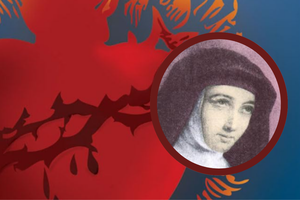
A week earlier, at the canonization Mass of Edith Stein, Teresa Benedicta of the Cross, the Holy Father preached one of his greatest homilies, a passionate plea to search for truth, after the model of the Jewish convert who died a Carmelite nun, a martyr at Auschwitz:
For a long time Edith Stein was a seeker. Her mind never tired of searching and her heart always yearned for hope. She traveled the arduous path of philosophy with passionate enthusiasm. Eventually she was rewarded: she seized the truth. Or better: she was seized by it.
Then she discovered that truth had a name: Jesus Christ. From that moment on, the incarnate Word was her One and All. Looking back as a Carmelite on this period of her life, she wrote to a Benedictine nun: ‘Whoever seeks the truth is seeking God, whether consciously or unconsciously.’
Then, looking back to 1978, he applied the affirmative “open wide the doors to Christ” in a negative assessment of the challenges posed, especially to young people.
The modern world boasts of the enticing door which says: everything is permitted. It ignores the narrow gate of discernment and renunciation. I am speaking especially to you, young Christians. … Pay attention! Your life is not an endless series of open doors! Listen to your heart! Do not stay on the surface, but go to the heart of things! And when the time is right, have the courage to decide! The Lord is waiting for you to put your freedom in his good hands.
In October 1998, John Paul noted that “alongside Teresa of Ávila and Thérèse of Lisieux, another Teresa takes her place among the host of saints.” Likely his thoughts also included Mother Teresa, who had died a year earlier, and for whom he had suspended the usual five-year waiting period before a cause for canonization could be introduced.
Five years later, in October 2003, the beatification was ready, and John Paul made the saint of the gutters — who took her religious name in honor of the Little Flower — the fourth saintly Teresa of wide devotion. It was Oct. 19 and it was Mission Sunday, as it was again this year. The Holy Father linked “one of the most important figures of our time” with the missionary and charitable identity of the Church:
Is it not significant that her beatification is taking place on the very day on which the Church celebrates World Mission Sunday? With the witness of her life, Mother Teresa reminds everyone that the evangelizing mission of the Church passes through charity, nourished by prayer and listening to God’s word. Emblematic of this missionary style is the image that shows the new Blessed clasping a child’s hand in one hand while moving her Rosary beads with the other.
A few days before Mission Sunday 2003, John Paul marked the 25th anniversary of his election, becoming only the third pope — aside from St. Peter himself — to celebrate a silver papal jubilee. (The others were Blessed Pius IX, 1846-1878, and Leo XIII, 1878-1903.)
John Paul, echoing a dominant theme of his pontificate, described his election as “a special experience of divine mercy,” and his long Petrine ministry as “25 years totally steeped in his mercy.”
He then cast his ministry in the image of the Good Shepherd, whose mission goes to the lost, the isolated, the weak and the suffering:
From the beginning of my Pontificate, my thoughts, prayers and actions were motivated by one desire: to witness that Christ, the Good Shepherd, is present and active in his Church. He is constantly searching for every stray sheep, to lead it back to the sheepfold, to bind up its wounds; he tends the sheep that are weak and sickly and protects those that are strong. This is why, from the very first day, I have never ceased to urge people: ‘Do not be afraid to welcome Christ and accept his power!’ Today I forcefully repeat: ‘Open, indeed, open wide the doors to Christ!’ Let him guide you! Trust in his love!
The Holy Father did not, to be sure, “forcefully” repeat the words from his first great October homily. Burdened by years and infirmity, his voice had grown weaker and his speech was slurred by the ravages of Parkinson’s. Indeed, by October 2003, he sometimes only read the first lines of his homilies, entrusting another bishop to read the rest.
The force of his spirit remained, and the force of his words. As his third successor celebrated his first Mission Sunday, those words echo still in St. Peter’s Square, as pilgrims today come to venerate his tomb.
- Keywords:
- pope john paul ii
- homilies