First Things First: What the Consistory Reveals About Pope Leo’s Priorities
COMMENTARY: The extraordinary consistory sheds light on Pope Leo XIV’s for sequence — beginning with discernment before direction.
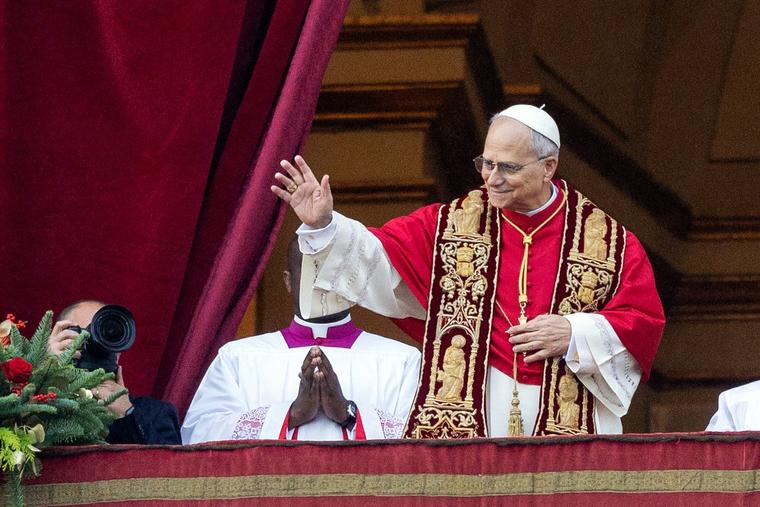
When Pope Leo XIV announced this week’s consistory in Rome — somewhat earlier and more unexpectedly than most Vatican watchers predicted — it sent ripples of surprise and speculation through the Church.
Yet perhaps the consistory shouldn’t surprise us at all. In fact, it may well offer a window into the inner logic of a pontificate that is only beginning to reveal its shape.
Commentators have already noted that Pope Leo XIV studied mathematics as an undergraduate. That fact was repeated frequently in the weeks following his election. But what interests me in this moment is not simply that he once solved equations. Instead, what matters is how he thinks: his instinct for clarity, sequence, order, and properly aligned relationships. These instincts shine just as brightly in his little-known 1987 canon law dissertation as they do in his undergraduate transcript.
I had the opportunity to study the Holy Father’s dissertation earlier this year (long before its October publication by Catholic University Press), and it consistently emphasizes that proper order is the key to authentic communion and rightly exercised authority. Pope Leo’s earliest theological writing, therefore, insists that discernment begins with God’s will before any communal need, preference or initiative can be addressed.
Encountering that work — and having met him more than a decade ago — confirmed the consistency between his early formation and the leadership style emerging now. That intellectual framework now finds its clearest ecclesial expression in this week’s consistory. Others may point to his background in math; fewer can point to how deeply he has reflected on order as a theological category. And it is precisely this depth that makes the present moment in his pontificate so revealing.
Mathematical Order, Augustinian Rhythm
The Church has had popes who were diplomats, theologians and scholars. A pope shaped by mathematics is unusual. Add to this his identity as an Augustinian friar, and the combination becomes even more striking.
Anyone who knew him before his election often recalls a man whose calm order and measured responsiveness foreshadowed the clarity now visible in his early papacy. And his sense of sequence echoes a simple lesson first learned in middle school — that the order of operations matters, because getting the steps right is what allows clarity to emerge. Mathematics alone does not produce a governing style. Formation does.
At Villanova University, the young Robert Prevost learned the disciplined habits of mind that mathematics demands — not simply calculating, but discerning patterns, establishing relationships and placing elements in their proper sequence.
That early analytical training was later deepened by something very different: his Augustinian formation. Before studying canon law or assuming leadership roles, Prevost spent an intensive novitiate year in St. Louis. This largely cloistered period was marked by daily prayer, silence, community life and deep study of Augustine’s Rule. It was there that the abstract clarity of mathematics met Augustinian interiority.
As a friar steeped in Augustine’s theology of rightly-ordered love, he also learned that the spiritual life works the same way: love misordered leads to chaos; love rightly ordered leads to peace. In his juridical training (culminating in his dissertation), he learned that authentic leadership cannot be improvised. It must be structured, obedient and proportioned, always beginning with God’s will and flowing outward into the life of the community.
His mathematical, Augustinian and canonical instincts form one integrated lens: first things first, and everything else in its proper place.
Logic of the Gospel
This instinct is not foreign to Christianity. At every Mass, we proclaim, “Glory to God in the highest, and on earth peace to people of goodwill.” The sequence is the proclamation: glory first, peace second.
When a scholar of the law asks Jesus which commandment is the greatest, he gives an order that anchors the entire moral and spiritual life: “You shall love the Lord your God with all your heart, and with all your soul, and with all your mind. This is the first and greatest commandment. And the second is like it: You shall love your neighbor as yourself.” Divine love precedes human love, and human love becomes possible only because of this primacy.
St. John the Evangelist echoes this principle when he writes, “We love because he first loved us.”
Scripture, then, presents a clear hierarchy of loves and a divinely revealed order of operations. Love flows outward from its source, and peace emerges from rightly directed hearts. This is the very logic Augustine would later formalize, and it is the same logic Pope Leo XIV seems poised to restore.
Augustine’s Insight, Leo XIV’s Instinct
As an Augustinian friar, Pope Leo XIV knows this logic not as theory but as formation. Augustine’s ordo amoris (the “order of loves”) teaches that spiritual disorder arises not from loving the wrong things, but from loving good things in the wrong sequence. Place God first, and every other love finds its proper measure. Place anything else first, and even noble desires become burdensome. This is Augustine’s enduring insight: love becomes luminous only when it is ordered.
Leo XIV’s instinct mirrors this tradition. When I spent time with his 1987 doctoral dissertation, what struck me most was how consistently he returned to this same conviction: authentic discernment must begin with God’s will before a community can hope to understand its own needs.
Even in that early scholarly work, the future Pope argued that genuine communion rests on rightly ordered loves and responsibilities. The coherence between that early writing and his present leadership is unmistakable. The point for this moment is simple: Leo XIV’s emerging papal style reflects an Augustinian vision in which order is not rigidity, but the very condition that allows charity to become real.
Clarifying the Sequence
Consistories always matter, but this one matters uniquely — not only because it comes early in the pontificate, but because it gives Leo XIV his first opportunity to clarify the sequence in which he believes the Church must move forward. Until now, the Holy Father has made remarkably few personnel changes and has largely honored the schedule and rhythms set by his predecessor. His governance has been marked by continuity, with a style that has been patient, observant and almost deliberately restrained.
But 2026 marks the period when posture will shift from receiving to shaping. For those who knew him before his election, this shift carries a sense of continuity rather than departure. The same patient attentiveness that marked his friendships now marks his governance.
Seen through a mathematical and Augustinian lens, the consistory becomes something like the moment when parentheses are finally placed around the first expression in a long, wandering equation. Everything that follows depends on getting this initial grouping right.
Leo XIV appears drawn to pastors who combine doctrinal clarity with spiritual depth, canonical coherence with pastoral charity, and fidelity to tradition with lived communal wisdom. This emerging pattern mirrors the same logic visible in his early canonical writing: begin with God, and allow every subsequent judgment to flow from that primacy. Authority must start with obedience to the divine will, not with administrative agility or political calculus.
This is why the consistory matters. It is not simply staffing; it is sequencing — a deliberate act of setting the equation in order, so that everything that follows can unfold in right harmony.
When the Order Is Right, the Church Flourishes
When we put multiplication before parentheses, the answer fails. When we place peace before glory, communion fractures. When neighbor-love (or self-love) is elevated above God-love, even charity becomes thin. But when the first term is set where it belongs, everything else can follow with coherence.
A Church that begins with God can love the world without losing itself. A Church that begins with worship can build unity without sacrificing doctrine. A Church that begins with rightly ordered love can offer peace that is more than sentiment — a peace that is salvation. This is Augustine’s wisdom. This is the Gospel’s structure. And it increasingly appears to be the “mathematics” of Leo XIV’s emerging pontificate.
This consistory will not simply reveal his priorities; it will unveil the guiding logic of his pontificate and the inner order by which he intends to lead the Church. If Leo XIV can restore the order he has spent a lifetime discerning, then peace, charity and unity will cease to be distant hopes and will become incarnate once more in the Church’s life. Renewal will not be forced; it will rise steadily and recognizably from a Church rediscovering its center.
And when, God willing, he succeeds in setting the Church’s order of operations aright, then the life of faith (like a problem finally worked in the proper sequence) will once more display its clarity, coherence and grace. Those who glimpsed this order in him years ago will not be surprised. He is leading the Church precisely as he was formed to lead: God first, everything else in its proper place.
- Keywords:
- consistory of cardinals
- pope leo xiv

Brendan Towell Brendan Towell is the Director of Spirituality and Mission for Secondary Schools and Schools of Special Education in the Archdiocese of Philadelphia, where he lives with his family. His interests include Augustinian Studies, Ressourcement Theology and the theological legacy of Pope Benedict XVI. His website is BrendanTowell.com.