Lebanon on the Brink. Again.
COMMENTARY: The Trump administration and Pope Leo want peace in the war-torn country. Can their diplomacy deliver what they both, as well as the beleaguered Lebanese people, seek?
Exactly three months from when Pope Leo XIV left Lebanon as a messenger of peace on Dec. 2, the country was plunged into war.
But Lebanon’s entry into the U.S.-Israeli-Iran War didn’t just happen. In fact, the terrorist group Hezbollah resisted for about 48 hours the call of its Iranian masters to join in the conflict.
Hezbollah had already taken a pummeling during the 2023-2025 Hamas War. In the 2026 conflict, both the U.S. and Israel had sent messages through trusted intermediaries encouraging the group to sit this war out. In the end, Hezbollah couldn’t resist Iran’s pressure, although polls showed that most Lebanese didn’t want Lebanon in another war.
Three months after the beginning of this latest conflict, Lebanon is still at war, not because of a decision by Lebanon’s government but because of the actions of a heavily armed, foreign-funded militia outside of Lebanese government control.
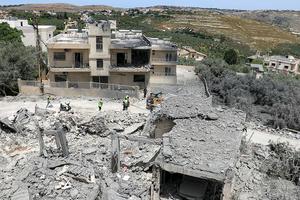
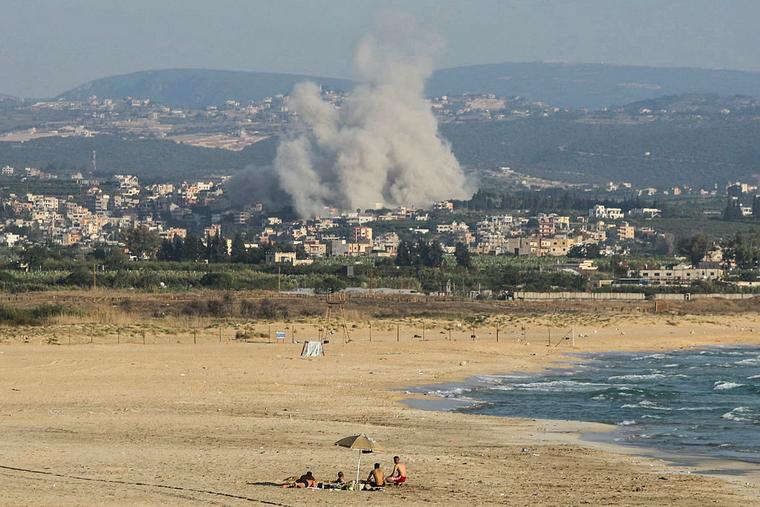
The Hezbollah war with Israel has brought great suffering to the country. About one-quarter of the population (1.4 million people) has been displaced. More than 3,500 have been killed — many of them Hezbollah fighters but also many civilians.
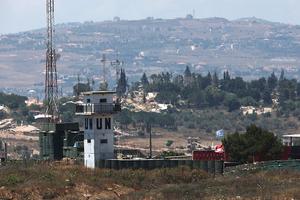
Israel has declared 14% of Lebanon, particularly in the south where the two countries share a border, “free-fire non-civilian zones,” which means that any movement in those areas is extremely dangerous. About a dozen Lebanese Christian civilians have been killed in the south under just such conditions. On June 1, Dr. James Karam and his two children, Tony and Theodosia, were killed by an Israeli drone strike as they returned from university exams in Beirut to their village.
To its credit, the Trump administration has sought to save Lebanon, pushing the Lebanese and Israeli governments to negotiate directly for the first time in 46 years. The negotiations are a hopeful sign. They seemed to have made some real progress, as seen in the June 3 joint statement from the trilateral — U.S., Lebanon, Israel — meeting in Washington. As analyst Toni Nissi noted, the statement finally “places sovereignty at the center of the diplomatic process.”
But in the short run, securing a ceasefire in Lebanon does not really depend on the Lebanese state but rather on spoilers, Hezbollah and Iran.
One might say that Lebanon faces three tracks towards the future. The Hezbollah/Iran track seeks above everything else to preserve Lebanon as a rocket and drone launchpad against Israel, to keep the catastrophic status quo where the country is plunged into war at any point because of calculations made in Tehran. Lebanese President Joseph Aoun addressed this problem in a recent CNN interview, where he said to Iran, “It’s not your country, it’s our country.” He added that the Lebanese “are fed up, and we want to live in peace,” that “they deserve not seeing their homes being destroyed every five to 10 years.”
Not quite as destructive as the “Hezbollah/Iran track” is the sly agenda being pushed by Saudi Arabia and several other Sunni Arab and Muslim states, which essentially seeks to “keep Lebanon in play” for some future grand arrangement by blocking a long-term peace agreement. In a sense, it seeks to sacrifice Lebanon today for some sort of comprehensive Israeli-Palestinian-Arab regime agreement tomorrow.
The Saudis fear that if Lebanon makes a separate peace with Israel now, like Egypt and Jordan did, that it will weaken the ability of Saudi Arabia, Qatar, Turkey and others to pressure the Jewish state later. In this scenario, Lebanon still pays the price now and a quite steep, ironic one given the role of the Palestinian cause in triggering the Lebanese Civil War of 1975-1990.
Only the third track, the American-Israeli one, offers Lebanon a potentially different perspective from the current grim reality, one that seeks to strengthen the Lebanese state and restore its sovereignty now. Yes, Israel also wins in this scenario, gaining calm along its northern border and peace with its neighbor. But ideally, Lebanon in this case would win something truly elusive, a break from the constant “war-destruction-pause-war-destruction-pause-war tool” fashioned by Iran and Hezbollah.
But given the obvious Hezbollah recalcitrance and the state’s weakness, something else will be needed to bring about a solution. As Nissi has emphasized, “Lebanon alone may not possess the political, military, economic, or diplomatic resources required” for such an agreement.
A May 2026 poll of Lebanese found that not only Christians, but Lebanon’s Druze and Sunni Muslims favor the disarmament of Hezbollah and some sort of peace with Israel. Not surprisingly, a large majority of Shiite Muslims, who are Hezbollah’s main supporters and beneficiaries, do not.
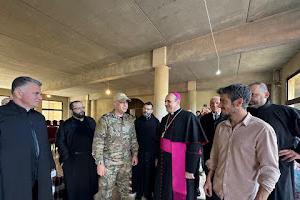
Both the Maronite Catholic Patriarch and the Maronite Bishop’s Council in Lebanon have endorsed negotiations. The council recently called for Lebanese neutrality; peace talks with Israel “under Arab and international sponsorship” and a return to the 1949 Armistice Agreement. “The priorities of the people are not armed conflicts, but security, stability, and the restoration of livelihoods,” the council affirmed.
A key part of such a peace would be the role of the Lebanese Armed Forces (LAF), a dubiously led and shaky institution. Another weakness of this track is that the U.S. and Israel are not completely aligned on Lebanon. Given the recent public controversy and criticism between the Vatican and the White House on Iran, it is often forgotten that, at least when it comes narrowly to Lebanon, the Trump administration and Pope Leo XIV are not far apart.
In his farewell address to Beirut on Dec 2, the Pope said that “armed struggle brings no benefit. While weapons are lethal, negotiation, mediation and dialogue are constructive. Let us all choose peace as a way, and not just as a goal!”
Lebanon today is both on the edge of still more destruction and on the edge of a path towards a radically different, and peaceful, future which has eluded it for decades. Can Trump deliver what both he and the Pope want there?
- Keywords:
- catholic church in lebanon
- israeli christians