Alito Is Right: We Should All Be Concerned Over Worldwide Threats to Religious Liberty
COMMENTARY: Each case in the Supreme Court’s fall session involves efforts by government to restrict or compel speech in error or suppress ministries and individuals from acting consistent with religious conviction.
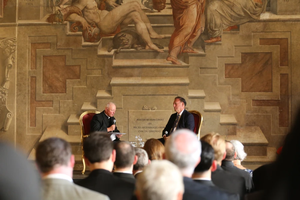
Last weekend, Supreme Court Justice Samuel Alito greeted Pope Leo XIV in St. Peter’s Square prior to addressing judges and lawyers gathered at the Vatican’s judicial headquarters during the Jubilee of Justice.
Alito stressed that justice is what people are due, while mercy — though not strictly merited — is indispensable in a humane legal system. “Mercy should be built into laws,” he urged.
Alito also raised a sharp warning: Religious freedom across the globe is under attack. According to an article in The New York Times, Alito also remarked that offenses against religious liberty are “a great matter of concern and something that I think all Christians should be concerned about and should try to find ways of combating.”
He is right.
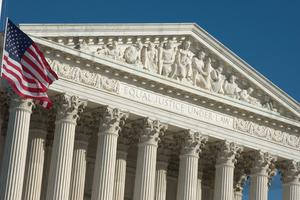
Over the past several years, the Supreme Court has consistently handed down decisions that strengthened protections for religious freedom and conscience. As the court begins a new term on Oct. 6, the stakes are once again high. The court’s docket is not yet full. Additional cases will be added as the term progresses, but several petitions already accepted for review raise pressing questions of whether the government may condition speech and action in ways that silence or sideline religious believers.
The first case comes from Colorado. Under Colorado law, licensed counselor Kaley Chiles is barred from engaging in conversations with young people that depart from the state’s preferred view of gender identity. Colorado’s “conversion therapy” ban does not regulate abusive conduct; it compels counselors like Chiles to use words at odds with their sincerely held religious beliefs.
If a minor struggling with gender dysphoria, for example, seeks help to embrace his or her biological sex, counselors like Chiles are forbidden to affirm that desire. If this censorship stands, faithful professionals will be unable to offer the very guidance their clients seek. Oral argument in Chiles v. Salazar is set for Oct. 7.
The Court will also hear two cases — State of West Virginia v. B.P.J. and Hecox v. Little — that go to the very heart of women’s sports. In West Virginia, Lainey Armistead, a college soccer player, has joined her state in defending a state law ensuring that only biological females compete in female divisions. Idaho passed a similar law, which immediately faced legal challenge. Lower courts have split, and the court will now decide whether states may preserve sex-specific athletics.
For female athletes, this is about fairness, safety and opportunity. For women of faith, it is also about fidelity to the truth of their biological reality. Striking down these laws would not only erase gains made by women in athletics but would force young women to participate in affirming an ideology that seeks to erase God’s creative hand.
Another case arises from New Jersey, where a faith-based, pro-life pregnancy center is being targeted. In First Choice Women’s Resource Centers v. Platkin, the state attorney general singled out a pregnancy-resource center offering alternatives to abortion, demanding sweeping categories of documents and compliance burdens that other nonprofits in the state do not face. These centers provide hope, medical care, counseling and material support to women facing difficult pregnancies.
New Jersey’s campaign is not fair regulation; it is thuggery. If the court allows such tactics to go unchecked, states will be emboldened to weaponize their authority against pro-life centers nationwide, forcing them to dedicate precious time and resources to responding to relentless government harassment.
The justices will also hear a religion-related case that carries significant weight. On Nov. 10, the Court will hear argument in Landor v. Louisiana Department of Corrections and Public Safety. The issue is whether money damages are available against individual government officials under the Religious Land Use and Institutionalized Persons Act (RLUIPA).
The case was brought by a Rastafarian prison inmate whose head was forcibly shaved against his religious convictions. Like the cases mentioned previously, the principle at stake is the same: whether believers will have meaningful remedies when the state violates their religious liberty.
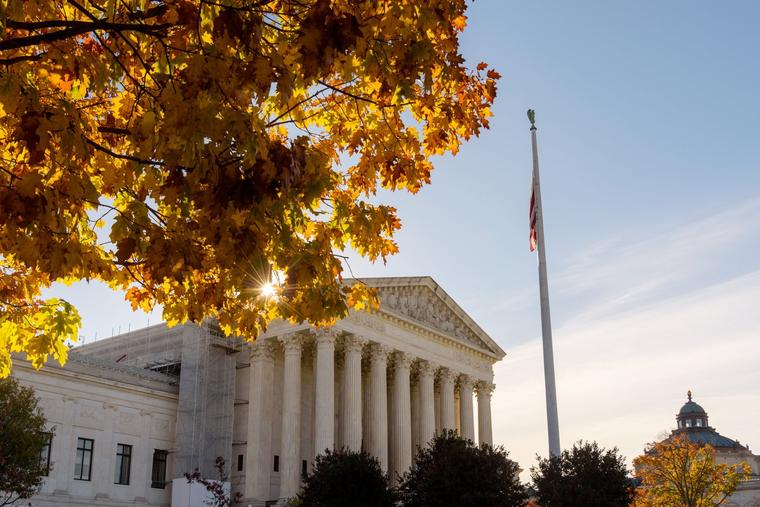
These cases share a common thread. Each involves efforts by government to restrict or compel speech in error or suppress ministries and individuals from acting consistent with religious conviction. If censorship and coercion prevail, the result will be the suppression of the ability of Americans of faith to live in integrity.
Alito’s remarks in Rome are a timely reminder. A just legal system cannot be indifferent to conscience, and mercy must temper the exercise of the government’s authority. As the Supreme Court begins another term, pray that it continues to uphold the protection of truth and belief we enjoy under the law.