Trump Announces Capture of Maduro Following U.S. Strikes On Venezuela
Trump stated the operation was conducted 'in conjunction with U.S. Law Enforcement' and announced a news conference for 11 a.m. ET at Mar-a-Lago.
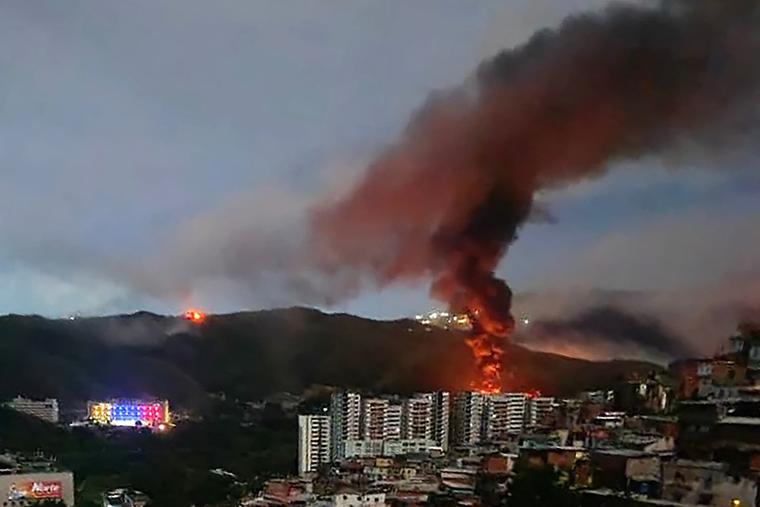
President Donald Trump announced early Saturday that U.S. forces have “captured” Venezuelan President Nicolás Maduro and his wife, Cilia Flores, flying them out of the country following a “large scale strike” on the South American nation.
“The United States of America has successfully carried out a large scale strike against Venezuela and its leader, President Nicolas Maduro, who has been, along with his wife, captured and flown out of the Country,” Trump wrote in a post shared by U.S. Secretary of War Pete Hegseth.
— Pete Hegseth (@PeteHegseth) January 3, 2026
Trump stated the operation was conducted “in conjunction with U.S. Law Enforcement” and announced a news conference for 11 a.m. ET at Mar-a-Lago.
Explosions and Chaos
The announcement followed reports of multiple explosions rocking Caracas and other cities around 2 a.m. local time, accompanied by military aircraft flyovers.
“The explosions were so strong they made the windows of my house shake. When we looked outside, numerous plumes of smoke were rising over Caracas,” said Andrés Henríquez, a correspondent for ACI Prensa, CNA's Spanish-language news partner. “There were many, countless. Then, videos and reports began to emerge of explosions in other cities.”
Amid the chaos and prior to the reported capture, Foreign Minister Yván Gil Pinto announced that the regime had declared a “State of External Commotion” — a constitutional emergency measure granting sweeping wartime powers.
Citing Article 51 of the U.N. Charter, Gil Pinto denounced the “extremely grave military aggression” and called on citizens to mobilize against an “imperialist attack.” It remains unclear who is currently commanding the regime's forces.
Church context
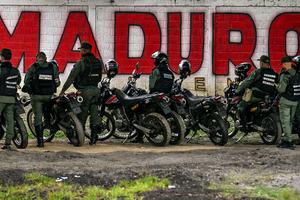
The apparent fall of the socialist leader follows months of escalating tensions. The U.S. recently designated Maduro as the alleged leader of the “Cartel of the Suns” narco-terrorism ring.
The Venezuelan Bishops’ Conference (CEV) has long warned of the country's “turbulent national reality.” In their recent Christmas message, the bishops cautioned that the “joyful experience” of the season was “overshadowed” by the country's “generalized impoverishment.”
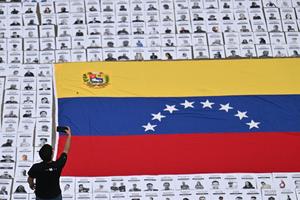
Tensions between the Church and the regime have spiked since the disputed July 2024 elections. The episcopate has repeatedly demanded the release of political prisoners — including minors — while Maduro recently accused Cardinal Baltazar Porras of conspiracy during the October 2025 canonization of Venezuela’s first saints.
Analysts told CNA recently that the Church would likely face “more persecution” in 2026 as the regime becomes increasingly isolated.
This is a developing story. Updated Jan. 3, 4:45 a.m. ET.
- Keywords:
- nicolas maduro