Padre Pio Returned to This Favorite Writer Again and Again
In his letters, the Capuchin saint revealed a deep love for the writings of St. Paul and drew on them to guide souls.
“Don’t neglect your spiritual reading,” St. Josemaría Escrivá famously said. “Reading has made many saints.”
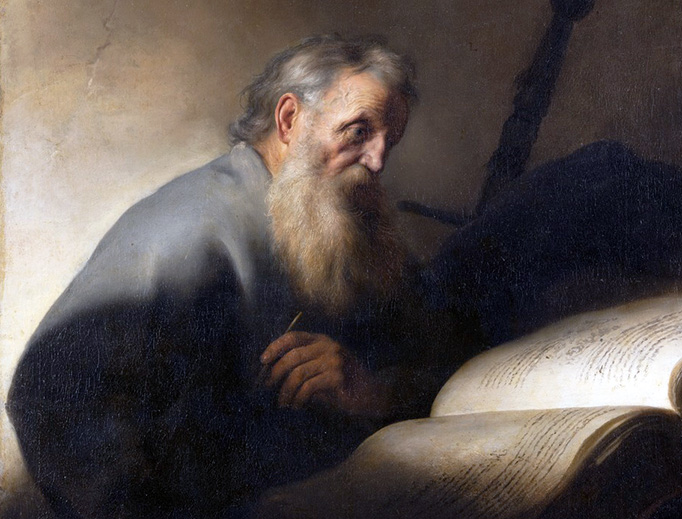
In a recent blog, the reading recommendations of the saints were considered through the lens of soon-to-be-saint Pier Giorgio Frassati’s appreciation for the writings of St. Paul. And he’s not the only one — Padre Pio also pointed often to the writings of St. Paul.
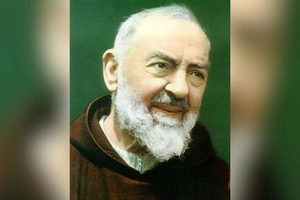
St. Pio of Pietrelcina (1887-1968), the Capuchin Franciscan more commonly known as “Padre Pio,” was well-known for particular graces he was given by the Lord, such as the stigmata and miraculous gifts in his work of hearing sacramental confessions. He also left behind spiritual writings in the form of letters, such as ones he wrote to his spiritual directees. (The fourth volume of these letters was recently published in English.) In an Oct. 23, 1914, letter to Raffaelina Cerase, one of his spiritual daughters, Padre Pio notes his love for the writings of St. Paul:
I began with the apostle [Paul] and I intend to continue with him to the end. Whenever I read his Letters, which I prefer to all other holy writings, words cannot express how much I relish them.
While Padre Pio could have made mention of any spiritual reading as his preference, here he chooses St. Paul’s letters.
Some excerpts from this same 1914 letter also give evidence of how Padre Pio made use of St. Paul’s writings in his own. He writes:
Well, then, he [Paul] tells us in this respect: ‘If we live by the Spirit, let us also walk by the Spirit’ (Galatians 5:25), as if he wished to say for our edification: Do we want to live a spiritual life, moved and guided by the Spirit of the Lord? Let us take care, then, to mortify our selfish spirit which puffs us up, makes us impulsive and leads to aridity of soul.
Padre Pio continues the letter by citing Galatians 5:26:
In a word, we must be careful to subdue vainglory, irascibility and envy, three evil spirits to which most men are slaves. These three spirits are extremely opposed to the Spirit of the Lord.
Pio offers to speak more of these three dangers in a future letter and then directly makes use of St. Paul’s letter to the Galatians: “Meanwhile, let us end with the words of the holy apostle: Let us have no self-conceit, no provoking of one another, no envy of one another (Galatians 5:26).” He not only appreciates the writings of Paul but also has received the wisdom of these words and seeks to share their wisdom for the spiritual life with his spiritual directee, Raffaelina. Through the passing on of these letters, in published works, their wisdom is shared with a wider audience as well.
While Padre Pio’s recommendation of the writings of St. Paul in his own words is notable, perhaps more significant is the fact that he embodies these writings in his own life, particularly in his conformity to Christ.
For instance, Galatians 2:20 was lived by him in a singular way in his generous living of the stigmata: “I have been crucified with Christ; it is no longer I who live, but Christ who lives in me.”
And having allowed his life to bear witness to the Lord, he too can now say with St. Paul: “I have finished the race” (2 Timothy 4:7).
- Keywords:
- padre pio
- st. paul
- spiritual reading