St. Teresa of Ávila Says Prayer Is More Than Words — It’s Friendship
For St. Teresa, holiness begins not in lofty thoughts but in daily conversation with the One who loves us most.
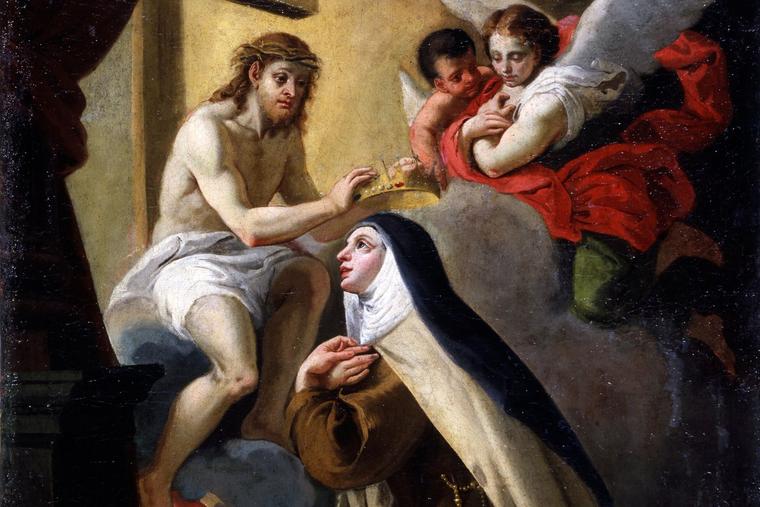
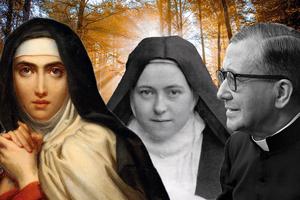
St. Teresa of Ávila (1515-1582), a Carmelite nun, devoted herself to prayer and to teaching others about how to grow closer to God through it. The following are some of her most powerful quotes, centering on how prayer brings us into deep contact with the person of Christ and allows us to act for him in the real world.
Teresa wrote that “prayer is nothing else than being on terms of friendship with God. … Mental prayer in my opinion is nothing else than an intimate sharing between friends; it means taking time frequently to be alone with him who we know loves us.” Making time for him is the starting point and can be the most challenging for us. Our calendars are so full that we often neglect to make time for Jesus. Teresa reminds us that friendship requires time and attention for growth. This simple reminder can make all the difference in our spiritual lives.
Once we become committed to a life of daily prayer, we can become more attuned to discovering how God is inviting us to act for him in our practical lives. Teresa wrote that “many remain at the bottom of the [mountain of prayer] who could ascend to the top. … I repeat and ask that you may always have courageous thoughts. As a result of these, the Lord will grant you the grace for courageous deeds.”
The more frequently we meet Christ in prayer, the more we can hear how he is inviting us to accept the heroic holiness that we are all challenged to enter into. This can arise through realizing in prayer that we need to have a tough conversation with someone in our life, or that God is asking us to change something about our own personal life so we can become less attached to sinful tendencies. Only once prayer becomes intimate can we respond in this way. But once it does, we will be transformed into the saints we are called to be.
This is the call of all Christians because, as Teresa notes, “Christ has no body now but mine. He prays in me, works in me, looks through my eyes, speaks through my words, works through my hands, walks with my feet and loves with me here.”
The friendship we grow in prayer with Jesus allows us to become bold enough to live for him in the real aspects of our lives. This means that we can radically impact the lives of others by recalling the fact that to ignore the other person in need is to ignore Jesus and that to serve the one in need is to serve Christ and grow in relationship with him.
All of these moments of prayer and service to others become access points to experiencing the living God. For this reason, Teresa writes that “we shall never learn to know ourselves except by endeavoring to know God; for, beholding his greatness, we realize our own littleness; his purity shows us our foulness; and by meditating upon his humility we find how very far we are from being humble.”
The direction of our lives is determined by Whose we are. We belong to God. The more we know him intimately through a commitment to intentional prayer time, the more we will see him in those around us. The more we see him in those around us, the more we will love others. And the more we love others, the more we will reside in the communion of the Trinity. As we contemplate the holiness of God, we will realize that we are dependent on him for all things. He is always providing for us and constantly calling us to go deeper into the eternal union that we were crafted for.
Today, may our prayer be that St. Teresa of Ávila’s intercession sparks in us a deeper desire for nothing less than that union.
- Keywords:
- st. teresa of avila
- prayer