Our Lady of Lourdes and a Call to Embrace the Love of the Good Samaritan
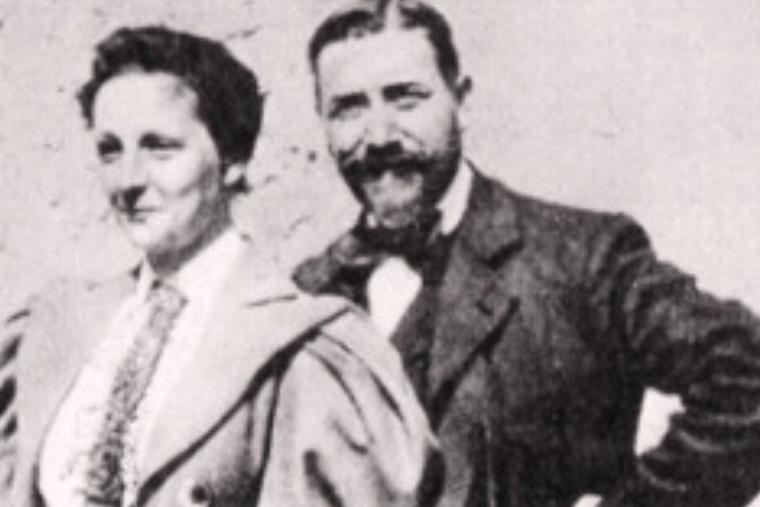
One embodiment of this active love is the marriage of Servant of God Élisabeth Leseur and her husband, Félix.
Each Feb. 11 marks the feast of Our Lady of Lourdes and World Day of the Sick. Since World Day of the Sick was established by Pope St. John Paul II in 1992, it has been a tradition for the pope to write an address on the topic of caring for the sick.
Pope Leo XIV’s 2026 World Day of the Sick message about the Good Samaritan feels especially important this year, in a nation and world steeped in suffering. Where we are tempted to withdraw from each other, Pope Leo calls us to communion: “Love is not passive; it goes out to meet the other. Being a neighbor is not determined by physical or social proximity, but by the decision to love.”
One embodiment of this active love is the marriage of Servant of God Élisabeth Leseur and her husband, Félix.
Throughout their marriage, the couple demonstrated a desire “to meet the other.” Élisabeth spent most of her married life sick, and the couple also had to bear the cross of infertility on account of her illness. Despite not being aligned religiously during their married life (Élisabeth grew in her Catholic faith, while Felix embraced an atheistic worldview), the couple’s love for one another was active. Élisabeth decided not to meet her husband’s comments about her faith with harsh words. Félix in turn took tender care of his wife and spared no means of tending to her illness.
In his World Day of the Sick Message, Pope Leo XIV goes on to say, “The gift of encounter flows from our union with Jesus Christ. We recognize him as the Good Samaritan who has brought us eternal salvation, and we make him present whenever we reach out to a wounded brother or sister.” Élisabeth’s union with Christ and prayers for Félix in the midst of her physical suffering eventually led to his reconversion. Shortly after her death, he discovered her diary; and in it, he encountered a map to the hidden world of his wife’s soul. That map not only led Félix back to Catholicism, but eventually to the priesthood.
The beautiful thing about the relationship of the Leseurs is that they loved one another beyond the obstacle that could have separated them. Like the Good Samaritan, who had to cross the boundaries of religious background to tend to the wounded traveler, the Leseurs had to navigate religious difference in order to tend to each other’s needs.
Drawing from John Paul II, Pope Leo XIV says, “‘To be one in the One’ means truly recognizing that we are members of a single Body that brings the Lord’s compassion to the suffering of all people, each according to our own vocation.” It was through their marriage that Félix and Élisabeth became one, and it was through a love that remained active beyond Élisabeth’s death that they became ever more united in a shared faith in Christ. Bearing the cross of Élisabeth’s suffering together, they learned the Lord’s compassion for each other.
In a letter written to a friend a couple years before her death, Élisabeth reveals the potential suffering has to activate love:
“Suffering is so powerful and obtains so much: an hour spent in pain, united to the cross, can obtain more than hours consecrated to good works, to action, and according to these very beautiful words: ‘Suffering is also a sacrament’” (quote from Bernadette Chovelon’s Salt and Light: The Spiritual Journey of Élisabeth and Félix Leseur).
In the midst of our wounded world, may our words and actions, united to the love of Christ, function like the Samaritan’s wine, oil and linen bandages. May they heal, revive hope, and make whole.