What an Openly Catholic Pro-Life, Pro-Family President Means for Poland
ANALYSIS: While secularization is making inroads in the homeland of John Paul II, the recent election results are encouraging.

Despite the perception that the Church in Europe is fading into oblivion, earlier this month an openly Catholic pro-life, pro-family politician was elected president in the heart of the continent. For at least the next five years, Poland’s leader will be Karol Nawrocki, a guarantee that the nation’s current left-liberal government will not be able to push forward its progressivist agenda.
On June 1, the second round of Poland’s presidential election, conservative Nawrocki defeated his opponent, liberal Warsaw Mayor Rafał Trzaskowski, by a slender margin of 50.89% to 49.11%. Turnout was among the highest in post-communist Polish history, as 71.63% of those eligible cast a vote.
Whereas in most parliamentary democracies the office of president is a ceremonial one, the Polish political system is based on the French model. Thus, the president’s duties include nominating ambassadors and ratifying treaties. Most important, legislation passed by Polish Parliament can become law only with the signature of the president, who has veto power.
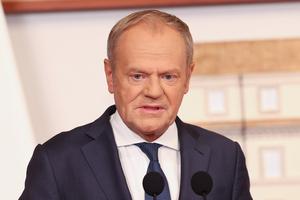
Since the fall of 2023, the Polish government has consisted of a broad coalition led by the liberal Civic Platform party, but also including the Lewica (Left), the centrist Poland 2050, and the traditionally agrarian, moderately conservative Polish People’s Party. Over the past year and a half, the culture wars have figured prominently in Polish politics as Donald Tusk’s government has halved the number of religious education classes, while leftist education minister Barbara Nowacka has gutted the national curriculum of works by Pope St. John Paul II and the entirety of Nobel Prize winner Henryk Sienkiewicz’s pro-Christian classic novel Quo Vadis. Meanwhile, she has introduced sex education, euphemistically called “health education.”
The Tusk government has tried to legalize same-sex civil unions and abortion on demand (following a 2020 Constitutional Court ruling, abortion is legal only when the pregnancy results from an illicit act like incest or rape and when it endangers the mother’s health or life), but these attempts have been frustrated by the Polish People’s Party.
Yet media reports suggest that deputies from that party have been softening their pro-life stance. If true, then the only obstacle to legalize killing the unborn is the veto power of President Andrzej Duda from the conservative Law and Justice party. Yet lame-duck Duda’s second term ends in August.
In every poll before the first round of voting, Civic Platform’s Rafał Trzaskowski enjoyed a comfortable lead over Nawrocki. Yet on the first round of elections (May 18) Trzaskowski’s advantage amounted to less than 2%.
As mayor of Warsaw, Poland’s most liberal city, Trzaskowski became known for his progressivism. Last year, he ordered religious symbols such as crosses be removed from municipal offices (he ultimately reversed the ordinance, which, according to surveys, more Poles opposed than supported, due to protests), while he became the Polish capital’s first mayor to participate in Warsaw’s annual “gay pride” parade.
The contrast between Trzaskowski and Nawrocki was evident, for instance, in their respective proposals to increase Poland’s birth rate. Whereas Nawrocki has pledged to submit to Parliament on his first day in office a bill exempting families with two or more children from paying personal income taxes, Trzaskowski has promised to repeal Poland’s “medieval” abortion law, which, in his view, frightens women from getting pregnant. Nawrocki has also pledged to veto all anti-life legislation, including that allowing aborting children with Down syndrome, and oppose legalizing civil unions.
Encouragingly, the majority of Polish voters under age 30 voted for Nawrocki in the second round of voting (in the first round, more than a third of young Poles voted for Sławomir Mentzen of the Confederation party, which, while libertarian-leaning on economic matters, is as pro-life and pro-family as Law and Justice). Tomasz Rowiński, editor-in-chief of the conservative Catholic magazine Christianitas, was asked by the Register if this is merely an expression of young people’s inherent contrarian nature; after all, just five years ago, hundreds of thousands of Poles from the same generation took part in pro-abortion protests. Maybe youths tend to vote against whoever is in power?
Rowiński notes that there is some truth in that. Furthermore, he cautions against interpreting the election results (which were very close) in terms of just ideology. Many Poles voted against Civic Platform because of Tusk’s limited successes in slashing inflation and housing prices, which in recent years grew at Europe’s fastest rate. Yet he notes that there is a conservative shift among Poles young and old. He points to a recent survey by OGB (the firm that most accurately predicted the presidential election) showing that from 2023 to 2025, support for legalizing first-trimester abortions declined from 57% to 52%, while pro-life stances rose from 34% to 39%.
“These election results show that there is a conservative majority in Poland,” Rowiński said, observing that unlike Geert Wilders in the Netherlands or the AfD in Germany, most members of Law and Justice are genuinely pro-life. “Conservative candidates have won three presidential elections in a row, while in 2010 Bronisław Komorowski also tried to make overtures to conservatives.” Komorowski successfully ran on a Civic Platform ticket when the party was much more conservative; in 2010, he courted conservative voters by emphasizing his opposition to abortion on demand (although he supported subsidizing in vitro fertilization).
Rowiński is echoed by Marcin Perłowski of the Center for Life and Family, an organization that coordinates Marches for Life and Family in 80-plus Polish cities and towns. He told the Register that the election results, especially among the young, “show that pro-abortion milieus’ claims, supported by manipulated data, that most Polish men and women want abortion on demand, as in Western Europe, are lies.”
Many have expressed worries (or, depending on their vantage point, hopes) that Poland would, like Ireland or Quebec, become post-Catholic. While secularization is making inroads in Poland, the recent election results are encouraging. For at least the next five years, European conservatives will have in Karol Nawrocki, alongside Hungary’s Viktor Orbán and Italy’s Giorgia Meloni, a strong defender of Christian, family and patriotic values.
- Keywords:
- catholics in poland
- catholic politicians