US Bombing of Iran Is the Most Recent Stage in a Forever War
COMMENTARY: Iran, the United States and Israel have been repeatedly striking each other in a variety of ways since the Islamic Republic began in 1979.

The American attack on Iranian nuclear sites on June 21 has provoked heated controversy, both inside and out of the Catholic Church.
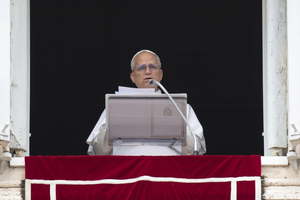
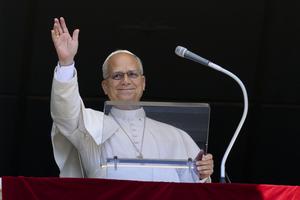
Only hours after the airstrikes, Pope Leo XIV called for diplomacy and a commitment to peace. While he spoke of “alarming news” that “continues to arrive from the Middle East, especially from Iran,” he also mentioned the “dramatic scenario” in Israel and Palestine.
Other Catholic voices have been more emphatic in their condemnation.
Before Saturday’s attack, Catholic philosopher Edward Feser called on the United States to “stay out of Israel’s war with Iran,” while prominent Catholic public intellectual Iranian-born Sohrab Ahmari warned against American involvement from the beginning, highlighting the recklessness of “regime change” rhetoric and how the already-dangerous conflict could spiral out of control.
Of course, one thing that can be said of this war is that this is not exactly new — it is incredibly complex and comes with considerable historical baggage. Iran, the United States and Israel have been repeatedly striking each other in a variety of ways, directly and indirectly, since the beginning of the Islamic Republic of Iran in 1979. They have sometimes done diplomacy, sometimes seemed to calm down, only to later return to conflict. America secretly sold arms to Iran once, while Iran shelters the leadership of the al-Qaida Sunni Salafi jihadist terrorist group. Iran humiliated captured American sailors after signing a nuclear deal with Barack Obama in 2015.
Iran’s enmity toward both the United States and Israel is well-known and, as the Iranian Supreme Leader Ali Khamenei has said, it is not just rhetoric but policy. “Death to America” is not supposed to be for mere internal consumption but to be expressed in deeds. Like them or not, the American strikes on Iran’s nuclear sites are the culmination of a decades-long, bipartisan U.S. policy — stated ad nauseum and always including the threat of force — that “Iran cannot have a nuclear bomb.”
Former Clinton and Biden staffer Jamie Metzl recently stated that “Iran has been at war with the United States for 46 years,” since the attack on the American Embassy in Tehran in November 1979. That international law recognizes diplomatic premises as sovereign territory and protected from invasion by the host country is a long-established fact.
Diplomatic and international law scholars differ as to how much of a violation an act like the 1979-1981 Iran Hostage Crisis was, but it was certainly illegal. Many violations of diplomatic premises or privileges have been minor, but this one was not — and it was not a onetime occurrence.
It is now well established that Iran was also behind the bombings of the U.S. embassies in Beirut and Kuwait in 1983. A separate attack by Iranian surrogates later that year killed 241 American and 58 French peacekeepers in Beirut.
While Iran’s behind-the-scenes role was obvious from the beginning, in 2023 a senior Iranian official admitted Iran’s direct involvement in the attacks at the highest level of the regime. Iranian-controlled militias in Iraq were responsible for the deaths and wounding of hundreds of American soldiers during the U.S. presence in Iraq from 2003 to 2011. Iran has struck Israeli diplomatic missions and Israeli civilians and Jews worldwide for decades. Israel has responded and has recently been successful in striking key regime targets inside Iran, even before the direct conflict that erupted on June 13.
The recent actions from the Trump administration are not even the first time that the United States and Iran have fought directly. Thirty-seven years ago, during Operation Praying Mantis, the Reagan administration damaged or destroyed a significant part of the Iranian navy.
Iran has also been projecting power and waging war not just against Israel but against its Arab neighbors. It was not an Israeli or an American neo-conservative but rather the current mayor of Tehran, Alireza Zakani, close to the supreme leader, who claimed a decade ago that Iran controlled four Arab capitals — Beirut, Damascus, Baghdad and Sanaa, Yemen. Iranian proxies have also fired missiles and drones at targets in Saudi Arabia and the United Arab Emirates.
Numerous Arab voices on social media, especially Syrians, have been exultant over Israeli strikes on senior Iranian regime figures. One major Syrian Muslim commentator, Omar Madaniah, posted photos of deceased Iranian commanders with the caption, “whoever does not rejoice in their demise should review their Islam.”
All of this is to say that this conflict is not just about Israel or about us and that reckless American behavior in quagmires in Afghanistan and Iraq, American hubris and American miscalculations — along with well-founded weariness by the American people over new foreign entanglements — are only part of the story. One reason American administrations have been so adamant about preventing Iran from acquiring nuclear weapons is not just concern for Israel, but the likelihood that it would trigger a regional nuclear arms race, with at least Turkey and Saudi Arabia seeking to develop their own. Those fears of things spinning out of control are not limited to America or Iran.
One can make the case that both Israel and Iran have miscalculated in the current conflict with each other, which was triggered by the October 2023 Hamas invasion of Israel. This is the first real war Iran has faced against a powerful regional adversary since 1988 (a war Iran lost). Israel faces the prospect of an open-ended war against a well-organized nation-state, maybe for the first time, but at least since Egypt in 1973. Israel clearly has the upper hand, but what is most important is how wars end.
Our Holy Father’s call for peace is always the right one, and Feser’s and Ahmari’s warnings are legitimate, particularly about avoiding protracted conflicts. But a lot of blood was spilled long ago, in multiple directions, in the pursuit of national ambitions before Trump’s recent actions.
Editor’s Note: On Monday evening, President Trump announced a ceasefire timeline between Iran and Israel in a Truth Social post.
- Keywords:
- iran
- u.s.-iran tensions
- israel
- prayers for peace