Twenty Years Later, Bosnians Work to Reclaim War’s First Victim: Trust
Catholic Croats make up a significant part of the ethnically diverse population of Bosnia-Herzegovina, which Pope Francis will visit June 6.

SARAJEVO, Bosnia-Herzegovina — A key Muslim figure in Bosnia said that “mutual trust” was the first victim of the country’s recent war and is something each of the four main religious populations are still working to regain.
In a June 4 interview with CNA, Ifet Mustafic stressed that, “during (the) war, many bad things were done and were even done from people with religious affiliations. … Now, people are talking a lot about victims, about people who died. But they do not talk about trust.”
“Trust was a victim of the war itself. If you don’t trust someone, you cannot work with someone,” he noted, explaining that interreligious dialogue has also been damaged by this lack of trust.
Historically divided into three key ethnic groups, Bosnia-Herzegovina is composed of a majority of Muslim Bosniaks, followed by a large percentage of mostly Orthodox Serbs and a great population of Croats, a majority of which are Catholic.
Ethnic tensions broiled during the country’s 1992-1995 war, during which Bosnia’s Serb population began a policy of “ethnic cleansing” in large areas of Bosnia inhabited by non-Serbs and Muslim, Croat and Serb populations who opposed their army. The war ended in 1995, with the signing of the Dayton Peace Accords.
Mustafic is the head of the Raisu-l-Ulama Islamic community’s interreligious relations office in Bosnia-Herzegovina and is part of the Muslim delegation that will meet with Pope Francis for the interreligious encounter during his June 6 visit to Sarajevo. He was also present when St. John Paul II visited the country in 1997.
The June 6 interreligious meeting, which will be held in Sarajevo’s International Franciscan Study Center, will be a closed-door one. It is estimated that some 1,000 participants will attend, representing the four religions of Bosnia-Herzegovina: Catholicism, Orthodoxy, Judaism and Islam.
A group of around six people from each delegation will be allowed to approach the Pope and shake his hand; however, Mustafic said he doesn’t expect to be part of the group.
He said that the main challenge for Bosnia’s Muslim community “is to regain the trust, to re-establish it again within religious communities.”
“Dialogue existed before the war, and — when the war ended in 1996 — all the four communities sat together and tried to deal with some issues and tried at least to talk to each other,” he said.
However, he noted that the Muslim community is keenly aware they are talking about sensitive and “specific” topics that have affected their recent past the most.
“Because we could not get anywhere, we chose to talk and work on things that are important for all of us and that we can agree all together,” he said.
Mustafic said that, as Muslims, they expect the Pope “to encourage the path we are carrying forward (with) dialogue.” He also expressed hope that Francis will address the topic of confiscated properties.
During the communist era, religious properties — whether cathedrals or mosques — were confiscated. After the war, religious communities began the process of procuring their lost properties from the state.
“We expect the Pope to call government officials to pay more attention to the rights of the community, including property rights and also the rights of individual believers of any community,” Mustafic said.
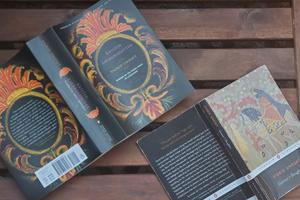
He noted that a book describing the historical presence of Sarajevo’s religions will be included among the gifts given to Pope Francis at the interreligious meeting.