Sri Lankan Cardinal Credits Papal Trip for Post-Election Peace
Cardinal Ranjith credits Pope Francis’ arrival for the ‘miracle’ of a smooth transition of power following Maithripala Sirisena’s upset win in the Jan. 8 presidential election.
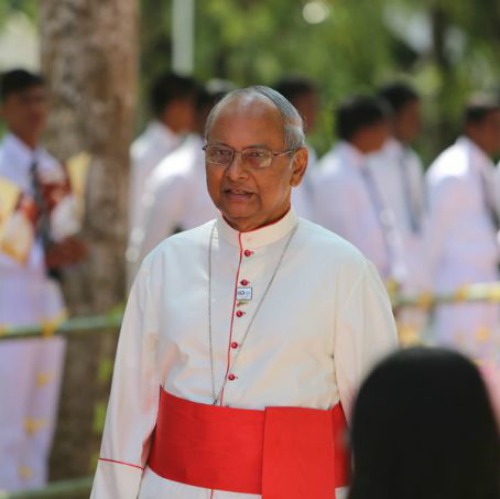
COLOMBO, Sri Lanka — After tense elections yielded a new president just days before Pope Francis' arrival in Sri Lanka, Cardinal Malcolm Ranjith said that the “miracle” of a smooth transition is due in large part to the Pope's visit.
“Before the elections, there was a lot of pressure on the bishops to try and stop the Holy Father, to tell him not to come or to postpone [his visit],” Cardinal Ranjith told CNA on Jan. 13.
“But we acted in good faith, believing in God: that, in these matters, if we have faith, everything succeeds. … And it would seem that the miracle was worked out, that the elections went smoothly, and that the transfer of power took place very, very smoothly,” he said.
Cardinal Ranjith, who was elevated to the rank of cardinal by Pope Benedict XVI in 2010, had been waiting for the arrival of Pope Francis on Tuesday in the Archdiocese of Colombo. The Holy Father never made it to the meeting, due to time strains in his schedule.
Last week, Sri Lanka received a new president, Maithripala Sirisena, who was formerly the country's health minister. He defeated former President Mahinda Rajapaksa, who had led the nation for nearly a decade.
Five years ago, Rajapaksa was able to bring about an end to a nearly 30-year civil war between Sinhala nationalists and Tamil separatists that claimed at least 60,000 lives.
However, despite bringing the war to a close, the former president had remained unpopular among the ethnic and religious minorities, and tensions were running high ahead of last Thursday’s close-race election.
The “surprising” calm and transition of authority was due in large part to the presence of Pope Francis so soon after the elections took place, Cardinal Ranjith said.
In spite of receiving pressure to cancel the visit and reschedule it, as well as numerous personal attacks, the cardinal explained, “We went ahead with [the visit] courageously” and were able to “welcome the Holy Father in the best way we wanted.”
Because of this, it was evident, he said, that concerns regarding the timing of the visit were “very much unfounded.”
He expressed his own personal joy and enthusiasm in welcoming the Pope to Sri Lanka, saying, “We are very happy that he came here, because our people are so fond of him, across the religious differences.”
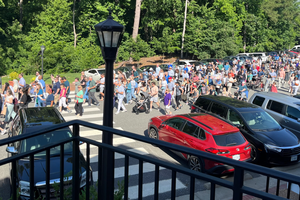
The widespread acceptance of the Pope — regardless of religion — was clearly visible in the thousands of citizens who packed the streets and cheered for him as he made his way along the 23-kilometer route from the airport, the cardinal observed.
More than 70% of the 20.4 million people in Sri Lanka are Buddhists, and Christians make up an estimated 8% of the population.
The fact that only a few small patches along the road were sparse with pilgrims “shows how much Sri Lanka appreciated [the Pope], and so, it’s a great thing that he came.”
Cardinal Ranjith also expressed gratitude for Pope Francis’ “sacrifice” in coming in the middle of the country’s hot season, when the sun is particularly fierce.
In reference to a meeting with interreligious leaders that the Pope had scheduled for later this afternoon, the cardinal said that there were no specific expectations.
As a religious minority on the continent of Asia, it is the “daily bread and butter” for Christians to live alongside and interact closely with non-Christians, he explained, noting that the Christian faith in Sri Lanka is “very much influenced” by non-Christian beliefs.
“So, in this context, we learn from them, and we are enriched by whatever is in their faiths, and they are enriched by whatever we believe in,” the cardinal said.
This attitude, he noted, “is mutual, and this helps to evangelize the continent, if not in a direct way, in an indirect and passive way, and it will bear fruits in the years to come.”
Alan Holdren contributed to this report.