Shake-Up in Detroit: New Archbishop Fires Ralph Martin and Eduardo Echeverria
The dismissal of Martin and Eduardo Echeverria, who had both critiqued what they perceived as doctrinal ambiguity under Pope Francis, is already generating controversy

Two prominent theologians who critiqued what they saw as doctrinal ambiguity under the late Pope Francis have been fired from their longtime posts at the Archdiocese of Detroit’s major seminary by the local archbishop, the Register has confirmed.
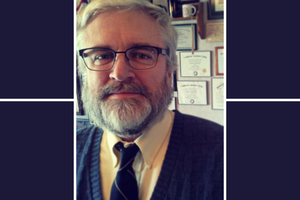
Archbishop Edward Weisenburger removed Ralph Martin and Eduardo Echeverria from their positions at Sacred Heart Major Seminary on July 23, both theologians told the Register separately.
In a statement to Renewal, the Catholic charismatic apostolate founded and led by Martin, the theologian described his sudden termination as “a shock,” noting his 23 years of contributions to the seminary. He wrote that when he asked Archbishop Weisenburger for an explanation, the Detroit ordinary “said he didn’t think it would be helpful to give any specifics but mentioned something about having concerns about my theological perspectives.”
Martin added that he was sharing these details because his colleagues and friends were owed an explanation, adding that he wanted to be truthful, but that he did not “want to unnecessarily contribute to current polarization in the Church.”
Echeverria told the Register no reason had been provided to him for his termination and that he could not say more due to signing a non-disclosure agreement.
When contacted for more information, Sacred Heart referred the Register to the Archdiocese of Detroit. Holly Fournier, associate director of communications, said, “The Archdiocese of Detroit does not comment on archdiocesan or seminary personnel matters.”
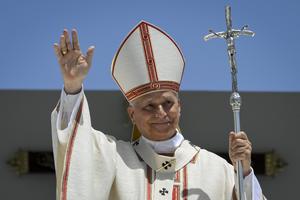
The firing of the theologians, which is already generating outcry online, is the latest controversial move by Archbishop Weisenburger since his March 18 installation as ordinary of the Motor City, following his appointment by Pope Francis. In June, the archbishop barred 13 parish churches from celebrating the traditional Latin Mass, while also banning the ad orientem posture from Novus Ordo liturgies in the archdiocese.
Both Martin and Echeverria are widely published and respected theologians who had served at Sacred Heart for decades.
Martin, 82, a leading figure in the Catholic charismatic renewal, began teaching at the Detroit seminary in 2002. Most recently, he served as the director of graduate programs in the New Evangelization, a topic that he has written on extensively. The host of the EWTN program “The Choices We Face,” Martin was appointed as a consultor to the Pontifical Council for the Promotion of the New Evangelization by Pope Benedict in 2011, and served as an “expert” at the 2012 synod dedicated to the topic.
Echeverria, 74, who joined the faculty of Sacred Heart in 2003, taught philosophy and systematic theology. A proponent of ecumenical dialogue with evangelical Christians, he has been an active contributor to websites like The Catholic Thing and Catholic World Report.
Both had also raised measured concerns that Pope Francis was fostering doctrinal ambiguity through his words and actions.
Martin frequently cited what he regarded as a lack of clarity in Pope Francis’ teaching, and wrote in his 2021 book A Church in Crisis that the then-pope was “reluctant to dispel” ambiguity, which was “almost a hallmark” of Francis’ approach. Following Pope Francis’ Jan. 14, 2024, statement that he liked “to think of hell as empty,” Martin penned a commentary in the Register arguing that the pope’s comments were “extremely damaging,” and played into “a widespread sympathy” toward universalism, the heretical belief that all are saved.
Echeverria expressed similar concerns. In 2019, he substantially revised his 2015 book entitled Pope Francis: The Legacy of Vatican II, writing that “I have now come to accept that Francis has contributed to the current crisis in the Church — doctrinal, moral, and ecclesial, due to the lack of clarity, ambiguity of his words and actions, one-sidedness in formulating issues, and a tendency for demeaning Christian doctrine and moral law.”
And in a June 7 The Catholic Thing article, he wrote that Pope Leo XIV “must dispel” confusion in Francis’ teaching on marriage and sexuality “by reclaiming the doctrines on sexual ethics of the Church.”
News of Martin and Echeverria’s dismissal has generated controversy on social media. Eric Sammons, the editor of the traditionalist Catholic magazine Crisis, described Archbishop Weisenburger’s move as “an act of a thin-skinned, petty tyrant.”
“It’s not about advancing the Gospel; it’s about power and control,” he said in an X post.
Brian Holdsworth, a prominent Catholic commentator, said the development was an example of “why good Catholics don’t want to work for the Church.”
“New bishops come and go and you’ll eventually end up working for a bad one and have your whole life derailed,” the Canadian said on X.
Mike Lewis, founder of the website Where Peter Is, took a different approach, calling the terminations of the theologians “necessary and overdue.”
“It was a scandal that these men were involved in the formation of seminarians after the way they wrote and spoke about Pope Francis,” wrote Lewis, who is known for his harsh criticism of those he perceives as disloyal to the late pontiff.
The firing of the two professors comes as the second summer session begins at Sacred Heart Major Seminary. The archdiocesan seminary’s website states that it is “the leading center of the New Evangelization forming priests, deacons, and lay ministers who are prepared to bring the truth of the Gospel to an increasingly secularized world.”
It is unclear if Archbishop Weisenburger, who came to Detroit from the Diocese of Tucson, has other changes in mind for the regional seminary, which includes seminarians from dioceses throughout the Midwest.
This story was updated at 5:17 p.m. ET on July 24 to include the statement from Ralph Martin.
- Keywords:
- Ralph Martin
- Archbishop Edward Weisenburger
- eduardo echeverria
- archdiocese of detroit
- sacred heart seminary