Pope's Appeal for Peace and Penance
The Holy Father speaks out on Libya conflict, the Middle East situation and the need for confession.
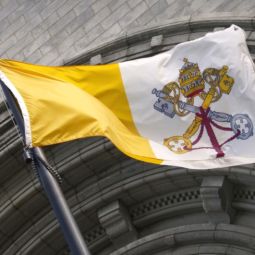
VATICAN CITY (CNS) — Pope Benedict XVI appealed for a suspension of fighting in Libya and the immediate start of a serious dialogue aimed at restoring peace to the North African country.
Speaking at his weekly blessing March 27, the pope said he was increasingly concerned at the news from Libya, where rebels supported by U.S. and European airstrikes have battled the forces of Libyan leader Moammar Gadhafi.
“My fear for the safety and well-being of the civilian population is growing, as is my apprehension over how the situation is developing with the use of arms,” the Pope said. “To international agencies and to those with political and military responsibility, I make a heartfelt appeal for the immediate start of a dialogue that will suspend the use of arms.”
He said that in moments of great international tension there is more urgency for diplomatic efforts that take advantage of “even the weakest sign of openness to reconciliation” among the parties in conflict. Solutions should be “peaceful and lasting.”
The Pope offered a prayer for “the return of harmony in Libya” and throughout North Africa.
He also expressed concern about the entire region of the Middle East, where episodes of violence and civil unrest were taking place daily. In Syria, more than 50 people were reported killed in anti-government demonstrations in late March.
“My thoughts go to the authorities and citizens of the Middle East. ... There, too, the path of dialogue and reconciliation should be chosen for a just and brotherly coexistence,” he said.
Jesuit Father Federico Lombardi, Vatican spokesman, said the Vatican would send an observer to the international conference on Libya scheduled for March 29 in London. He said Archbishop Antonio Mennini, the apostolic nuncio to Great Britain, would represent the Vatican at the one-day meeting, which was convened to assess the Libyan intervention.
The Holy Father also commented in recent days on how confession is a teaching moment for priest and penitent alike.
While penitents can discover grace and hope from God’s love and forgiveness, priests hearing confession can be inspired to be more honest, humble and transparent about their own sins, he said.
The Pope made his comments during an audience March 25 with participants attending a course sponsored by the Apostolic Penitentiary, a Vatican court that that handles issues related to the sacrament of penance.
He said confessors can learn so much from “exemplary penitents about their spiritual life, the seriousness with which they examine their conscience, about their transparency in recognizing their own sins and their docility toward Church teaching and recommendations from the confessor.”
“We can learn great lessons about humility and faith” when administering the sacrament of penance.
A priest’s faith in God and in God’s mercy can be strengthened every time he assists and witnesses true “miracles of conversion,” he added.
By hearing confession, a priest will “visit the depths of the human heart, even its darker side,” which can test the faith of priests just like it tests other people’s faith, said the Pope. On the other hand, it also can foster the certainty that evil never has the last word and that God and his mercy make all things new, he said.
People not only learn about humility and recognize their own fragility when confessing their sins, they become aware of their need for God’s forgiveness and of the fact that divine grace can transform their lives, he said.
In a world “marked by noise, distraction and solitude, the conversation between penitent and confessor can be one of the few, if not the only, occasions to be really and completely listened to.”
The relativism of modern times has weakened people’s knowledge of their true being, which in turn has led to people no longer practicing the sacrament of penance, the Pope said.
Yet, examining one’s conscience in confession has enormous value, because it teaches people to “take a sincere look at their existence and confront it with the truth of the Gospel and evaluate it with parameters that are not just man-made, but that emerge from divine revelation.”