Dialogue Stalled: SSPX and Vatican at Impasse Over July 1 Consecrations
ANALYSIS: What happens now that the leadership of the Society of St. Pius X has rejected the Vatican’s proposal to restart dialogue on the condition that they postpone their plan to consecrate bishops later this year?
The present impasse between the Holy See and the Society of St. Pius X (SSPX) has hardened into a standoff, with both sides, convinced they are defending the Church’s good, heading toward a formal break, absent a constructive intervention.
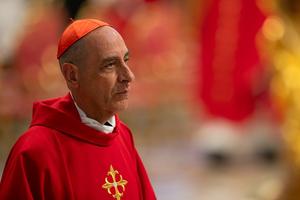
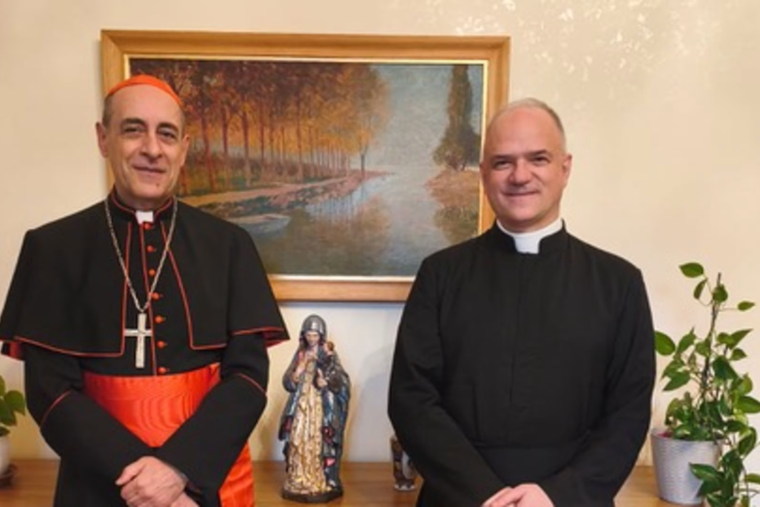
On Feb. 12, the Dicastery for the Doctrine of the Faith, headed by Cardinal Víctor Fernández, had invited the SSPX to resume doctrinal talks on the understanding that both parties would work toward what Rome calls the “minimum requirements” for full communion.
Cardinal Fernández had one condition: that the Society postpone its planned episcopal consecrations on July 1, warning that going ahead with them “would imply a decisive rupture of ecclesial communion (schism) with grave consequences for the Fraternity as a whole.”
Responding in a letter on Ash Wednesday, SSPX Superior General Father Davide Pagliarani informed the cardinal that he had decided, after consulting his general council, to decline that offer. He did so in a tone that was courteous but unyielding.
Though he welcomed the willingness to reopen doctrinal discussions, Father Pagliarani stressed that both Rome and Écône “know in advance” they cannot agree doctrinally, particularly regarding “fundamental orientations adopted since the Second Vatican Council” — the texts of which, the DDF prefect had said, “cannot be corrected,” nor can the legitimacy of the liturgical reform be challenged.
Not only is that latter statement of the prefect a vigorously contested point, but to stress that the “minimum requirements” for full communion with the Church include subscribing to these “unchangeable” orientations is something the SSPX has never been able to do. That is because, for them, the problems of the post-conciliar era are the fruit of fundamental errors baked into the Council’s texts and their official interpretation by successive popes over the past 60 years.
They questioned who determines minimum requirements for ecclesial communion, saying that task “does not belong to us” but belongs to the magisterium. “What must be believed in order to be Catholic has always been taught with authority, in constant fidelity to Tradition,” Father Pagliarani wrote.
Moreover, for the society, the dispute is, as Father Pagliarani stated in his letter, ultimately one of conscience. “The Society,” he stressed, “cannot abandon souls” at a time when it sees many pastors and bishops no longer reliably providing sound doctrine or sacraments. The consecrations are thus an emergency measure, which it argues, is canonically valid. Nor do they believe it is schismatic, arguing that consecrating new bishops would assume no jurisdiction against the will of the Pope and that they do not intend it to be a schismatic act, but rather a means of ensuring the faithful can receive valid sacraments. Excommunication does not equate to schism and, the SSPX leadership argues, previous popes have lifted excommunications on their bishops, given the society faculties, and viewed them as valid dialogue partners, thereby recognizing they are within the Church.
The Vatican’s assertion that the consecrations are a schismatic act, as Cardinal Fernández stated on Feb. 12, will be a hard one to surrender. Officials feel they have to hold this position as allowing the consecrations to proceed without such a sanction would set an unwelcome precedent that would undermine papal authority. Any group, they fear, could consecrate bishops without a papal mandate, claiming an emergency situation as an act of grave necessity. The “grave necessity” argument is, in any case, being questioned by some, such as New York canonist Father Gerald Murray, who say it’s a fallacy given that the Vatican is open to dialogue and that there are already associations of priests such as the Priestly Fraternity of St. Peter offering the traditional Mass.
The Vatican also opposes the consecrations because allowing them would give credibility and validity to the SSPX’s position on the Second Vatican Council, which, in turn, would undermine the Council’s teaching and post-conciliar interpretation that Church leaders such as Cardinal Fernández hold so dear.
In view of these entrenched positions, the situation appears, on the face of it, intractable, but some options remain.
One solution could be to test a proposal sketched by figures such as Auxiliary Bishop Athanasius Schneider of Kazakhstan, who led a visitation of SSPX seminaries in 2014-15. He has suggested granting a protected canonical space first, and then the Vatican and the SSPX tackling the most neuralgic conciliar questions in a longer, more candid process.
But the SSPX would have to be fully assured that what happened in 2017, when the Vatican suddenly insisted on acceptance of the entire Council and the post-conciliar period after eight years of on-and-off talks, won’t be repeated.
Other conceivable options are that Rome declares the consecrations illicit and gravely unlawful, but explicitly avoids closing the door to future dialogue, thereby preserving papal authority; or that the aftermath of 1988 is repeated and the new bishops and consecrating bishop are excommunicated, but over time the Vatican grants faculties and eventually lifts the excommunications. But neither of these would be satisfactory outcomes.
In his Ash Wednesday letter, Father Pagliarani asked for prayers and spoke of two points of agreement: charity towards souls and the Church, and that neither party wishes to “reopen wounds.”
Perhaps if, with the Lord’s help, both parties focus on these two points of convergence in the coming months, a calamity on July 1 can be avoided.
- Keywords:
- sspx
- society of st. pius x

Edward Pentin Edward Pentin is the Register’s Senior Contributor and EWTN News Vatican Analyst. He began reporting on the Pope and the Vatican with Vatican Radio before moving on to become the Rome correspondent for EWTN's National Catholic Register. He has also reported on the Holy See and the Catholic Church for a number of other publications including Newsweek, Newsmax, Zenit, The Catholic Herald, and The Holy Land Review, a Franciscan publication specializing in the Church and the Middle East. Edward is the author of The Next Pope: The Leading Cardinal Candidates (Sophia Institute Press, 2020) and The Rigging of a Vatican Synod? An Investigation into Alleged Manipulation at the Extraordinary Synod on the Family (Ignatius Press, 2015). Follow him on Twitter at @edwardpentin.